
In This Article
Somewhere in almost every new photographer’s story, there’s a moment of quiet disappointment: the kit lens photos look… fine. Not magical, not sharp, not the creamy-background portraits from Instagram. That gap between “fine” and “wow” almost always comes down to glass, not the camera body sitting on the shelf collecting dust money. A camera lens beginner setup done right can transform flat, forgettable snapshots into images that actually stop the scroll — and you don’t need to remortgage anything to get there.
What is a camera lens beginner setup? In practical terms, it’s an affordable, easy-to-use interchangeable lens — usually a 50mm prime or a versatile zoom — matched to a beginner’s skill level, budget, and camera mount, chosen for forgiving autofocus, wide apertures, and a gentle learning curve rather than professional-grade complexity.
This guide digs into seven real, currently available lenses across Canon, Nikon, and Sony systems, weighs their specs against what they actually deliver in the hands of someone still learning the difference between aperture and shutter speed, and walks through the accessories — tripods, ring lights, editing software — that round out a first kit. According to Wikipedia’s overview of camera lens optics, a lens is fundamentally a system for bending light onto a sensor, and the quality of that bending is what separates a lens that flatters your subject from one that just… records them. Let’s get into which ones are worth your money in 2026.
Quick Comparison Table: Best Camera Lens Beginner Picks at a Glance
| Lens | Mount | Type | Best For |
|---|---|---|---|
| Canon RF 50mm F1.8 STM | Canon RF | Prime | Canon mirrorless beginners on a budget |
| Sony FE 50mm F1.8 | Sony E | Prime | Lightweight full-frame Sony starter kit |
| Nikon AF-S 50mm f/1.8G | Nikon F | Prime | Affordable entry into Nikon DSLR glass |
| Nikon NIKKOR Z 50mm f/1.8 S | Nikon Z | Prime | Sharpest optics for Nikon mirrorless |
| Canon EF-S 18-135mm F3.5-5.6 IS USM | Canon EF-S | Zoom | One-lens travel and everyday versatility |
| Sony E 18-135mm F3.5-5.6 OSS | Sony E | Zoom | All-in-one APS-C Sony zoom |
| Sony FE 85mm F1.8 | Sony E | Prime | Dedicated portrait work |
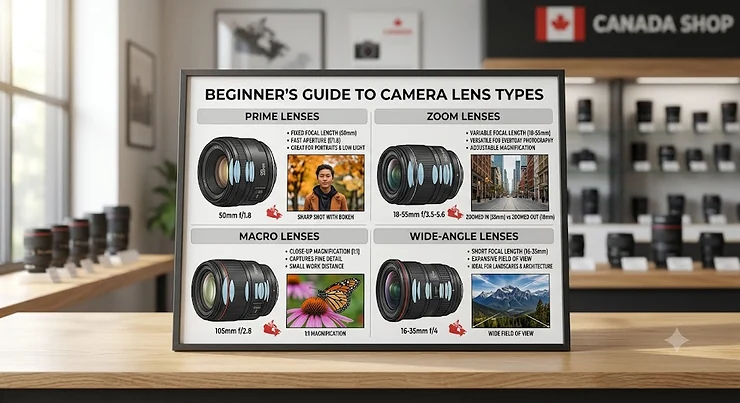
Looking at the spread above, notice that five of the seven are prime lenses — that’s not an accident. Primes tend to be cheaper, sharper, and faster (wider maximum aperture) than zooms at a similar price, which is exactly the trade-off a camera lens beginner benefits from most: fewer decisions, better low-light performance, and a forced discipline around composition since you can’t just zoom your way out of bad framing. The two zooms earn their spots for buyers who’d rather carry one lens than swap glass mid-walk.
💬 Just one click — help others make better buying decisions too!😊
Top 7 Camera Lens Beginner Picks: Expert Analysis
1. Canon RF 50mm F1.8 STM — best all-around budget prime for Canon mirrorless
The Canon RF 50mm F1.8 STM is the closest thing the RF mount has to a rite of passage, and its price point is exactly why. Specs first: a 50mm focal length, an f/1.8 maximum aperture, Canon’s quiet STM stepping-motor autofocus, and a control ring for adjusting settings on the fly — all packed into a lens weighing well under 200 grams. In practice, that wide f/1.8 aperture lets in roughly eight times more light than the f/5.6 you’d get zoomed in on a typical kit lens, which is the difference between a usable indoor portrait and a blurry, grainy mess.
Based on the spec comparison against Canon’s older EF 50mm STM, the RF version adds the control ring and slightly faster, quieter focusing — a small but real upgrade for anyone shooting casual video alongside stills. This is squarely a beginner-to-enthusiast lens: it’s for someone who owns an RF-mount body (Canon R10, R50, R8, and similar) and wants creamy background blur without spending on L-series glass. Reviewers consistently note that image sharpness at the center of the frame is excellent even wide open, with some softening toward the edges that mostly disappears by f/2.8.
Pros:
- ✅ Extremely affordable entry point into RF-mount primes
- ✅ Wide f/1.8 aperture excels in low light and portraits
- ✅ Compact and lightweight for all-day carry
Cons:
- ❌ Plastic mount feels less durable than pricier lenses
- ❌ No image stabilization built in
Expect this lens to sit in the budget range, generally under C$250 depending on retailer promotions — check current price before buying, since availability shifts. For a first RF prime, the value verdict is hard to beat.
2. Sony FE 50mm F1.8 — lightest full-frame prime for Sony shooters
The Sony FE 50mm F1.8 is Sony’s answer to the nifty-fifty formula, built for full-frame E-mount bodies like the a7 series and the beginner-friendly a7C line. At under half a pound, it’s genuinely one of the lightest 50mm primes on the market, with a 7-blade aperture diaphragm that produces reasonably rounded, pleasant background blur for a lens in this price tier.
What most buyers overlook about this model is how well it handles video autofocus — quiet and quick, which matters if you’re shooting both photos and clips on the same body. On paper, this means a single lens can cover portraits, street photography, and casual vlogging without a second purchase. Aggregated review sentiment across major retailers tends to praise the sharpness-per-dollar ratio while flagging that autofocus, though quiet, isn’t the snappiest in Sony’s lineup when tracking fast-moving subjects like kids or pets.
Pros:
- ✅ Among the lightest full-frame 50mm primes available
- ✅ Strong low-light performance from the f/1.8 aperture
- ✅ Quiet, video-friendly autofocus motor
Cons:
- ❌ Autofocus tracking lags behind Sony’s pricier G-series lenses
- ❌ Build feels plasticky compared to premium Sony glass
Pricing generally sits in the C$350-C$450 range in Canada, positioning it as a mid-tier pick rather than a true budget buy — but for full-frame image quality, it’s excellent value.
3. Nikon AF-S 50mm f/1.8G — most affordable way into full-frame Nikon glass
Nicknamed the “Nifty Fifty” for good reason, the Nikon AF-S 50mm f/1.8G has been a staple of Nikon DSLR kits for over a decade, and it remains one of the cheapest ways to dramatically upgrade image quality on a Nikon D3500, D5600, or similar body. The specs are simple: 50mm focal length, f/1.8 to f/22 aperture range, a Silent Wave Motor for autofocus, and a weight around 185 grams.
Here’s what the spec sheet won’t tell you, but reviewers note repeatedly: on an APS-C Nikon body, this lens behaves like a roughly 75mm equivalent, which pushes it more toward a portrait-length lens than a true standard. That’s not a flaw so much as a fact worth knowing before you buy — if you wanted a “normal” field of view on a crop-sensor Nikon, you’d actually want something closer to 35mm. Reviewers consistently highlight the sharpness and bokeh quality as punching well above the price, especially on pre-owned units, which are widely available and often inspected by reputable used-gear retailers.
Pros:
- ✅ Extremely low cost, especially pre-owned
- ✅ Sharp images even at wide apertures
- ✅ Compatible with both full-frame and crop Nikon DSLRs
Cons:
- ❌ Plastic build feels dated next to newer lenses
- ❌ Autofocus is noticeably louder than modern STM/SWM designs
New units typically land under C$250, while pre-owned copies can dip into the C$150-C$200 range — genuinely one of the best value-per-dollar lenses on this entire list.
4. Nikon NIKKOR Z 50mm f/1.8 S — sharpest optics in this lineup
Stepping up to Nikon’s mirrorless Z mount, the Nikon NIKKOR Z 50mm f/1.8 S is part of Nikon’s premium “S-Line,” and the jump in optical engineering shows. Weather-sealing, a more complex 12-element lens design, and noticeably improved edge-to-edge sharpness separate this from the DSLR-era Nifty Fifty. It’s built for Z-mount bodies like the Z50, Zfc, or Z6 series.
Based on the spec comparison with cheaper 50mm options on this list, the S-Line coating and element count translate into less chromatic aberration (that faint purple or green fringing around high-contrast edges) and punchier micro-contrast — the kind of detail that matters more once you start printing images or cropping tightly. What most buyers overlook about this model is that it isn’t marketed as a “beginner” lens at all, yet its autofocus is so forgiving and its weather sealing so practical that it’s arguably one of the best long-term investments for someone serious about sticking with photography. Reviewers consistently describe it as tack-sharp wide open, with almost no need to stop down for critical work.
Pros:
- ✅ Exceptional sharpness across the entire frame
- ✅ Weather-sealed for outdoor reliability
- ✅ Smooth, fast autofocus even in dim light
Cons:
- ❌ Noticeably pricier than DSLR-era 50mm primes
- ❌ Larger and heavier than the budget options on this list
Expect a price in the C$550-C$650 range — a mid-to-premium investment, but one that will still feel current five years from now, unlike some budget glass.
5. Canon EF-S 18-135mm F3.5-5.6 IS USM — most versatile one-lens travel option
Not everyone wants to juggle primes. The Canon EF-S 18-135mm F3.5-5.6 IS USM covers wide-angle group shots all the way to moderate telephoto in a single barrel, making it a favourite for beginners who’d rather pack light than carry three lenses on a hike or a family trip. Image Stabilization (IS) and Canon’s USM autofocus motor round out the spec sheet.
What that focal range means in practice: at 18mm you’re capturing sweeping landscapes and cramped family dinners where everyone needs to fit in frame; at 135mm you’re pulling in distant wildlife or candid shots without walking into someone’s personal space. The variable f/3.5-5.6 aperture is the trade-off — it’s noticeably slower than the primes on this list, meaning indoor and evening shots will need higher ISO or a flash. Reviewers consistently point to the built-in stabilization as the redeeming feature, letting handheld shots stay sharp at slower shutter speeds than you’d manage on an unstabilized prime.
Pros:
- ✅ Covers wide-angle through telephoto in one lens
- ✅ Built-in image stabilization aids handheld shooting
- ✅ Genuinely useful for travel and everyday variety
Cons:
- ❌ Slower variable aperture limits low-light performance
- ❌ Bokeh quality is average compared to prime lenses
Pricing typically falls in the C$430-C$580 range for Canon EF-S mount bodies like the Rebel/T-series — a reasonable one-lens-does-it-all investment for someone who values convenience over ultimate sharpness.
6. Sony E 18-135mm F3.5-5.6 OSS — best all-in-one zoom for APS-C Sony
The Sony equivalent to a do-it-all travel zoom, the Sony E 18-135mm F3.5-5.6 OSS pairs with APS-C bodies like the a6400 or a6700 and covers everything from wide interiors to moderate telephoto reach, backed by Sony’s Optical SteadyShot stabilization.
Based on the spec comparison with Sony’s shorter 18-55mm kit zooms, the extended 135mm reach on this lens genuinely changes what you can shoot — school sports, distant architecture details, casual wildlife — without needing a second telephoto purchase. The spec sheet won’t tell you this, but user reports suggest autofocus speed holds up well even in the telephoto range, which isn’t guaranteed on budget superzooms. Aggregated sentiment describes the lens as “the one lens I actually keep on my camera,” a common theme among reviewers who value flexibility over the absolute sharpest possible image.
Pros:
- ✅ Wide focal range replaces two or three lenses
- ✅ Optical stabilization keeps handheld shots steady
- ✅ Reliable autofocus throughout the zoom range
Cons:
- ❌ Bulkier and heavier than the prime lenses on this list
- ❌ Maximum aperture narrows significantly when zoomed in
This one sits in the C$650-C$780 range, making it the priciest zoom here — but for Sony APS-C shooters who want one lens for a whole trip, the convenience often justifies the cost.
7. Sony FE 85mm F1.8 — best dedicated portrait lens for beginners
Rounding out the list is a lens built for one job and one job exceptionally well: the Sony FE 85mm F1.8 exists to make people look good. The 85mm focal length compresses backgrounds pleasingly and keeps a comfortable working distance from your subject — no awkward face-to-face closeness required.
Here’s what most buyers overlook about this model: the f/1.8 aperture, combined with dust and moisture resistance, makes it a genuine step up from the 50mm primes on this list for anyone whose photography leans toward people — graduation photos, family portraits, engagement shoots. Reviewers consistently praise the background compression and creamy out-of-focus rendering, while a common complaint in user reviews is that the focal length is too tight for indoor use in smaller rooms, since you often need several metres of distance to frame a subject properly.
Pros:
- ✅ Flattering compression ideal for portraits
- ✅ Weather-sealed construction for outdoor shoots
- ✅ Excellent background separation and bokeh
Cons:
- ❌ Requires more shooting distance, awkward in small rooms
- ❌ Pricier than the standard 50mm options on this list
Expect a price range around C$780-C$920. For anyone whose camera lens beginner journey is really a portrait journey in disguise, this is the upgrade worth saving for.
Top 7 Products: Full Spec Comparison
| Lens | Focal Length | Max Aperture | Price Range (CAD) | Best For |
|---|---|---|---|---|
| Canon RF 50mm F1.8 STM | 50mm | f/1.8 | Under C$250 | Budget Canon mirrorless |
| Sony FE 50mm F1.8 | 50mm | f/1.8 | C$350-C$450 | Lightweight full-frame Sony |
| Nikon AF-S 50mm f/1.8G | 50mm | f/1.8 | C$150-C$250 | Cheapest full-frame-ready glass |
| Nikon NIKKOR Z 50mm f/1.8 S | 50mm | f/1.8 | C$550-C$650 | Sharpest optics, weather-sealed |
| Canon EF-S 18-135mm F3.5-5.6 IS USM | 18-135mm | f/3.5-5.6 | C$430-C$580 | One-lens travel versatility |
| Sony E 18-135mm F3.5-5.6 OSS | 18-135mm | f/3.5-5.6 | C$650-C$780 | All-in-one Sony APS-C zoom |
| Sony FE 85mm F1.8 | 85mm | f/1.8 | C$780-C$920 | Dedicated portrait work |
Reading across the table, a clear pattern emerges: the primes cluster at wider apertures and lower prices, while the zooms trade speed for range and convenience. If your budget caps out around C$250, the Nikon AF-S 50mm f/1.8G and Canon RF 50mm F1.8 STM are the standouts. Buyers with C$550 or more to spend should look hard at the Nikon NIKKOR Z 50mm f/1.8 S for its weather sealing and long-term durability, while anyone prioritizing one-lens convenience over speed should lean toward either 18-135mm zoom depending on their mount.
Practical Usage Guide: Getting Started With Your New Lens
Unboxing a new lens is the easy part. The first thirty days determine whether it becomes a trusted tool or a dust magnet in your bag. Start by shooting in aperture priority mode (usually marked “A” or “Av” on your dial) rather than full auto — this lets you control the aperture directly while the camera handles shutter speed, which is the fastest way to actually understand what f/1.8 versus f/8 looks like in your own photos.
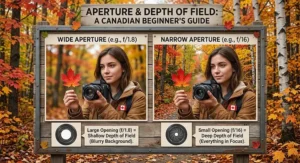
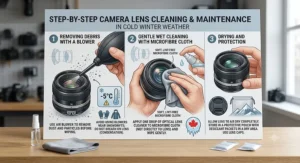
A common first-month mistake is leaving the aperture wide open for every shot because the background blur feels exciting. It is exciting — until you photograph a group of three people and only one face is in focus. Stop down to f/2.8 or f/4 for anything with more than one subject at varying distances. Clean your lens with a proper microfiber cloth and a blower brush rather than your shirt sleeve; dust and oils can etch into coatings over time. Once you’ve got a folder of shots you like, pull them into photo editing software — even a free option like Lightroom’s mobile app or GIMP handles basic exposure and colour correction well enough for a beginner to see dramatic before-and-after improvements without a subscription. Maintenance is minimal: store the lens with its cap on, avoid direct sun exposure for extended periods (it can act like a magnifying glass on the sensor curtain), and give the rear element a gentle check for dust every few weeks.
Real-World Scenarios: Which Lens Fits Your Life
The content-creating teen. If you’re a teenager building a YouTube or TikTok channel from your bedroom, your priority list looks different from a landscape photographer’s. A 50mm prime like the Canon RF 50mm F1.8 STM or Sony FE 50mm F1.8 paired with a tripod for teens — something compact, under C$60, with a phone/camera mount and adjustable height — solves the framing problem instantly, since you’re not holding the camera yourself. Add ring light photography into the mix (an 8-to-10-inch ring light in the C$30-C$80 range) and you’ve solved the two biggest beginner video problems: shaky footage and flat, unflattering lighting, both without touching camera settings you don’t understand yet.
The budget-conscious family documentarian. If your main goal is capturing kids’ birthdays, school events, and everyday chaos, the Canon EF-S 18-135mm F3.5-5.6 IS USM or Sony E 18-135mm F3.5-5.6 OSS earns its keep by never needing a lens change mid-event — a real consideration when you’re also managing a toddler.
The aspiring portrait photographer. If your Instagram grid is already full of friend portraits shot on a phone, the jump to the Sony FE 85mm F1.8 or even the Nikon NIKKOR Z 50mm f/1.8 S will feel like the single biggest quality leap you can buy, full stop.
Buyer’s Decision Framework
If you’re shooting mostly indoors under artificial light, choose a prime lens with f/1.8 or wider, because variable-aperture zooms struggle badly once the sun goes down. If you’re travelling and want to pack one bag, choose an 18-135mm-style zoom, because swapping lenses in airports, on trails, or at events is genuinely annoying. If portraits are your primary goal, choose an 85mm prime over a 50mm, because the extra compression and working distance produce noticeably more flattering results. If your budget is under C$250, don’t overthink it — a nifty-fifty prime in your camera’s native mount is the highest-value purchase you can make in photography, full stop. If you already own a kit zoom and want your next lens to feel like an upgrade rather than a lateral move, skip another zoom and go straight to a fast prime.
How to Choose a Camera Lens for Beginners
- Confirm your camera’s mount first. A Canon RF lens will not physically attach to a Sony E-mount body, so check your camera’s mount type before comparing specs.
- Decide between prime and zoom. Primes offer wider apertures and sharper images at a lower price; zooms offer flexibility without lens changes.
- Check the maximum aperture. Anything f/1.8 or wider handles low light and background blur significantly better than the f/3.5-5.6 range on most kit zooms.
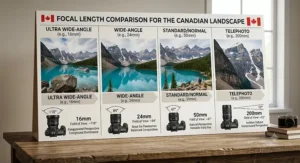
- Consider focal length for your subject. 35-50mm suits everyday and street photography; 85mm+ suits portraits; wide zooms like 18-135mm suit travel and groups.
- Read aggregated review sentiment, not just star ratings. A 4.6-star average with recurring complaints about autofocus tells you more than the number alone.
- Factor in weight and size. A lens you find too heavy to carry daily becomes a lens that stays home.
- Budget for a filter and hood. A basic UV filter (roughly C$20-C$40) protects the front element from scratches far cheaper than a lens repair.
Common Mistakes When Buying a Beginner Camera Lens
A recurring pattern in beginner forums is buying the most expensive lens available “to be safe,” without checking whether the extra spending actually solves a real problem. Here’s where the money most commonly goes wrong.
Ignoring the mount system entirely. Shoppers frequently buy a stunning deal on a used lens, only to discover it’s the wrong mount for their camera body. Always cross-reference the mount code (RF, E, Z, F, EF-S) before purchasing.
Chasing focal length numbers without understanding crop factor. On an APS-C sensor, a 50mm lens behaves closer to 75-80mm equivalent. Buyers expecting a “normal” field of view are often surprised by how tight the framing feels.
Skipping a protective filter, then regretting it. Front elements are the most exposed, most expensive part of a lens to repair. A cheap accident — a dropped keychain, a curious toddler — can turn into a costly optical grinding job without a C$25 filter in place.
Assuming a higher megapixel camera needs a “better” lens. Sensor resolution and lens quality are related but separate; a soft lens will make a 40-megapixel sensor look worse than a sharp lens on a 20-megapixel one.
Not budgeting for photographic accessories. A lens alone doesn’t complete a kit — a bag, a cleaning cloth, spare batteries, and memory cards all add real cost that beginners routinely underestimate.
Camera Lens Beginner vs Kit Zoom Lens
| Factor | Beginner Prime Lens | Standard Kit Zoom |
|---|---|---|
| Max Aperture | f/1.8 typical | f/3.5-5.6 typical |
| Low-Light Performance | Strong | Weak without flash |
| Versatility | Fixed focal length | Wide zoom range |
| Typical Price (CAD) | C$150-C$650 | C$300-C$780 |
| Best For | Portraits, low light, learning composition | Travel, events, one-lens convenience |
The core trade-off here isn’t really about quality — it’s about what problem you’re solving. A dedicated camera lens beginner prime forces better composition habits because you can’t lean on zoom to fix framing mistakes, and the wider aperture opens up shooting situations (dim restaurants, evening walks, indoor portraits) that a standard kit zoom simply can’t handle without a flash. On the other hand, a versatile zoom removes the friction of lens-swapping entirely, which matters enormously if you’re documenting fast-moving events like a toddler’s birthday party or a school concert where the moment won’t wait for you to change glass.
Features That Actually Matter (And Those That Don’t)
Marketing copy loves to highlight megapixel counts and glossy “premium coating” language, but not every spec deserves equal attention from someone building their first kit.
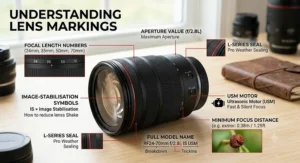
Actually matters: maximum aperture (directly affects low light and blur), build quality of the mount (metal mounts survive drops and swaps better than plastic), and autofocus motor type (STM, USM, and SWM designs are quieter and smoother than older screw-drive systems).
Doesn’t matter much for beginners: the number of aperture blades beyond 7-9 (diminishing visual returns for casual shooters), exotic coatings marketed as eliminating “100% of flare” (marketing hyperbole — some flare is often desirable, even stylistically), and weather sealing if you exclusively shoot indoors or in controlled environments.
Long-Term Cost & Maintenance
| Cost Factor | Typical Range (CAD) |
|---|---|
| Entry-level prime lens | C$150-C$450 |
| Premium mirrorless prime | C$550-C$920 |
| Protective filter | C$20-C$50 |
| Cleaning kit (blower, cloth, solution) | C$15-C$35 |
| Professional sensor cleaning (every 1-2 years) | C$40-C$80 |
Looking at the table above, the lens purchase itself is only the entry fee — a realistic total cost of ownership over three to five years includes filters, cleaning supplies, and the occasional professional sensor clean if you swap lenses often enough to introduce dust. Reviewers consistently note that primes hold their resale value better than kit zooms, since demand for sharp, fast lenses stays consistent even as camera bodies get replaced every few years. Before buying secondhand, it’s worth remembering that a CBC Marketplace investigation into refurbished electronics found real inconsistency in how “refurbished” grading gets applied across retailers, which is a useful reminder to inspect return policies and warranty terms carefully before buying used or open-box gear.
When a lens eventually reaches the end of its life — dropped, cracked, or simply outgrown — don’t just toss it in the household garbage. Camera glass and electronics contain materials that belong in proper recycling streams, and Innovation, Science and Economic Development Canada’s e-waste guidance outlines how to find certified drop-off programs in your municipality.
✨ Don’t Miss These Exclusive Deals! 🔍
Take your photography to the next level with these carefully selected lenses. Click on any highlighted pick to check current pricing and availability. These tools will help you capture authentic memories your family will love!
Optical Equipment for Beginners: Building Out Your Kit
A single lens rarely tells the whole story of a functional beginner kit. The right optical equipment around your lens often matters as much as the glass itself. A polarizing filter (roughly C$25-C$60 depending on filter thread size) cuts glare off water and windows, which is invaluable for outdoor shooters in a country as lake-heavy as Canada. Photographic accessories worth prioritizing early include a proper camera strap (wrist straps reduce drop risk dramatically compared to relying on grip alone), a padded bag with dividers, and at least one spare battery, since cold Canadian winters drain batteries noticeably faster than manufacturer estimates suggest.
Beyond the lens itself, image capture tools like external flashes, remote shutter releases, and memory cards with fast write speeds round out a functional beginner setup. A remote shutter release, for instance, solves the classic problem of camera shake during long exposures or group photos where you want to be in the frame yourself. None of these accessories need to be expensive — a basic wired remote often costs under C$20 — but skipping them entirely tends to create frustration down the line that a slightly more complete kit would have avoided from day one.
Frequently Asked Questions
❓ What is the best beginner camera lens for a Canon camera?
❓ Do I need a prime lens or a zoom lens as a beginner?
❓ How much should a beginner camera lens cost in Canada?
❓ Can I use a Canon lens on a Nikon camera?
❓ What lens should teens use for content creation with a tripod and ring light?
Conclusion
Choosing the right camera lens beginner setup really comes down to matching your subject matter, budget, and camera mount rather than chasing the flashiest spec sheet on the shelf. For most people starting out, a 50mm prime like the Canon RF 50mm F1.8 STM, Sony FE 50mm F1.8, or Nikon AF-S 50mm f/1.8G delivers the biggest visible jump in image quality for the smallest possible investment. Those who need flexibility over one specific look should lean toward the Canon EF-S 18-135mm F3.5-5.6 IS USM or Sony E 18-135mm F3.5-5.6 OSS, while anyone whose real goal is stunning portraits should start saving for the Sony FE 85mm F1.8 or the Nikon NIKKOR Z 50mm f/1.8 S.
Whichever you choose, remember that the lens is only one piece of a working kit — pairing it with the right photographic accessories, a bit of photo editing software know-how, and some patience through that first month of learning curve will do more for your images than any single purchase ever could. Prices, promotions, and stock all shift regularly on Amazon.ca, so always check current pricing before deciding, and don’t be afraid to start small; the best camera lens beginner purchase is simply the one that gets you out shooting more often.
Recommended for You
- 7 Best Raspberry Pi Projects Kits For Makers In 2026
- 7 Best Beginner DSLR Cameras for Teens in 2026 (Real Picks)
- Arduino Advanced Kit: 7 Top Picks Tested for Canada in 2026
Disclaimer: This article contains affiliate links. As an Amazon Associate, I earn from qualifying purchases. If you purchase products through these links, we may earn a small commission at no additional cost to you.
✨ Found this helpful? Share it with your friends! 💬🤗
