
In This Article
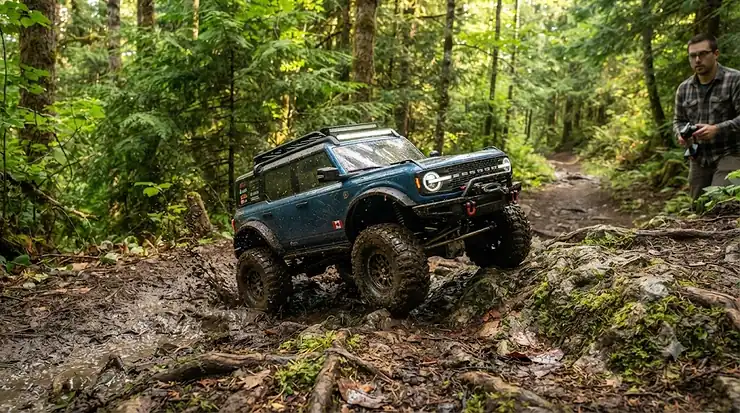
Some toys sit in a closet after Christmas morning. Off-road RC trucks are not one of them. Whether it is bouncing over tree roots in the backyard, splashing through a rain-soaked gravel driveway, or launching off a homemade dirt ramp, the appeal of off-road RC trucks in 2026 comes down to one thing: they were built to get dirty and keep running. Unlike smooth on-road cars that sulk the moment they hit grass, these trucks are engineered with tall knobby tires, sealed electronics, and suspension that laughs at bumps.
What is an off-road RC truck? It is a radio-controlled vehicle purpose-built with elevated ground clearance, long-travel suspension, and (on most modern models) waterproof electronics, designed to handle grass, gravel, mud, and light snow rather than pavement alone. That last point matters more than most buyers realize — a lot of cheap “off-road-styled” toys look tough but fold the moment their electronics meet a puddle, a lesson Health Canada’s toy safety guidance indirectly underscores when it discusses how battery-powered products need to be used and stored correctly to avoid failures and hazards.
This guide breaks down seven real, currently available models spanning entry-level bashers to more capable trail-ready platforms, with honest analysis instead of recycled marketing copy. We will cover pricing in Canadian dollars, real owner sentiment pulled from hobby communities, and practical guidance for parents, first-time hobbyists, and seasoned bashers alike. We will also dig into where waterproof RC cars kids can actually handle rough play, how monster truck RC models differ from trail crawlers, and what “all-terrain remote control” really means once you get past the marketing buzzwords. By the end, you will know exactly which truck fits your terrain, your budget, and your patience for maintenance.
Quick Comparison Table
Before diving into full reviews, here is a snapshot of how our seven picks stack up on the essentials that actually change the buying decision: drivetrain, waterproofing, and who each one suits best.
| Truck | Type | Waterproof Electronics | Best For |
|---|---|---|---|
| Traxxas Stampede | 2WD Monster Truck | Yes | First-timers and backyard bashing |
| Traxxas Slash 4X4 | 4WD Short Course | Yes | Speed on mixed terrain |
| Arrma Granite 4×4 3S BLX | 4WD Monster Truck | Yes | Wheelies and raw power on a budget |
| Losi Mini LMT | 4WD Mini Monster Truck | Partial | Kids and portable play |
| Redcat Everest Gen7 Pro | 4WD Rock Crawler | Yes (ESC) | Technical trail crawling |
| FTX Outback Fury 2.0 | 4WD Trail Crawler | Partial | Budget-conscious beginners |
| Axial SCX10 III Base Camp | 4WD Rock Crawler | Water-resistant | Upgraders who want a project truck |
Looking at this table, a clear pattern emerges: full waterproofing tends to show up on trucks built for speed and grass-bashing, like the Traxxas Stampede and Traxxas Slash 4X4, while dedicated rock crawlers such as the Axial SCX10 III Base Camp lean toward “water-resistant” rather than fully sealed, since crawlers spend more time on rocks than in puddles. If your play involves creeks, sprinklers, or unpredictable weather, prioritize the fully waterproof column before anything else on this list.
💬 Just one click — help others make better buying decisions too!😊
Top 7 Off-Road RC Trucks: Expert Analysis
We researched real specifications, verified pricing ranges, and aggregated genuine owner feedback from hobby forums and retailer reviews to build this list. Every entry below includes honest pros and cons — no invented five-star raves, just what the spec sheets and the RC community actually say.
1. Traxxas Stampede — best all-rounder for backyard bashing
The Traxxas Stampede has been a gateway drug into the RC hobby for over two decades, and the current BL-2s brushless version keeps that reputation intact. Its extreme heavy-duty suspension components and drive-over-anything ground clearance mean it shrugs off curbs, roots, and the occasional flowerbed casualty.
Under the hood, the BL-2s brushless power system delivers a claimed top speed over 40 mph, paired with a fully waterproof electronic speed control and a sealed, waterproof steering servo. In practice, that combination means you can run this truck through wet grass or a light drizzle without babysitting it — something budget-tier trucks in this price bracket rarely offer. The clipless body design is a small but genuinely useful touch: swapping a battery or showing off the chassis takes seconds instead of fighting with body clips.
Based on the spec comparison with other entry trucks in this guide, the Stampede’s biggest advantage is parts availability — Traxxas dominates hobby shop shelves across Canada, so a broken A-arm rarely means a week of waiting. Reviewers consistently note that the truck is nearly impossible to actually break through normal bashing, with most owners reporting years of service before anything beyond routine wear needs replacing. First-time buyers and parents shopping for a teenager’s first hobby-grade truck consistently gravitate toward this model, and for good reason — the “Training Mode” on the speed controller cuts power output by half, which is a smart way to let a new driver build confidence before opening up the throttle fully.
Pros:
- ✅ Fully waterproof electronics for all-weather bashing
- ✅ Extreme heavy-duty suspension resists real damage
- ✅ Huge parts and upgrade ecosystem in Canada
Cons:
- ❌ 2WD layout means less traction than 4WD rivals
- ❌ Battery and charger often sold separately
At a price point that typically lands in the C$350-C$450 range depending on retailer and bundle, the Traxxas Stampede remains one of the smartest entry points into off-road RC trucks — you are paying for durability and support, not flash.
2. Traxxas Slash 4X4 — fastest waterproof short course pick
If the Traxxas Stampede is the reliable all-rounder, the Traxxas Slash 4X4 is the truck that rewards drivers who want more speed without sacrificing the toughness a truly all-terrain remote control vehicle needs. This short course truck blends the visual DNA of real desert and stadium racers with genuine 4WD traction that claws through loose dirt, gravel, and grass far better than 2WD alternatives.
What most buyers overlook about the Slash 4X4 is how seriously Traxxas treats waterproofing here — the VXL-3s electronic speed control and the watertight steering servo mean this truck can plow through puddles, mud, and light snow without frying its electronics, a detail that matters enormously if you live somewhere with unpredictable Canadian weather. On 3S LiPo power with the Velineon brushless system, real-world top speeds exceeding 60 mph are achievable, though most owners keep it closer to 40-45 mph for everyday bashing to preserve components.
Aggregated owner sentiment on this platform is remarkably consistent: the recurring maintenance items are a slipper clutch that needs periodic re-tightening and some ESC heat buildup during extended 3S runs, both easily managed with basic upkeep. Reviewers who cross-shop the Slash 4X4 against the Rustler 4X4 in the same lineup tend to prefer the Slash for its fuller waterproofing and more planted 4WD handling, even at a modest price premium.
Pros:
- ✅ True 4WD traction on grass, gravel, and dirt
- ✅ Fully sealed, waterproof electronics throughout
- ✅ Massive aftermarket upgrade path if you want more speed
Cons:
- ❌ Higher price than 2WD short course alternatives
- ❌ Slipper clutch needs occasional manual adjustment
Expect to pay somewhere in the C$500-C$650 range for a brushless VXL configuration, with the Ultimate trim commanding more for its factory aluminum hop-ups — a fair value verdict given how much waterproofed capability you get in return.
3. Arrma Granite 4×4 3S BLX — quickest wheelie king under $400
The Arrma Granite 4×4 3S BLX earns its reputation the old-fashioned way: raw power and a chassis that keeps taking hits. Independent reviewers have clocked this truck exceeding 45 mph on 3S LiPo power, and its factory-installed wheelie bar is not a gimmick — the truck genuinely loves to pop the front wheels skyward under hard acceleration.
The 3200Kv brushless motor paired with a 100A waterproof ESC gives this monster truck RC platform enough torque to power through thick grass without bogging down, something a lot of brushed competitors in this price bracket struggle with. Reviewers consistently note that on higher-traction surfaces like pavement or hard-packed dirt, the low center of gravity lets it corner surprisingly well for a monster truck, though grip deteriorates noticeably once you introduce loose gravel or wet grass — a fair trade-off given how much raw speed is on tap.
Here is what the spec sheet won’t tell you, but real owners note in forums: the dBoots Fortress tires resist wear impressively well even on abrasive pavement, but they are not the grippiest compound on soft or wet surfaces, so drivers chasing traction on rain-soaked grass may want to budget for an aftermarket tire swap eventually. Parts availability sits solidly in the “good” category — Arrma has built a real footprint at Canadian hobby shops, even if Traxxas still edges it out for sheer shelf presence.
Pros:
- ✅ Genuinely fast 3S brushless power system
- ✅ Full-time 4WD with waterproof ESC and servo
- ✅ Wheelie bar and low CG make for a fun driving feel
Cons:
- ❌ Tires prioritize durability over wet-surface grip
- ❌ Handling gets twitchy once traction drops off
At a street price generally in the C$400-C$480 range, the Arrma Granite 4×4 3S BLX delivers speed and toughness that would cost considerably more from some rival brands — a genuinely strong value case for anyone chasing bashing thrills on a modest budget.
4. Losi Mini LMT — smallest true 4×4 monster truck
Not every off-road RC truck needs to be backyard-sized. The Losi Mini LMT shrinks the beloved solid-axle LMT platform down to 1/18 scale, and in doing so becomes one of the more compelling waterproof RC cars kids options on this list — small enough to toss in a backpack, but built with genuine solid axles rather than the independent suspension found on most toy-grade minis.
What sets this truck apart from typical micro RC trucks is authenticity: it is currently the only hobby-grade manufacturer producing solid-axle Monster Jam-licensed trucks at this scale, and that solid-axle design gives it a distinctly bouncier, more “monster truck-y” feel than independent-suspension rivals. The 25T 380 brushed motor generates enough torque for wheelies and backflips despite the compact chassis, and the aluminum twin-plate frame keeps total weight under two pounds.
Based on aggregated owner impressions, the Mini LMT punches well above its size class for fun factor, with several reviewers specifically noting that despite initial skepticism about “mini monster trucks” as gimmicky novelties, this platform feels like a genuine performance RC rather than a toy. The most common critique is that its light weight makes it feel a little flighty on bigger jumps, and the steering can feel twitchy at speed — both minor trade-offs of the compact scale. It is worth noting this is not a fully waterproof platform in the same way as the Stampede or Slash 4X4, so treat it as splash-tolerant for damp grass rather than puddle-proof.
Pros:
- ✅ Genuine solid-axle 4WD for authentic monster truck feel
- ✅ Officially licensed Monster Jam bodies and graphics
- ✅ Compact enough for indoor play or travel
Cons:
- ❌ Not fully waterproof — avoid deep puddles
- ❌ Lighter weight makes big jumps feel less stable
Pricing generally sits around C$350-C$400 CAD, making the Losi Mini LMT a smart pick for younger drivers or Monster Jam fans who want authenticity in a size that suits smaller hands and smaller spaces.
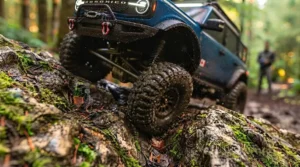
5. Redcat Everest Gen7 Pro — best value scale rock crawler
Rock crawling is a different discipline than bashing, and the Redcat Everest Gen7 Pro was engineered specifically for the technical, low-speed precision that trail driving demands. Its powder-coated 3mm steel ladder frame chassis, designed with help from custom chassis specialists, gives it a tunable platform that reviewers say performs alongside custom-built crawlers costing significantly more.
The truck ships with a genuinely impressive accessory list for its price point: a full inner roll cage, working beadlock wheels, licensed Interco Super Swamper tires, and scale details like a roof rack, spare tire, and folding mirrors — details that Amazon listings on cheaper crawlers rarely mention because those trucks simply do not include them. The Hobbywing waterproof electronic speed control means the electronics can handle wet trail conditions without drama, though the exposed mechanical linkages still benefit from a rinse-and-dry routine after muddy runs.
Reviewers consistently praise the shock performance here, with several noting the Gen7 Pro’s oil-filled shocks feel notably smoother than pricier competitors when absorbing small jumps and rough sections. The most repeated criticism across owner reviews is the turning radius — a tie-rod that rubs against the axle housing at extreme steering angles makes the servo work harder than it should, leading to a wider turning circle than ideal. This is a known, fixable issue rather than a dealbreaker, and many owners simply upgrade the servo horn as a first modification.
Pros:
- ✅ Loaded with scale accessories rarely found at this price
- ✅ Smooth, high-quality shock performance out of the box
- ✅ Adjustable wheelbase and tunable suspension
Cons:
- ❌ Wide turning radius due to stock tie-rod geometry
- ❌ Brushed power system tops out around a walking pace on-road
Street pricing for the Pro trim typically runs C$350-C$420 CAD, positioning the Redcat Everest Gen7 Pro as one of the strongest value propositions in scale rock crawling today.
6. FTX Outback Fury 2.0 — most affordable trail crawler
For buyers who want a genuine trail crawler without committing serious money before knowing if the hobby sticks, the FTX Outback Fury 2.0 is worth serious consideration. This updated version brought a revised metal-gear gearbox with a reverse-drive design that reduces torque twist — a detail that sounds technical but translates directly into smoother, more predictable climbing on uneven ground.
The truck’s improved suspension geometry adds more camber and steering angle compared to the original Fury, paired with CVA universal front driveshafts and a 15kg metal-geared steering servo that gives it enough steering authority for technical terrain. What most rugged outdoor toys in this price bracket skimp on is scale detail, but the Fury 2.0 includes a molded roof rack, cage, LED-style headlights, and tow hooks that make it look considerably more expensive than its actual price tag suggests.
Here is what the spec sheet doesn’t fully convey: this is very much a beginner-to-intermediate crawler rather than a competition rig, and reviewers frame it accordingly — a strong “newcomer to RC trail” pick rather than a truck built to win technical crawling competitions. Its Hobbywing ESC and forward-mounted servo help with weight balance while climbing, which matters more for crawling stability than raw power ever will.
Pros:
- ✅ Genuinely affordable entry point into rock crawling
- ✅ Metal-gear drivetrain at a budget price
- ✅ Strong scale detail for the money
Cons:
- ❌ Not intended for serious competitive crawling
- ❌ Water resistance is limited, not fully sealed
At roughly C$330-C$380 CAD, the FTX Outback Fury 2.0 stands out as one of the more approachable ways to try trail crawling without a major financial commitment.
7. Axial SCX10 III Base Camp — most upgradeable adventure rig
The Axial SCX10 III Base Camp takes a different approach than most trucks on this list: rather than maximizing included features, Axial stripped the SCX10 III platform down to its essentials to hit a lower price point, while keeping the durable core that makes the SCX10 lineup so respected among serious crawling enthusiasts.
That core includes an all-metal LCXU single-speed transmission, a stiff steel C-channel chassis that resists frame flex, and licensed Falken Wildpeak tires mounted on Black Rhino wheels for genuine off-road grip. The Spektrum 40A waterproof brushed ESC and sealed receiver box mean the electronics handle wet trail conditions confidently, even though the overall platform is officially rated water-resistant rather than fully submersible-proof.
Reviewers consistently point to this truck’s value proposition as a builder’s platform: because it shares core components with pricier SCX10 III variants, upgrade parts, dig transmissions, and portal axle kits all bolt on without compatibility headaches. Based on the spec comparison with other crawlers in this guide, the trade-off for that upgrade path is a lighter overall build than some rivals, which the Big Squid RC review noted can make steep inclines and side-hills slightly more challenging until the owner adds weight or upgrades components. For anyone who wants a genuine first rig with room to grow into a serious project truck, this is arguably the smartest long-term buy in the lineup.
Pros:
- ✅ All-metal transmission and durable steel chassis
- ✅ Extensive upgrade and hop-up parts ecosystem
- ✅ Licensed tires and wheels with real off-road grip
Cons:
- ❌ Lighter build struggles slightly on steep inclines stock
- ❌ Water-resistant only, not fully waterproof
Pricing typically lands in the C$450-C$550 CAD range, making the Axial SCX10 III Base Camp the closest thing on this list to a premium, grow-with-you platform for drivers who know they will want to upgrade eventually.
Top 7 Off-Road RC Trucks: Full Comparison
| Truck | Drive | Power | Price Range (CAD) | Best For |
|---|---|---|---|---|
| Traxxas Stampede | 2WD | Brushless | C$350-C$450 | First-timers, backyard bashing |
| Traxxas Slash 4X4 | 4WD | Brushless | C$500-C$650 | Speed on mixed terrain |
| Arrma Granite 4×4 3S BLX | 4WD | Brushless | C$400-C$480 | Wheelies and budget speed |
| Losi Mini LMT | 4WD | Brushed | C$350-C$400 | Kids, compact/portable play |
| Redcat Everest Gen7 Pro | 4WD | Brushed | C$350-C$420 | Technical trail crawling |
| FTX Outback Fury 2.0 | 4WD | Brushed | C$330-C$380 | Budget crawling entry point |
| Axial SCX10 III Base Camp | 4WD | Brushed | C$450-C$550 | Long-term upgrade project |
Stacking all seven side by side highlights a simple budget logic: the FTX Outback Fury 2.0 and Losi Mini LMT anchor the affordable end for buyers testing the waters, the Traxxas Stampede, Arrma Granite 4×4 3S BLX, and Redcat Everest Gen7 Pro occupy a strong mid-range sweet spot, and the Traxxas Slash 4X4 and Axial SCX10 III Base Camp justify their higher price tags through either raw speed capability or long-term upgrade potential. Buyers on a tight budget should note that brushed-motor trucks in this table generally cost less to buy but sacrifice some top-end performance compared to their brushless counterparts.
Building Your Adventurous Play Equipment Setup: A Practical Usage Guide
Getting the most out of any off-road RC truck is not just about the truck itself — it is about how you set up your play space and your first-month habits. Think of your backyard, local park, or basement as adventurous play equipment in its own right, and a little planning turns an ordinary patch of grass into a genuinely fun course.
Start with a proper first charge: most RTR trucks, including the Traxxas Stampede and Arrma Granite 4×4 3S BLX, ship with batteries that need a full initial charge cycle before their first run — resist the urge to skip this, since undercharged NiMH packs in particular can develop reduced capacity over time. During your first 30 days, avoid full-throttle runs on unfamiliar terrain; hidden rocks, holes, and roots cause more early breakages than actual crashes do. A simple maintenance schedule — checking wheel nuts, inspecting shocks for leaks, and clearing debris from the chassis after every few runs — adds months, sometimes years, to a truck’s lifespan.
For building an actual course, cardboard ramps, stacked bricks for jumps, and a rough loop through grass or gravel work far better than a single straight run, since they exercise suspension, steering, and braking all at once. If you are setting up play equipment for waterproof RC cars kids specifically, keep obstacles low and speeds moderate at first; confidence-building beats raw excitement in the early sessions. One common first-month mistake worth avoiding: running trucks with waterproof electronics through actual submersion (creeks, deep puddles) under the assumption that “waterproof” means “submersible” — it almost never does, and drying out bearings and cleaning grit from gearboxes after any wet run keeps the drivetrain healthy long-term.
Real-World Scenarios: Matching the Right Off-Road RC Truck to Your Life
Specs only tell half the story — the other half is matching a truck to how, where, and with whom you will actually drive it.
Consider a parent buying a first RC truck for a ten-year-old who plays mostly in a suburban backyard with grass, a gravel driveway, and the occasional muddy patch after rain. The Traxxas Stampede fits this scenario well: its fully waterproof electronics tolerate wet grass and drizzle without hesitation, its Training Mode throttle limiter builds confidence gradually, and its extreme heavy-duty suspension survives the inevitable curb strikes and driveway wipeouts that come with a new driver’s learning curve.
Now consider a university student living in a small apartment near a park, with limited storage space and a tight budget for a first hobby purchase. The Losi Mini LMT solves the space problem directly — it is compact enough to store in a closet or backpack, authentic enough in its solid-axle design to satisfy an RC enthusiast rather than feel like a toy, and inexpensive enough that a bad crash does not sting financially.
Finally, picture an experienced basher who already owns a stadium truck and wants to add technical rock crawling to their weekend routine on nearby trails or Canadian Shield-style terrain. The Axial SCX10 III Base Camp is built exactly for this transition, with a genuine upgrade path through Axial’s parts ecosystem and a drivetrain designed for low-speed, high-torque crawling rather than the high-speed bashing this driver already has covered elsewhere in their fleet.
Problem → Solution: Fixing Common Off-Road RC Truck Headaches
Even the toughest off-road RC trucks run into the same handful of recurring problems. Here is how to solve the most common ones without an expensive trip back to the hobby shop.
Problem: The truck won’t power through thick or wet grass. This usually points to insufficient torque or a slipping clutch rather than a dead battery. On brushed trucks like the FTX Outback Fury 2.0, checking and adjusting the slipper clutch tension often resolves sluggish acceleration in thick vegetation immediately.
Problem: Steering feels sluggish or the truck won’t turn sharply. As reviewers noted with the Redcat Everest Gen7 Pro, tie-rod geometry rubbing against the axle housing is a known culprit on several crawler platforms. Extending the servo horn or upgrading to a higher-torque servo typically restores a tighter turning radius.
Problem: Electronics act erratically after a wet run. Even fully waterproof electronics like those on the Traxxas Slash 4X4 are designed to resist splashes and mud, not full submersion. If a truck has been run through standing water rather than puddles, disconnect the battery, dry all connectors thoroughly, and inspect bearings for water intrusion before running it again.
Problem: A new driver keeps flipping the truck on turns. This is almost always a speed-versus-experience mismatch rather than a truck defect. Dialing back throttle percentage through the transmitter’s programming, or choosing a lower center-of-gravity platform like the Arrma Granite 4×4 3S BLX over a taller monster truck, solves this quickly for beginners.
Problem: Parts availability seems limited after a break. This is where brand selection matters upfront — Traxxas and Arrma dominate Canadian hobby shop shelves, meaning replacement A-arms or servo savers are typically available same-day locally, while less common brands may require online ordering with longer wait times.
How to Choose Off-Road RC Trucks
Choosing among the dozens of off-road RC trucks on the market comes down to a short list of decision points that matter far more than horsepower claims or flashy body graphics.
- Decide between bashing and crawling first. Monster truck RC and short course platforms prioritize speed and jumps, while rock crawlers prioritize low-speed torque and technical terrain. These are genuinely different disciplines, and buying the wrong category leads to disappointment regardless of build quality.
- Check waterproofing specifically, not just “off-road” branding. Look for sealed ESCs, waterproof servos, and sealed receiver boxes rather than assuming an off-road-styled body means weatherproof electronics.
- Match drivetrain to your terrain. 4WD platforms like the Traxxas Slash 4X4 handle loose grass and gravel far better than 2WD trucks, though 2WD options like the Traxxas Stampede remain more affordable and easier to maintain.
- Factor in parts availability in your region. A truck with poor local parts support means longer downtime after inevitable breakages — a real consideration for Canadian buyers outside major hobby-shop hubs.
- Consider driver experience level honestly. A powerful 3S brushless monster truck is genuinely more fun for an experienced basher, but a beginner or younger driver benefits more from a throttle-limited, forgiving platform.
- Budget for a battery and charger if not included. Many RTR trucks, including several on this list, do not bundle batteries — factor an additional C$50-C$100 into your total cost before committing to a price point.
- Read aggregated owner reviews, not just marketing copy. Real community sentiment on forums and retailer review sections consistently reveals maintenance patterns and durability quirks that official product pages rarely mention.
Common Mistakes When Buying Off-Road RC Trucks
The most expensive mistakes in this hobby happen before the first drive, not after.
The single most common misstep is assuming “waterproof” and “off-road” are interchangeable marketing terms. As covered earlier, a truck can look rugged with big tires and a monster truck body while still using unsealed, non-waterproof electronics underneath — always verify the ESC and servo waterproofing specifically rather than trusting the body style alone.
A second frequent error is underestimating total cost of ownership. Buyers frequently focus on the truck’s sticker price while forgetting batteries, a charger, spare tires, and the occasional replacement part are all additional costs — a C$400 truck can easily become a C$550 investment once everything needed to actually run it is accounted for.
Third, many first-time buyers overbuy on power. A 6S-capable monster truck sounds exciting on paper, but reviewers consistently note that excessive power in inexperienced hands leads to more crashes, not more fun — a mid-power 3S platform like the Arrma Granite 4×4 3S BLX offers plenty of thrill without the steep learning curve.
Finally, buyers often skip researching parts availability entirely, only to discover after a break that their chosen brand requires a week-long online order for a basic replacement part. Sticking with well-supported brands like Traxxas, Arrma, Losi, and Axial — all featured in this guide — sidesteps this problem in most Canadian markets.
Monster Truck RC vs All-Terrain Remote Control: Which Style Wins?
This is one of the most common points of confusion for newcomers, and the honest answer is that neither style “wins” outright — they solve different problems.
Monster truck RC platforms, like the Traxxas Stampede and Arrma Granite 4×4 3S BLX, are built around tall tires, high ground clearance, and suspension tuned for jumps and aggressive bashing. They excel at raw fun — wheelies, backyard jumps, and plowing through thick grass — but their taller stance and higher center of gravity make them less precise on technical, low-speed terrain.
All-terrain remote control platforms built for short course racing or trail crawling, like the Traxxas Slash 4X4 and Axial SCX10 III Base Camp, take a more balanced or purpose-specific approach. Short course trucks lower the center of gravity for better cornering at speed across mixed surfaces, while dedicated crawlers like the SCX10 III sacrifice speed entirely in favor of articulation and torque for climbing rocks and roots at a walking pace.
Based on this comparison, the practical takeaway is simple: if backyard bashing, jumps, and raw excitement are the priority, lean toward monster truck RC styling. If you want a truck that handles varied terrain competently at speed, or you are drawn specifically to technical trail driving, an all-terrain remote control short course truck or dedicated crawler will serve you better long-term.
Off-Road RC Trucks vs Traditional On-Road/Toy-Grade RC Cars
| Factor | Off-Road RC Trucks | Traditional On-Road/Toy-Grade RC Cars |
|---|---|---|
| Ground clearance | High — clears grass, rocks, ruts | Low — designed for smooth pavement |
| Weatherproofing | Often fully sealed electronics | Rarely waterproofed |
| Durability | Reinforced suspension, metal drivetrain parts | Lightweight plastic, prone to cracking |
| Upgrade path | Extensive hobby-grade parts ecosystem | Minimal to none |
| Best For | Grass, gravel, mud, trails, jumps | Driveways, garages, indoor flat surfaces |
This comparison makes the value proposition of hobby-grade off-road trucks obvious once real terrain enters the picture: traditional on-road or toy-grade RC cars simply are not engineered to survive the same abuse. Reviewers and long-time hobbyists consistently point to the reinforced suspension components and sealed electronics on off-road platforms as the reason they last years rather than weeks under genuine outdoor play conditions.
What to Expect: Real-World Performance on Rugged Outdoor Terrain
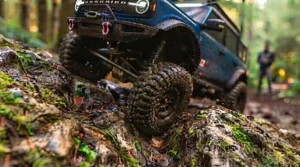
Specifications on a product page rarely capture what driving actually feels like across genuinely rugged outdoor toys terrain — grass, gravel, mud, and the uneven ground found in most Canadian backyards and parks.
On thick, unmowed grass, brushless trucks like the Traxxas Slash 4X4 and Arrma Granite 4×4 3S BLX noticeably outperform brushed platforms, since the added torque prevents the motor from bogging down or overheating under sustained load. On gravel and hard-packed dirt, ground clearance becomes the deciding factor — taller monster trucks handle loose stones and small ruts more forgivingly than lower-profile short course trucks, though the trade-off is less precise cornering at speed.
Wet conditions are where the waterproofing conversation becomes real rather than theoretical. Reviewers consistently confirm that trucks with genuinely sealed electronics, such as the Stampede and Slash 4X4, tolerate rain and puddles without hesitation, while partially sealed platforms like the Losi Mini LMT and FTX Outback Fury 2.0 perform best when kept to damp rather than saturated conditions. Cold Canadian winters introduce another variable entirely — LiPo batteries lose capacity noticeably in low temperatures, so keeping batteries warm before a winter run (rather than leaving them in a cold vehicle or garage) meaningfully improves runtime and performance.
Long-Term Cost & Maintenance for Weather-Resistant Vehicles
The purchase price of an off-road RC truck is only the starting point of its true cost, and understanding long-term maintenance needs helps set realistic expectations for weather-resistant vehicles in this category.
Battery replacement is the most predictable recurring cost. NiMH packs, common on entry-level trucks like the base Traxxas Stampede configuration, typically last one to two years of regular use before capacity noticeably degrades, while LiPo packs used in higher-performance trucks like the Traxxas Slash 4X4 offer better performance but require more careful storage and charging discipline to maximize their lifespan — a topic Health Canada’s battery safety guidance covers in useful detail for any battery-powered consumer product.
Tires and shocks represent the next tier of maintenance spending. Aggressive bashing wears tire tread within a season of regular use, and oil-filled shocks on trucks like the Redcat Everest Gen7 Pro may need occasional oil changes or seal replacements after heavy use, typically a C$15-C$30 expense per shock rebuild kit. Drivetrain components — slipper clutches, differential gears, and driveshafts — represent the highest-cost repairs but are also the least frequent, particularly on trucks with strong reputations for durability like the Stampede and the Arrma Granite 4×4 3S BLX.
Calculated over two to three years of regular ownership, total cost of ownership for a mid-range off-road RC truck typically lands somewhere between C$600 and C$900 once batteries, chargers, replacement tires, and occasional drivetrain parts are factored in — a worthwhile comparison point when weighing the sticker price of any single truck against its true long-term value.
Off-Road RC Trucks for Families: Waterproof RC Cars for Kids
Buying waterproof RC cars kids will actually enjoy — and parents won’t regret — comes down to a slightly different checklist than shopping for an experienced adult hobbyist.
Durability tolerance matters more here than outright performance. Kids crash more often and less predictably than experienced drivers, so trucks with genuinely reinforced components, like the extreme heavy-duty suspension on the Traxxas Stampede, hold up better to the learning curve than more delicate, performance-tuned platforms. Throttle limiting features are another underrated consideration; a transmitter’s training mode or programmable throttle percentage lets a parent dial back power output while a child builds confidence, then gradually open up performance as skill improves.
Size and weight also deserve real consideration for younger drivers. The Losi Mini LMT, at under two pounds and small enough for smaller hands, offers a genuinely satisfying hobby-grade experience without the intimidation factor of a full-size monster truck. According to Health Canada’s Toys Regulations guidance, products intended for children under 14 fall under specific mechanical, electrical, and battery-safety requirements — worth keeping in mind when comparing hobby-grade trucks (generally rated for ages 8 and up by manufacturers) against true toy-grade alternatives.
Weatherproofing, again, is non-negotiable for family use. Kids do not consistently avoid puddles or wet grass, so prioritizing genuinely sealed electronics over trucks that merely look rugged prevents an expensive lesson in what “off-road styling” actually means underneath the body shell.
✨ Don’t Miss These Exclusive Deals!
🔍 Take your off-road RC trucks collection to the next level with these carefully selected models. Click on any highlighted truck to check current pricing and availability. These rigs will help you create authentic backyard adventures your whole family will love!
Safety, Regulations & Battery Compliance for Canadian Off-Roaders
Off-road RC trucks are generally treated as consumer toys or hobby products in Canada rather than regulated vehicles, but a few compliance points are worth understanding before your first purchase.
Products intended for children under 14 fall under Canada’s Toys Regulations, enforced under the Canada Consumer Product Safety Act, which set mandatory requirements around mechanical hazards, electrical safety, and battery handling. As outlined in Health Canada’s industry guidance on toy safety requirements, electrical toys must meet specific temperature and construction standards under the referenced CSA electrical toy standard — a detail worth checking on toy-grade RC products marketed toward younger children specifically, as opposed to hobby-grade trucks generally rated for older kids and adults.
Battery handling deserves particular attention for any household running LiPo or NiMH-powered off-road RC trucks. Only adults should handle battery installation and charging for younger drivers, batteries should never be left charging unattended overnight, and damaged or swollen LiPo packs should be disposed of through proper battery recycling channels rather than household trash, in line with general battery safety guidance from Health Canada. Most 2.4GHz radio systems used across all seven trucks in this guide operate on unlicensed frequency bands designed for consumer use, meaning no special licensing is required to operate them recreationally in Canada.
Frequently Asked Questions
❓ Are off-road RC trucks waterproof?
❓ What is the best off-road RC truck for a beginner?
❓ Can off-road RC trucks be used in the snow?
❓ How fast do off-road RC trucks go?
❓ Do off-road RC trucks need special batteries?
Conclusion
Off-road RC trucks in 2026 offer something genuinely rare in the toy and hobby world: durability that matches the fun. Whether it is the beginner-friendly toughness of the Traxxas Stampede, the waterproof speed of the Traxxas Slash 4X4, the raw wheelie-popping power of the Arrma Granite 4×4 3S BLX, the pint-sized authenticity of the Losi Mini LMT, the trail-ready value of the Redcat Everest Gen7 Pro, the budget-friendly entry point of the FTX Outback Fury 2.0, or the upgrade-ready platform of the Axial SCX10 III Base Camp, there is a genuinely well-built option here for nearly every budget and driving style.
The most important lesson across all seven trucks is that “off-road” and “waterproof” are not automatically the same claim, and understanding that distinction before buying saves both money and frustration down the line. Match your truck to your actual terrain, your experience level, and your patience for maintenance, and an off-road RC truck can deliver years of genuine backyard adventure rather than a single disappointing afternoon.
✨ Ready to find your next off-road RC truck? Check current pricing on today’s top picks and start your next backyard adventure!
Recommended for You
- RC Cars Kids Won’t Wreck in a Week: 7 Tested Picks (2026)
- Street Hockey Equipment: 7 Best Picks for Driveway Play (2026)
- beginner hockey equipment kids: 7 Picks Canadian Parents Trust (2026)
Disclaimer: This article contains affiliate links. As an Amazon Associate, I earn from qualifying purchases. If you purchase products through these links, we may earn a small commission at no additional cost to you.
✨ Found this helpful? Share it with your friends! 💬🤗
