
In This Article
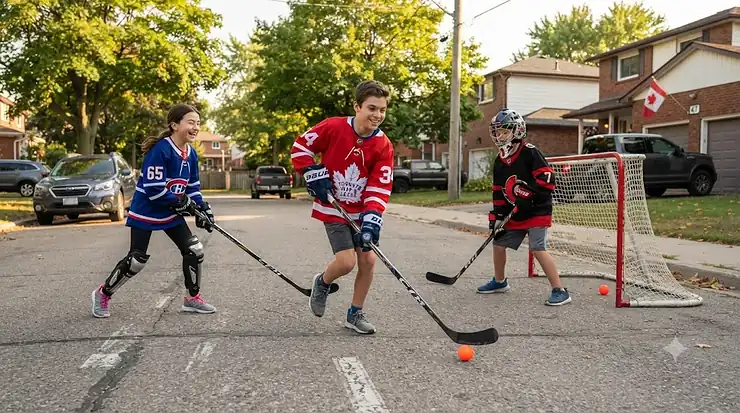
Every Canadian street has a version of the same story: a kid, a stick, a tennis-ball-orange blur, and someone yelling “car!” before play resumes three seconds later. That’s the pull of street hockey equipment — it turns a quiet cul-de-sac into a rink without a Zamboni in sight. But walk into a sporting goods aisle (or scroll an Amazon.ca results page) and the sheer volume of sticks, nets, balls, and training pads gets overwhelming fast, especially when half the marketing copy sounds identical.
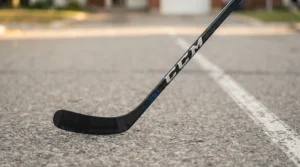
What is street hockey equipment? It’s the gear built specifically for asphalt, concrete, and driveway play — composite or wood-and-fiberglass sticks with abrasion-resistant blades, no-bounce balls or roller pucks, steel-frame nets, and off-ice training aids like shooting pads that simulate ice without the ice rink price tag. As Wikipedia’s overview of the sport explains, the game goes by several regional names — shinny, dek hockey, ball hockey, road hockey — but the equipment demands stay largely the same everywhere it’s played.
This guide breaks down seven real, currently available products across every price tier, explains what each spec actually means once you’re playing on pavement instead of a rink, and walks through the practical side most listings skip entirely — setup, maintenance, safety, and how to build a training habit that survives a Canadian winter. Whether you’re outfitting a driveway for the first time or replacing a stick that finally cracked after three seasons, here’s what’s worth your money and what to skip.
Quick Comparison Table
| Product | Type | Price Range (CAD) | Best For |
|---|---|---|---|
| Mylec MK5 Pro Stick | Composite street stick | Around C$30-45 | Casual, budget-first players |
| A&R Sports Street Stick | Wood two-piece stick | Around C$20-30 | Beginners who want a replaceable blade |
| Franklin Ambush Junior Stick | Wood/fiberglass one-piece | Around C$25-35 | Kids and youth starter sets |
| Sherwood T60 ABS Stick | Composite (ice-style geometry) | C$45-60 range | Ice players who want a familiar street feel |
| Franklin NHL Mini Hockey Set | Mini sticks + balls | Around C$15-25 | Knee hockey and indoor practice |
| Winnwell Shooting Pad | HDPE training pad | C$50-70 range | Year-round shooting and stickhandling drills |
| Mylec Steel Street Goal | Steel-frame net | C$90-130 range | Serious driveway setups and small leagues |
Looking at the spread above, the pattern is straightforward: sticks cluster in the affordable C$20-60 zone regardless of material, while the bigger investment lives in the net and the training pad, not the stick itself. If you’re outfitting more than one kid, the mini hockey set and a shared shooting pad stretch further per dollar than buying multiple full-size sticks. Budget-conscious families should note that the Mylec MK5 Pro and the A&R wood stick solve the same problem — durability on rough pavement — through completely different construction, so the “cheaper” option isn’t automatically the worse one.
💬 Just one click — help others make better buying decisions too!😊
Top 7 Street Hockey Equipment Picks: Expert Analysis
1. Mylec MK5 Pro Street Hockey Stick — best all-around budget workhorse
Mylec has been making outdoor hockey gear since the early 1970s, and the MK5 Pro is the closest thing the category has to a default choice.
The one-piece ABS composite construction weighs in noticeably heavier than a true ice stick — a real-world consequence of building a shaft tough enough to survive asphalt rather than optimized purely for weight. What that extra mass buys you is durability: the blade insert shrugs off curb strikes and slap shots on concrete that would splinter a cheap wood stick within weeks. Based on the spec comparison with lighter composite options, this stick trades a bit of shot speed for a stick that will realistically survive an entire summer of daily driveway hockey.
Reviewers consistently note that the MK5 Pro holds its flex profile well over time compared to bargain no-name sticks, though a handful mention the blade curve is fairly neutral out of the box, which better suits all-around players than pure snipers. It’s available in senior and junior lengths and both left and right curves.
Pros:
- ✅ Durable ABS blade built for rough pavement play
- ✅ Widely available in multiple lengths and curves
- ✅ Long track record as a reliable outdoor stick
Cons:
- ❌ Heavier than premium carbon composite alternatives
- ❌ Blade curve is generic, not tailored to specific shot types
At around C$30-45, the MK5 Pro delivers the best cost-per-season ratio in this lineup for anyone who plays several times a week and doesn’t want to babysit their equipment.
2. A&R Sports Street Hockey Stick — best replaceable-blade value pick
The A&R stick takes a genuinely different engineering approach than most of this list: a traditional two-piece design with a 100% solid wood shaft and a vented plastic blade attached by two screws.
What most buyers overlook about this construction is the practical upside of the screw-mount blade — when the blade eventually wears through from asphalt friction (and it will, eventually, on any stick), you replace just the blade instead of the entire shaft. The vented design is a small but clever detail; it sheds a bit of weight and lets the blade flex slightly differently than a solid slab of plastic, which some players feel improves puck feel on hard surfaces.
Here’s what to weigh: solid wood doesn’t flex the way composite does, so shot power depends more on technique than on stored energy in the shaft. Aggregated reviewer sentiment on this stick’s construction leans positive for durability, with the wood shaft standing up well to years of casual use, though a few buyers note the stock blade insert wears faster than the shaft itself, reinforcing why the replaceable design matters.
Pros:
- ✅ Replaceable blade extends the stick’s usable life
- ✅ Solid wood shaft resists cracking from cold-weather play
- ✅ Simple, repairable two-piece construction
Cons:
- ❌ Less shot power than composite alternatives
- ❌ Blade needs periodic screw retightening
Priced in the C$20-30 range, it’s arguably the smartest long-game value on this list, especially for families who’d rather buy replacement blades than a whole new stick every season.
3. Franklin Sports NHL Ambush Junior Street Hockey Stick — best starter stick for kids
Franklin Sports is the officially licensed street hockey partner of the NHL, and the Ambush line is built specifically for younger players easing into the sport.
The wood-and-fiberglass shaft with a one-piece ABS blade splits the difference between a full composite stick and a basic wood one: it’s lighter in hand than solid wood but noticeably tougher against pavement abrasion than a pure plastic toy stick. On paper this means a stick that can survive a season of enthusiastic slap shots against a garage door without the shaft snapping — a common failure point with cheaper junior sticks. It comes in 46″, 52″, and 58″ lengths, which matters more than most buyers realize, since an oversized stick actively hurts a young player’s shooting mechanics.
Reviewers consistently report that Franklin’s junior sticks hold up better than expected given the price point, with the main complaint being that the factory blade curve runs shallow for kids who’ve already developed a preference from ice hockey.
Pros:
- ✅ Sized specifically for youth and junior players
- ✅ Fiberglass shaft resists snapping on hard impacts
- ✅ NHL-licensed branding kids actually want to use
Cons:
- ❌ Shallow stock blade curve for advanced young players
- ❌ Not built for adult-level shot power
At around C$25-35, this is the stick to buy first for a kid who’s still figuring out if street hockey is going to be a daily habit or a summer phase.
4. Sherwood T60 ABS Street Hockey Stick — best for ice players who want a familiar feel
The Sherwood T60 exists for a specific type of player: someone who’s used to an ice hockey shaft profile and doesn’t want street hockey to feel like a completely different sport in their hands.
The composite construction and shaft geometry closely mirror Sherwood’s ice hockey lineup, which means the grip position, kick point, and general flex behaviour translate directly from rink to driveway. What most buyers overlook here is that this consistency has real coaching value — a player working on a specific shot mechanic on the ice can practice the identical motion in the driveway without relearning stick feel. Based on the spec comparison with other sticks on this list, the T60 sits in the lightest bracket for a non-carbon composite, which noticeably speeds up release time.
The trade-off, and it’s worth being honest about it: the blade isn’t purpose-built for rough outdoor surfaces the way a dedicated street blade is, so reviewers note faster blade wear on coarse asphalt or unfinished concrete compared to purpose-built street sticks. On a smooth driveway, sport court, or garage floor, that concern mostly disappears.
Pros:
- ✅ Shaft feel matches ice hockey sticks closely
- ✅ Lighter than most non-carbon composite options
- ✅ Fast release thanks to lower overall weight
Cons:
- ❌ Blade wears faster on rough asphalt or gravel-flecked concrete
- ❌ Premium price for a non-purpose-built street blade
In the C$45-60 range, the T60 earns its price tag for smooth-surface players but isn’t the top pick for daily play on chewed-up pavement.
5. Franklin Sports NHL Mini Hockey Stick & Ball Set — best NHL mini sticks Canada pick for indoor play
When the driveway is buried under snow or it’s simply too cold to be outside, this is where NHL mini sticks Canada searches usually lead — and Franklin’s set is the most widely stocked option at Canadian retailers.
The set includes two mini player sticks (one left, one right) built from premium ABS plastic, plus two soft EVA foam balls, and the blade is intentionally bendable so a kid can shape their own curve rather than being stuck with a factory setting. What this means in practice: knee hockey and basement games get real stickhandling practice value, not just noise-making. Reviewers consistently mention that these mini sticks hold up surprisingly well against hardwood floors and carpet, though the flexible blade does eventually lose some of its snap after heavy daily use.
The foam balls are the other half of the equation — soft enough that a mishit doesn’t put a dent in the drywall, but with enough weight to actually roll and bank off a wall the way a real puck would. It’s officially NHL-licensed, and Franklin also sells full team-branded versions if brand loyalty matters to your household.
Pros:
- ✅ Bendable blade lets kids customize their curve
- ✅ Foam balls are safe for indoor, small-space use
- ✅ Genuinely useful for stickhandling practice, not just novelty
Cons:
- ❌ Not durable enough for outdoor pavement use
- ❌ Blade flex softens after months of heavy daily play
At around C$15-25, this is the cheapest entry point on the list and arguably the best value for extending street hockey equipment into the off-season.
6. Winnwell Ice Hockey Shooting Pad with Handle — best hockey shooting pad for protecting sticks and building shot accuracy
If there’s one accessory that transforms a driveway setup from “kids messing around” to genuine training, it’s a proper hockey shooting pad, and Winnwell’s 40″ x 24″ version is a well-built entry point.
Built from 100% high-density polyethylene (HDPE), the surface is engineered to replicate the low-friction glide of real ice, so a puck or ball moves the way it would on a rink rather than dragging or catching on rough concrete. The practical benefit reviewers and coaches point to most often isn’t actually the puck glide — it’s stick protection. Composite and even wood blades wear down dramatically faster dragging across bare asphalt than they do on an HDPE pad, so the pad effectively extends the life of every stick on this list. The built-in carry handle is a small design choice that matters more than it sounds, since it means the pad actually gets used regularly instead of sitting folded in a garage corner.
Aggregated user feedback on HDPE shooting pads in this size class is consistently positive for passing and one-timer practice, with the most common critique being that 40″ x 24″ feels tight for full slap-shot wind-ups with older or taller players, who may eventually want to size up to a roll-up pad.
Pros:
- ✅ Genuine ice-like glide for realistic puck and ball feel
- ✅ Protects stick blades from rough asphalt wear
- ✅ Built-in handle makes it easy to store and transport
Cons:
- ❌ Compact size limits full wind-up shots for bigger players
- ❌ Surface can discolour if left outdoors long-term
Priced in the C$50-70 range, this is less a toy and more a training investment — the kind of purchase that pays for itself in stick longevity within a single season.
7. Mylec All-Purpose Steel Street Hockey Goal — best driveway hockey net for serious daily play
For anyone who’s outgrown the flimsy PVC net that blows over in a stiff breeze, the Mylec Steel Goal is the upgrade, and it’s the answer of choice for most driveway hockey net searches from families who play daily.
Measuring 52″ x 43″ x 28″ and built around 1¼-inch steel tubing, it’s noticeably heavier and more stable than plastic-frame alternatives — 17 pounds of frame that stays put through real shots instead of sliding across the driveway. The sleeve netting system is a smart practical upgrade over traditional net clips: the mesh slides directly over the frame tubing rather than relying on small plastic hooks that snap in cold weather, which is exactly the kind of failure point that ruins a Canadian winter setup. It also includes a pro-style top shelf, giving the net a more authentic look and feel for players trying to replicate real scoring angles.
What most buyers overlook about steel-frame nets generally is long-term value rather than initial cost: a plastic net typically needs replacing every season or two once the frame cracks in the cold, while a properly stored steel frame can realistically last several years. Reviewers frequently mention the tool-free assembly as a highlight, since it can be set up and torn down in a few minutes without a manual.
Pros:
- ✅ Steel tubing frame resists tipping and warping
- ✅ Sleeve netting avoids brittle plastic clip failures
- ✅ No-tool assembly for quick setup and teardown
Cons:
- ❌ Heavier and less portable than PVC nets
- ❌ Steel can rust if left outside uncovered through winter
In the C$90-130 range, this net costs more upfront than a basic PVC goal, but it’s the one purchase on this list most likely to outlast the kids who are currently using it.
Practical Usage Guide: Setting Up Your Driveway for Street Hockey
Getting street hockey equipment out of the box is the easy part — setting it up so it actually survives daily use takes a bit more thought. Start with surface prep: sweep loose gravel and debris off the driveway or street before every session, since small stones are what actually chew through blades and ball surfaces, not the pavement itself. When positioning a steel-frame net like the Mylec goal, angle it slightly away from windows and parked vehicles; even a well-controlled shot can skip unpredictably off a rough seam in old asphalt.
In the first 30 days, the most common mistake is over-tightening or under-tightening blade screws on two-piece sticks like the A&R model — check them every few sessions, since vibration from shooting loosens screws faster than most players expect. For shooting pads, store them indoors or under cover between uses; UV exposure and freeze-thaw cycles are what actually degrade HDPE surfaces over a Canadian summer and winter, not the puck impacts.
A simple maintenance rhythm works well: inspect blades weekly for hairline cracks, rinse balls and pucks periodically to remove grit, and store steel nets with netting slack removed to prevent stretching. None of this takes more than ten minutes a week, but skipping it is exactly why so many nets and sticks die well before their time.
Real-World Scenarios: Matching Gear to How You Play
Consider three common setups. First, the after-school casual player — a kid who plays two or three times a week with neighbourhood friends on a quiet street. For this profile, the Mylec MK5 Pro stick paired with the Franklin mini hockey set for rainy days covers almost everything needed without overspending on gear that will be outgrown or lost within a season.
Second, the serious backyard trainer — someone aiming to improve specific skills, often alongside organized ice hockey. This player benefits most from the Winnwell shooting pad paired with a composite stick like the Sherwood T60, since the pad protects the higher-cost stick while letting shot mechanics carry over directly to the ice.
Third, the multi-kid household running daily pickup games in the driveway. Here, durability and stability matter more than individual stick performance — the Mylec steel goal anchors the setup, and A&R’s replaceable-blade sticks keep ongoing costs predictable since only blades need replacing, not entire sticks, as siblings cycle through gear.
Problem → Solution: Common Street Hockey Equipment Headaches
Blade cracking in cold weather: Composite and ABS blades get more brittle below freezing. Solution: warm sticks slightly before hard shooting sessions, or switch to a wood-shaft stick like the A&R model for winter play, since wood tolerates cold flex better than most plastics.
Net tipping over in wind or from hard shots: Lightweight PVC nets are the usual culprit. Solution: upgrade to a steel-frame net, or anchor a lighter net with sandbags at the base corners.
Balls disappearing into storm drains or neighbours’ yards: A near-universal driveway hockey problem. Solution: keep a stash of Mylec or Franklin no-bounce balls on hand rather than a single ball, and consider a low mesh backstop behind the net for busier streets.
Shooting pad sliding around during play: Common with lightweight HDPE pads on smooth concrete. Solution: use pads with textured undersides, or place them against a wall or net base to limit slide.
Sticks warping from being left outside: Sun and temperature swings warp shafts over a season. Solution: store sticks indoors between sessions rather than leaving them leaned against a garage wall outdoors.
How to Choose Street Hockey Equipment
- Match the surface to the stick material. Rough asphalt chews through blades faster than smooth concrete or sport court, so prioritize ABS composite or wood-and-fiberglass builds for driveways with texture.
- Size sticks to the player, not the budget option in stock. An oversized junior stick actively hurts shooting mechanics; check length against the player’s height rather than defaulting to “senior” sizing.
- Decide between replaceable-blade and one-piece construction early. If multiple kids will share gear, replaceable-blade sticks like the A&R model reduce long-term replacement costs significantly.
- Treat the net as an infrastructure purchase, not a toy. A steel-frame net costs more upfront but typically outlasts three or four seasons of a plastic equivalent.
- Add a shooting pad before assuming you need a better stick. Much of what feels like poor stick performance on rough pavement is actually surface friction that a pad eliminates.
- Buy balls and pucks in bulk, not single units. They get lost or damaged constantly; a multi-pack avoids mid-game interruptions.
- Factor in storage, not just play. Equipment that lives outdoors year-round degrades far faster than gear brought inside between sessions, regardless of brand or price.
✨ Don’t Miss These Exclusive Deals!
🔍 Take your driveway setup to the next level with these carefully selected picks. Click on any highlighted item to check current pricing and availability on amazon.ca. The right gear turns a few spare minutes into a full-on game — and memories your family will love for years! 🥅🏒
NHL Mini Sticks Canada: Bringing the Game Indoors
Searches for NHL mini sticks Canada spike every winter for a simple reason: driveway hockey doesn’t stop when it snows, it just moves inside. Mini hockey and knee hockey sets scratch the same competitive itch as full-size street hockey without the risk of a broken lamp — mostly. Franklin’s official NHL-licensed sets dominate this category in Canada because they’re stocked at major retailers and come team-branded, which matters when a household has strong opinions about the Leafs versus the Oilers.
The core value of mini sticks isn’t just entertainment — it’s genuine stickhandling repetition in a low-stakes environment. A bendable blade lets a young player experiment with curve without committing to (or damaging) a real stick, and playing on hardwood or carpet teaches puck control on a different friction surface than pavement, which turns out to be useful cross-training rather than a distraction from outdoor play.
Hockey Shooting Pad vs Bare Pavement: What Actually Changes
The gap between shooting on bare asphalt and shooting on a proper hockey shooting pad is bigger than most first-time buyers expect. On raw concrete, friction slows the puck or ball unevenly depending on surface wear, grit, and even ambient temperature — a shot that glides cleanly in the morning can drag noticeably by afternoon once the pavement heats up. An HDPE pad standardizes that variable entirely, which is exactly why serious training programs use them rather than relying on pavement.
| Factor | Bare Pavement | Hockey Shooting Pad |
|---|---|---|
| Puck/ball glide | Inconsistent, surface-dependent | Consistent, ice-like |
| Stick blade wear | Fast, especially on rough asphalt | Significantly slower |
| Weather sensitivity | High (heat, grit, moisture) | Low |
| Cost | Free (already have driveway) | C$50-70+ range |
| Portability | N/A | High — most models are liftable and storable |
The table makes the trade-off obvious: pavement costs nothing but degrades equipment and skill consistency simultaneously, while a shooting pad is a modest one-time cost that pays back through slower stick wear alone. For anyone doing more than casual weekend play, the pad isn’t a luxury — it’s the more economical choice once you account for how many replacement blades bare asphalt causes over a season.
Driveway Hockey Net Buying Guide
Picking a driveway hockey net comes down to three real decisions: frame material, size, and netting system. Steel-frame nets like the Mylec All-Purpose Goal win on durability and wind resistance but weigh more and need occasional rust checks if stored outdoors. PVC-frame nets, such as several of Franklin’s youth models, are lighter and easier for a kid to move solo, but the frame becomes brittle in sub-zero temperatures and typically cracks within a season or two of regular winter use.
Size matters more than most buyers expect: a 54″ youth net suits driveway pickup games well, while regulation 72″ nets (like Franklin’s HX Pro line) make sense mainly for households running organized dek hockey or serious shooter-vs-goalie training, since the extra net area meaningfully changes shot-placement practice. Netting systems have quietly improved — sleeve-style netting that slides directly over the frame tubing has largely replaced the small plastic clips that used to snap constantly in cold weather, so it’s worth checking which system a net uses before buying, regardless of brand.
Outdoor Hockey Practice: Building a Year-Round Training Habit
Consistent outdoor hockey practice is less about any single piece of gear and more about removing friction — literally and figuratively — from playing regularly. Health Canada’s physical activity guidance for children recommends at least one hour of moderate-to-vigorous activity daily for kids aged five to eleven, and driveway hockey is one of the easiest ways to hit that target without it feeling like a chore, since kids will happily play far longer than they’d tolerate a structured workout.
Year-round hockey training in Canada means adapting to the calendar rather than fighting it. Summer favours full-length sessions on the driveway with a shooting pad protecting sticks from hot, abrasive pavement. Shoulder seasons — spring and fall — are when a garage or basement setup with mini sticks bridges the gap on days too wet or cold for full outdoor play. Winter, somewhat counterintuitively, is often the best season for shooting-pad work specifically, since cold makes bare asphalt even harder on blades, making the pad’s protective role more valuable, not less.
The households that keep kids engaged in outdoor hockey practice long-term tend to do one simple thing: keep gear staged and ready rather than stored away after each use. A stick, ball, and net that live by the garage door get used ten times more often than the same gear packed into a bin.
Street Hockey Equipment vs Ice Hockey Gear
The comparison isn’t just about price, though that’s the most obvious difference — street hockey equipment typically costs a fraction of full ice hockey gear since it skips skates, protective padding, and ice-specific stick engineering entirely.
| Factor | Street Hockey Equipment | Ice Hockey Gear |
|---|---|---|
| Typical stick cost (CAD) | C$20-60 range | C$80-300+ range |
| Surface | Asphalt, concrete, driveway | Ice rink |
| Blade construction | Reinforced ABS or wood/fiberglass | Precision composite, ice-specific curve |
| Protective gear needed | Minimal to none | Full pads, skates, helmet |
| Skill transfer to ice | Partial — stickhandling, shooting | Full |
The practical takeaway from that table: street hockey equipment isn’t a lesser version of ice hockey gear, it’s a different tool built for a different surface, and the skill transfer runs mostly one direction. Stickhandling and shot mechanics practiced in the driveway genuinely carry over to the ice, but ice-specific skating and positional play obviously don’t transfer back. For families managing hockey costs, leaning on street hockey equipment for off-season repetition is one of the more effective ways to keep skills sharp without paying rink-level prices year-round.
Common Mistakes When Buying Street Hockey Equipment
The single biggest mistake is buying a stick based on senior/junior sizing labels alone rather than actual height, which leads to shooting mechanics that never quite develop correctly. A close second is assuming all “outdoor” balls perform the same in every temperature — Mylec and similar brands actually make different ball densities for different temperature ranges, and using a warm-weather ball in near-freezing conditions makes it bounce unpredictably.
Buyers also frequently underestimate net stability, assuming a lightweight PVC frame will be fine, only to have it tip repeatedly during real play. And it’s common to skip a shooting pad entirely as an “extra,” not realizing it’s often the single purchase that most extends the life of every stick already owned. Finally, many buyers replace an entire stick when only the blade has worn out — checking whether a stick uses a replaceable-blade system, like the A&R model, before assuming a full replacement is necessary can save real money over a season.
Long-Term Cost & Maintenance
| Item | Typical Lifespan | Approx. Replacement Cost (CAD) |
|---|---|---|
| Composite/ABS stick | 1-2 seasons of regular play | C$25-45 range |
| Wood-shaft stick (replaceable blade) | 2-4 seasons (blade replaced separately) | C$8-15 per blade |
| PVC-frame net | 1-2 seasons outdoors | C$40-70 range |
| Steel-frame net | 3-6+ seasons with care | One-time C$90-130 |
| Shooting pad | 3-5+ seasons | One-time C$50-70 |
Looked at over a three-year window, the “cheaper” upfront choices often cost more in total: two or three replacement PVC nets can exceed the price of one steel-frame goal, and repeatedly replacing full composite sticks costs more than buying a replaceable-blade wood stick and swapping blades as needed. The genuine long-term value play in street hockey equipment is investing more upfront in the items that take the most physical abuse — the net and the training surface — while treating sticks as a more frequent, lower-cost consumable.
Neighbourhood Sports Play: Rules, Safety and Being a Good Neighbour
Street hockey has a complicated relationship with municipal bylaws in Canada, and it’s worth knowing where things stand before setting up a permanent net on a public road. CBC News reported on Hamilton’s decision to allow ball hockey again on local roads with speed limits of 40 km/h or less, reversing a decades-old ban on “games of sport” on public roadways. Similar reversals have happened in Toronto and other municipalities, but the details — allowed hours, speed-limit thresholds, and equipment-removal expectations when vehicles approach — vary by city, so it’s worth a quick check of local bylaws before treating a public street as a permanent rink.
Basic safety habits matter more than any bylaw. Always designate a “car” caller during play, keep nets and equipment clear of the road surface when not actively playing, and avoid using pucks on streets with any regular traffic — sticking to no-bounce balls keeps things safer and quieter for neighbours. For driveway-only setups, none of this is usually an issue, but for anyone playing on an actual roadway, a five-minute bylaw check can save a fine and a lot of neighbourhood friction.
Frequently Asked Questions
❓ What's the difference between a street hockey stick and a regular hockey stick?
❓ Can I use a real hockey puck for street hockey?
❓ How long does a street hockey net actually last?
❓ Is a hockey shooting pad worth it for casual players?
❓ What size street hockey stick should a kid use?
Conclusion
Street hockey equipment doesn’t need to be complicated, but it does reward a bit of intentional buying. A durable stick matched to the actual playing surface, a net that won’t tip over after the first hard shot, and a shooting pad that protects both will outlast a pile of impulse-bought gear picked mostly on price. The seven picks here cover the realistic range of what Canadian driveways and streets need — from a first mini hockey set for snow days to a steel-frame net that survives years of daily pickup games.
The bigger picture matters too: outdoor play, including street hockey, is one of the simplest ways to build a consistent activity habit that sticks through the seasons rather than fading after a few weeks. As Wikipedia’s history of ice hockey in Canada documents, the sport is widely considered the country’s national pastime, and its driveway cousin has quietly kept that culture alive on streets where the nearest rink is a car ride away. Gear it up properly, check your local bylaws if you’re playing on an actual road, and the rest tends to take care of itself — kids show up for a good game far more reliably than they show up for a scheduled workout.
Recommended for You
- beginner hockey equipment kids: 7 Picks Canadian Parents Trust (2026)
- Kids Sports Equipment: 7 Top Picks Parents Love in 2026
- 7 Best Family Board Games for Canadian Game Nights (2026)
Disclaimer: This article contains affiliate links. As an Amazon Associate, I earn from qualifying purchases. If you purchase products through these links, we may earn a small commission at no additional cost to you.
✨ Found this helpful? Share it with your friends! 💬🤗
