
In This Article
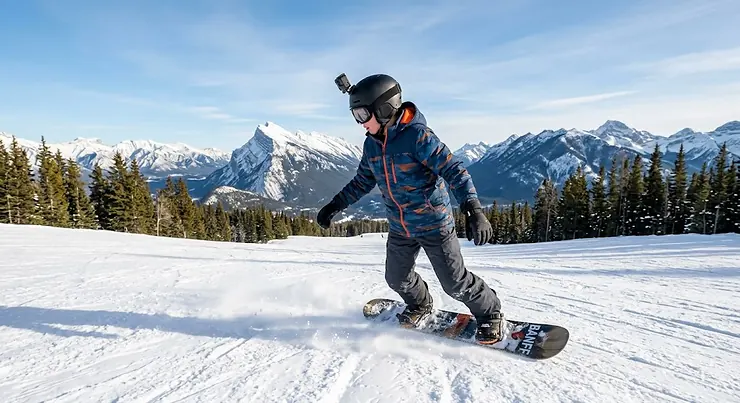
Somewhere between the trampoline and the skate park, most kids decide their phone isn’t cutting it anymore. It’s too precious to strap to a helmet, too slippery to hand over at the pool, and honestly, too boring for anyone under fifteen. That’s the gap an action camera youth actually wants to use is built to fill: something rugged enough to survive a wipeout, simple enough to run without a manual, and fun enough that it doesn’t just sit in a drawer by March. This guide breaks down seven real, currently available models spanning budget to premium, with honest analysis of what each one gets right (and where it falls short) so you’re not gambling C$300 on marketing copy.

We’re going to get specific. Every product here has real specs, verified against manufacturer pages and hands-on reviews, and every recommendation is tied to an actual use case — a nine-year-old’s first pool camera, a fourteen-year-old’s ski-hill vlogging setup, a budget-conscious parent who just wants proof the backyard skateboard ramp wasn’t a terrible idea. We’ll also cover setup, safety, and the less obvious stuff, like why handing a kid an always-recording camera raises different questions than handing them a phone. There’s a reason Canadian public health guidance nudges families toward active, hands-on screen use over passive scrolling — and an action camera, used well, sits firmly on the better side of that line.
Quick Comparison Table
| Product | Best For | Price Range (CAD) | Standout Feature |
|---|---|---|---|
| GoPro HERO13 Black | Serious teen athletes | C$540-C$600 | 5.3K60 video, modular HB-Series lenses |
| DJI Osmo Action 5 Pro | All-day filming, low light | C$440-C$610 | 4-hour battery, 13.5-stop dynamic range |
| Insta360 GO 3S | Hands-free, younger kids | C$540-C$590 | Thumb-sized, dedicated Kids Mode |
| GoPro HERO12 Black | Value-minded families | C$370-C$500 | Flagship-grade footage at a discounted price |
| AKASO Brave 8 Lite | Budget 4K60 shooters | C$260-C$300 | 4K60fps and 48MP stills for the price |
| AKASO Brave 4 | Tween selfie/vlog starters | C$150-C$200 | Dual front-and-rear color screens |
| WOLFANG GA200 | First camera, testing the waters | C$130-C$160 | Cheapest genuine dual-screen 4K option |
Looking at the spread, there’s a clean logic to it: the two GoPros and the DJI Osmo Action 5 Pro sit at the top because their sensors, stabilization, and battery life genuinely justify the price for a kid who’s serious about a sport. The AKASO Brave 8 Lite and WOLFANG GA200 exist for exactly the opposite reason — they let a family find out whether a kid will actually use an action camera before committing real money. The Insta360 GO 3S is the outlier, trading raw specs for a form factor so small and simple that younger children can genuinely operate it unsupervised.
💬 Just one click — help others make better buying decisions too!😊
Top 7 Action Cameras for Youth: Expert Analysis
Coverage here spans every price tier and includes options built specifically with dual screens, kid-safe modes, and one-button operation in mind — because an action camera youth won’t touch after week one is money wasted, no matter how good the sensor is.
1. GoPro HERO13 Black — best-in-class stabilization for serious young athletes
The HERO13 Black leads this list because it’s simply the most capable camera here, and for a teen who’s genuinely committed to biking, skiing, or skating, that capability shows up in the footage, not just the spec sheet. It shoots 5.3K video at up to 60fps and 27MP stills, backed by a 1,900mAh Enduro battery that GoPro rates for roughly 1.5 hours of continuous 5.3K recording or up to 2.5 hours at 1080p. HyperSmooth 6.0 with AutoBoost is the headline feature worth understanding: it’s digital stabilization that crops less of the frame than older versions, so footage from a bumpy trail run stays smooth without that telltale “zoomed-in” look cheaper stabilization produces. Based on the spec comparison with last year’s model, the real upgrade for young creators isn’t resolution — it’s the new HB-Series lens mod system, which lets a kid experiment with an ultra-wide or macro lens without buying a second camera body. It’s built for teens already invested in a sport and ready to treat filming as part of the hobby, not a side project. Reviewers consistently note that the touchscreen is responsive enough for a nine-year-old to navigate without help, though the premium price tag makes more sense once a kid has proven they’ll actually use the camera regularly.
Pros:
- ✅ 5.3K60 video with class-leading stabilization
- ✅ Modular HB-Series lenses add versatility over time
- ✅ Waterproof to 33ft without a case, tough build
Cons:
- ❌ Priciest camera on this list by a clear margin
- ❌ Battery drains fast at top resolution settings
Expect to pay in the C$540-C$600 range depending on the accessory bundle. For a kid who has already outgrown a starter camera, the value case is straightforward: this is the last camera they’ll need for years.
2. DJI Osmo Action 5 Pro — best battery life for all-day adventures
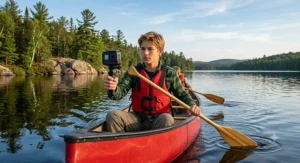
Where the GoPro wins on peak footage quality, the Osmo Action 5 Pro wins on stamina, and for a kid out at the lake or the hill from morning to dinner, that matters more than an extra few megapixels. DJI’s 1/1.3-inch sensor delivers a genuinely wide 13.5 stops of dynamic range — about 1.5 stops better than the previous Osmo Action 4 — which in practice means footage shot against bright snow or harsh midday sun holds detail in both the highlights and shadows instead of blowing out to white. The Standard Combo includes DJI’s Extreme Battery Plus, and the company’s own testing claims up to four hours of total operating time across battery swaps, which is a genuine standout for a kid who forgets to charge things. What most buyers overlook about this model is the dual OLED touchscreen setup: a 2.5-inch rear display and a 1.46-inch front screen mean a young vlogger can frame a selfie shot without guessing, something plenty of single-screen cameras still fumble. It’s a strong pick for the family that does a lot of multi-hour outings — hiking, ski days, long bike rides — where charging mid-session isn’t realistic.
Pros:
- ✅ Roughly 4 hours of total battery life claimed by DJI
- ✅ 13.5-stop dynamic range handles bright, high-contrast scenes well
- ✅ Dual front-and-rear OLED touchscreens
Cons:
- ❌ SuperNight low-light mode gets noisy in real-world tests
- ❌ Adventure Combo accessories add real cost quickly
Prices land around C$440 for the Standard Combo up to roughly C$610 for the Adventure Combo, though DJI’s direct-store pricing shifts often, so check current price before buying. Given the battery advantage alone, this is the camera we’d point toward for a kid whose outings regularly run long.
3. Insta360 GO 3S — smallest hands-free pick with a genuine Kids Mode
This is the camera to consider when the goal isn’t cinematic footage — it’s getting a camera into a kid’s hands (or onto their shirt) without the bulk and buttons of a traditional action cam getting in the way. At just 39 grams, the GO 3S clips to a magnet pendant or shirt collar and disappears, which reviewers note is exactly why it ends up being the camera families actually use consistently, rather than the one that stays in a drawer. It shoots true 4K video (double the resolution of the previous GO 3), is waterproof to 33ft on its own, and pairs with a companion Action Pod that doubles as a touchscreen remote and adds significant runtime — DJI’s rival tops out on paper specs, but Insta360’s own combo shooting time (camera plus pod) stretches to roughly 140 minutes. The feature that actually earns this camera a spot on a youth-focused list is Kids Mode: enabling it locks out all button operations except a long-press power toggle, silences prompt sounds, and dims the status lights, so a curious eight-year-old can’t accidentally change settings mid-recording. Here’s what to weigh: this isn’t the camera for a teen chasing 5.3K ski footage, but for younger kids or families prioritizing hands-free simplicity, it’s hard to beat.
Pros:
- ✅ Tiny 39g magnetic body kids barely notice wearing
- ✅ Dedicated Kids Mode locks out accidental settings changes
- ✅ True 4K video, waterproof to 33ft without a case
Cons:
- ❌ 30fps cap at 4K limits fast-action smoothness
- ❌ Action Pod accessory needed for full functionality
Pricing runs roughly C$550 for the 64GB version up to C$590 for 128GB. For families with kids under ten, the Kids Mode alone can justify the premium over cheaper alternatives.
4. GoPro HERO12 Black — flagship power at a genuinely discounted price
Reviewers consistently point out the same thing about the HERO12 Black in 2026: it’s a camera that was a class leader not long ago and hasn’t actually gotten worse, it’s just gotten cheaper as GoPro’s newer models pushed it down the lineup. It still shoots 5.3K video with HDR support for both photos and video, delivers 27MP stills, and carries the same HyperSmooth stabilization pedigree that earned GoPro an Emmy for in-camera stabilization. On paper this means a family gets flagship-tier footage quality without paying flagship-tier prices — the trade-off is mainly in newer conveniences like the HERO13’s HB-Series lens compatibility and its bigger Enduro battery, neither of which matters much to a kid who just wants smooth footage of their bike jumps. Based on the spec comparison, the HERO12 Black is arguably the shrewdest buy on this entire list for a parent who wants genuinely good image quality without paying for this year’s badge. It’s a strong match for a tween who’s shown real interest in filming but hasn’t yet earned the “buy the newest flagship” argument.
Pros:
- ✅ 5.3K HDR video at a meaningfully lower price than HERO13
- ✅ Same HyperSmooth stabilization lineage GoPro is known for
- ✅ Wide compatible accessory and mount ecosystem
Cons:
- ❌ Lacks HB-Series lens mod compatibility of the HERO13
- ❌ Smaller battery than the newer Enduro pack
Expect a price somewhere in the C$370-C$500 range depending on sales and bundle. Given how close the footage quality is to the newer flagship, this is where we’d tell most families to stop scrolling and just buy.
5. AKASO Brave 8 Lite — budget 4K60 without the flagship price tag
The Brave 8 Lite is the camera that makes “budget action camera” stop sounding like a compromise. It uses an Ambarella chip paired with a 7-element lens to shoot genuine 4K at up to 60fps and 48MP stills, numbers that would have been premium-tier specs just a few years ago. What most buyers overlook about budget cameras is that stabilization, not resolution, is usually where corners get cut — but the Brave 8 Lite’s two-in-one SuperSmooth system, which combines onboard anti-shake hardware with app-based auto-smoothing, produces footage reviewers describe as watchably smooth even on bumpy mountain bike trails. It’s waterproof to 33ft without a case at all, which is genuinely convenient for a kid who doesn’t want to fuss with a housing every time they head to the pool. Reviewers consistently note real-world quirks too — exposure can wobble in tricky lighting, and the companion app isn’t as polished as GoPro’s — but for the price, those are reasonable trade-offs. This is the camera for a family testing whether a kid will actually stick with filming before spending flagship money.
Pros:
- ✅ Real 4K60fps video and 48MP stills at a budget price
- ✅ Waterproof to 33ft without needing a separate case
- ✅ Includes two batteries and a remote in the box
Cons:
- ❌ Exposure can lag during fast lighting changes
- ❌ Companion app trails GoPro and DJI in polish
Pricing sits around C$260-C$300, making it one of the strongest value picks here. If a kid has already used a phone to film for a season and wants an upgrade, this is a sensible next step.

6. AKASO Brave 4 — dual-screen selfie and vlog starter for tweens
Tweens tend to care about one thing a lot of action cameras ignore: seeing themselves while they film. The Brave 4’s dual-color-screen setup — a small front display plus a 2-inch rear touchscreen — solves that directly, and reviewers single it out as the standout feature that makes this camera genuinely usable for selfie-style content rather than just point-and-shoot action clips. It records 4K at 30fps with 20MP stills, built around electronic image stabilization with a 6-axis gyroscope that keeps footage steady through the kind of shaky, excited hand movements a ten-year-old naturally makes. Waterproof to 131ft with the included case, it’s genuinely capable for pool days and beach trips, and it ships with two 1,050mAh batteries so a dead battery mid-afternoon isn’t a instant trip-ender. Here’s what to weigh: the fixed 30fps ceiling means fast action (think skateboard tricks) won’t look as fluid as it would on a 60fps camera, but for the vlogging-style use case this camera is built around, that’s rarely the deciding factor. It’s a strong fit for a tween more interested in narrating their day than capturing extreme sports.
Pros:
- ✅ Dual front-and-rear color screens for easy selfies
- ✅ Waterproof to 131ft with the included case
- ✅ Ships with two batteries for extended outings
Cons:
- ❌ Capped at 4K30fps, less smooth for fast action
- ❌ EIS noticeably softer footage in low light
Price generally falls in the C$150-C$200 range. For a tween whose interest is more “talk to the camera” than “capture the jump,” this beats pricier options built around raw action footage.
7. WOLFANG GA200 — cheapest genuine way to test the waters
Every family deciding whether a kid will actually use an action camera needs a low-risk starting point, and the GA200 is built for exactly that. It shoots 4K at 30fps and 2.7K at 60fps with 24MP stills, comes with a dual-screen design (front color screen, 2-inch rear touchscreen), and includes a waterproof case rated to 40 meters — specs that, on paper, aren’t far off cameras costing three times as much. The spec sheet won’t tell you this, but user reports suggest the honest ceiling here: image quality is noticeably softer than AKASO or GoPro in mixed lighting, and the two included 1,050mAh batteries deliver a modest 90 minutes of recording each. That’s a fair trade for a camera that lets a family find out, for well under C$200, whether their eight-year-old will treat an action camera as a beloved gadget or a novelty that gets left in a backpack. It comes bundled generously — two batteries, a charger, remote, and mounting accessories — which matters when a first-time buyer doesn’t yet own any of that gear.
Pros:
- ✅ Dual screens and 40m waterproof case at an entry price
- ✅ Generous accessory bundle for first-time buyers
- ✅ Simple enough for younger kids to operate solo
Cons:
- ❌ Image quality softer than pricier competitors
- ❌ Modest 90-minute battery life per charge
Expect to pay under C$150-C$160 for the full kit. It’s not the camera a serious young athlete keeps for years, but as a genuine first action camera youth can learn on without real financial risk, it does its job.
Setting Up a Kid’s First Action Camera: A Practical Guide
Getting the hardware right is only half the job — the first thirty days determine whether a camera becomes part of a kid’s routine or ends up in a drawer. Start with the memory card before anything else: 4K footage eats storage fast, and a slow card is the single most common cause of dropped frames or a camera that “freezes.” Look for a card rated U3 or V30 at minimum, in a capacity of at least 64GB, and format it in-camera rather than on a computer to avoid compatibility hiccups.
Next, walk through mounting together rather than handing over a pile of clips. Helmet mounts, chest harnesses, and handlebar clamps all distribute stress differently, and a poorly seated mount is the top reason kids lose footage — or worse, lose the camera entirely — on the first real outing. Test the mount at low speed before trusting it on a hill or a skate ramp.
Battery habits matter more with kids than adults, mostly because a dead battery mid-adventure is the fastest way to sour a kid on the whole hobby. Build a simple routine: charge the night before, carry a spare if the camera supports it, and turn off the screen when not actively framing a shot, since displays are consistently the biggest battery drain across every model on this list.
The most common first-30-days mistake is over-recording — filming everything in long, unedited clips that never get watched, let alone shared. Encourage short, intentional clips instead, and consider a weekly “watch party” where the family reviews and picks favorites together. It keeps the camera feeling like a creative tool rather than a chore, and it gives parents a natural, low-pressure way to see what their kid is actually filming.
Real-World Scenarios: Matching the Camera to the Kid
The pool-and-playground eight-year-old. For a younger child whose “adventures” are mostly backyard and pool-based, simplicity beats specs every time. The Insta360 GO 3S with Kids Mode enabled, or the budget-friendly WOLFANG GA200, both make sense here — neither demands much technical understanding, and both survive splashes without drama. Budget for this age group should stay modest; kids this age lose and damage gear at a higher rate, and a C$150 camera lost in a pool bag stings far less than a C$550 one.
The mountain-biking or skate-park thirteen-year-old. A kid who’s genuinely serious about a sport benefits from real stabilization and higher frame rates, since that’s what separates watchable footage from a shaky mess. The AKASO Brave 8 Lite is the sensible entry point; the GoPro HERO12 Black or HERO13 Black are the upgrade path once a parent trusts the kid to actually use the gear regularly and treat it with care.
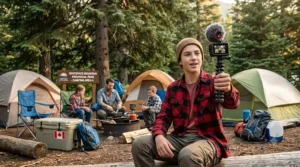
The camp-and-travel fifteen-year-old who wants to vlog. Older teens documenting trips, ski weekends, or hangouts with friends care about battery life and selfie framing more than raw resolution. The DJI Osmo Action 5 Pro‘s all-day battery and dual screens, or the dual-screen-focused AKASO Brave 4 on a tighter budget, both suit this profile better than a camera optimized purely for extreme-sport stabilization.
Building the Complete Youth Tech Kit: Beyond the Action Camera
An action camera rarely travels alone anymore — it’s usually one piece of a bigger bundle of gear a kid carries around, and getting the surrounding pieces right matters almost as much as the camera itself.
Portable Charger Kids Won’t Lose or Forget
A dead action camera is a wasted afternoon, and the fix is a portable charger kids can actually keep track of. Look for a compact 10,000mAh power bank with a built-in cable rather than a separate one — separate cables are the first thing that vanishes into a backpack void. A rugged, brightly colored casing helps too; it’s easier for a kid to spot in a bag and less likely to get left behind at a friend’s house. For camping trips or full-day outings, a slightly larger 20,000mAh bank can top off both an action camera and a phone, which matters when everyone in the group is filming.
Bluetooth Speaker Kids Can Bring Along
Once footage is captured, plenty of kids want to review it together on the spot, and a rugged, waterproof bluetooth speaker kids can toss in a bag turns a solo filming session into a group hangout. Prioritize an IP67-rated speaker with a carabiner clip — it survives a drop onto pavement and clips straight onto a backpack, which is a genuinely bigger factor in whether it gets used than sound quality alone.
Gaming Headset Tweens Actually Want
For tweens whose interest extends from filming into editing and gaming, a comfortable gaming headset tweens will keep wearing session after session tends to matter more than premium audio specs. Adjustable, lightweight headbands beat heavy over-ear designs for smaller heads, and a flip-to-mute mic is a practical feature for family households where quiet hours matter. This overlap between filming, editing, and gaming is a big part of how mobile technology has quietly merged into one connected hobby for a lot of kids — the camera, the headset, and the editing app on a tablet are really one workflow now, not three separate interests.
How to Choose an Action Camera Youth Will Actually Use
What is an action camera? An action camera is a small, rugged, typically waterproof camera designed for hands-free or mounted recording during physical activity, prioritizing durability and wide-angle stabilized footage over the interchangeable-lens flexibility of a traditional camera. Reviewers consistently frame the category as sitting between a smartphone and a dedicated camcorder, built for conditions neither handles well. For a deeper technical breakdown of the category’s history and design conventions, Wikipedia’s overview is a solid starting point.
Picking the right one for a kid comes down to a short list of practical criteria, not marketing claims:
- Match durability to the actual activity. A pool-and-playground kid doesn’t need 60m waterproofing; a serious skier or surfer does. Buying beyond the real use case just adds cost without benefit.
- Prioritize simplicity over spec sheets for younger kids. One-button recording and a locked-down mode (like Insta360’s Kids Mode) prevent more frustration than an extra few megapixels ever will.
- Check battery life against real outing length. A camera rated for 90 minutes is fine for a backyard afternoon; it’s a problem on a full ski day.
- Consider screen setup for vloggers vs. action shooters. Dual front-and-rear screens matter enormously for selfie-style content and barely at all for pure action footage.
- Budget for accessories, not just the body. Mounts, extra batteries, and memory cards routinely add C$40-C$80 to the real cost of ownership.
- Weigh stabilization over resolution. A 4K60 camera with weak stabilization produces worse-looking footage than a 1080p camera with strong stabilization, especially on bumpy activities.
- Read aggregated review sentiment, not just the star rating. A 4.5-star average can still hide a recurring complaint (app crashes, exposure lag) worth knowing before buying.
Common Mistakes When Buying an Action Camera for Youth
The single most common mistake is buying the most expensive option “to be safe,” assuming a pricier camera guarantees a happier kid. In practice, the gap between a C$150 budget camera and a C$550 flagship matters far less to a first-time user than whether the camera is genuinely easy to start recording with. A second frequent misstep is skipping accessories entirely — a camera without a spare battery or a proper mount often ends up unused within weeks, not because the hardware failed, but because friction crept in.
Parents also commonly underestimate storage needs, buying a 32GB card that fills up mid-outing and forces a kid to stop filming or start deleting clips on the fly. And a subtler mistake: choosing based on adult priorities like maximum resolution, when what actually predicts long-term use is closer to durability, simplicity, and a kid’s own stated interest — a wide-angle vlogging camera for a kid who wants to film ski jumps is a mismatch no spec sheet fixes.
Action Camera vs Smartphone Video for Young Creators
| Factor | Action Camera | Smartphone |
|---|---|---|
| Best For | Wet, high-impact, hands-free filming | Casual, everyday clips |
| Durability | Waterproof, shockproof by design | Fragile without a case |
| Stabilization | Purpose-built (HyperSmooth, EIS) | Software-based, varies widely |
| Field of View | Wide-angle, action-optimized | Standard, less immersive |
| Risk if damaged | Camera only | Family’s primary phone |
The comparison isn’t really about video quality — modern smartphones can match or beat budget action cameras in good lighting. It’s about risk and purpose: handing a kid the family phone to strap to a bike helmet risks a much more expensive, much more essential device than a dedicated action camera ever does. Reviewers and parents alike note that the wide-angle, action-optimized framing on a purpose-built camera also produces more usable footage for sports specifically, since a phone’s narrower lens and portrait-first design weren’t built with mounted, hands-free shooting in mind.
📸 See current listings and pick the option that fits your kid’s actual adventures, not just their wish list.
What to Expect: Real-World Performance
Spec sheets promise a lot, and real-world use narrows the gap. In good daylight, every camera on this list — even the budget WOLFANG GA200 — produces footage a kid will be happy sharing with friends. The differences show up at the margins: low light, fast motion, and choppy water are where the flagship GoPro and DJI models pull ahead, because their sensors and stabilization algorithms are built to handle exactly those edge cases.
Battery performance in practice tends to run shorter than manufacturer claims, particularly with the screen active and Wi-Fi connected for live preview — a habit most kids default to. Expect real-world runtime to land 15-25% below the rated figures on any camera here, budget or flagship. Footage transfer is another underrated factor: models with companion apps that support direct-to-phone transfer (most cameras on this list) save a genuine amount of friction compared to pulling a microSD card and using a computer, which matters more to a twelve-year-old’s patience than any spec on the box.
Action Cameras for Different Youth Audiences
Younger kids (roughly 6-9): Prioritize locked-down simplicity and shockproof durability over resolution. The Insta360 GO 3S‘s Kids Mode and the budget WOLFANG GA200 both fit, with the GA200 making more sense as a true low-risk starter.
Tweens (roughly 10-13): This is where dual-screen, selfie-friendly designs earn their keep, since tweens increasingly want to see themselves while filming, not just capture action. The AKASO Brave 4 and AKASO Brave 8 Lite both suit this stage well, depending on budget.
Teens (roughly 14-17) serious about a sport or content creation: Stabilization, frame rate, and battery life start to matter in ways that affect the finished product a teen is proud to share. The GoPro HERO12 Black, HERO13 Black, and DJI Osmo Action 5 Pro all reward that level of commitment.
Features That Actually Matter (And Those That Don’t)
Marketing copy tends to lead with megapixels and top resolution numbers, but those are rarely what separates a great youth action camera experience from a frustrating one. Stabilization quality, battery life under real conditions, and how quickly a kid can start recording from a cold start matter far more day-to-day than whether a camera shoots 4K or 5.3K.
On the other hand, features like extreme frame-rate slow motion (240fps+) or professional-grade log color profiles genuinely don’t matter for the vast majority of kids — they’re built for creators editing in professional software, not a twelve-year-old sharing clips with friends. Waterproofing depth is a similar story: a rating of 60 meters sounds impressive, but unless a kid is actually scuba diving, the practical difference between 10m and 60m waterproofing is close to zero.
Safety, Privacy & Regulations Guide for Youth Action Cameras
Physical safety starts with mounting. Helmet mounts should never interfere with a properly fitted, certified helmet — in Canada, that generally means a CSA-certified bike or ski helmet, and cameras should be mounted low and to the side rather than on top, where added weight and leverage can affect impact performance in a fall. Lithium-ion batteries, standard across every camera on this list, should be charged on a hard, heat-safe surface and never left charging unattended overnight, consistent with general battery-safety guidance from Canadian consumer product safety resources.
Privacy is the less obvious consideration, and it’s worth taking seriously before a kid starts posting footage publicly. An always-ready camera changes the calculus around what gets recorded and where it ends up — footage often includes other kids, license plates, house numbers, and school signage without anyone thinking twice. The Office of the Privacy Commissioner of Canada’s tips for parents are a genuinely useful starting point for setting household rules before footage starts hitting social media, and its broader guidance on privacy and young people covers how to talk kids through what’s appropriate to share.
A simple household rule that works well in practice: review footage together before anything gets posted, and default to not showing other kids’ faces without their parents’ knowledge. It’s a small habit that avoids most of the awkward situations that come up later.
Long-Term Cost & Maintenance
| Cost Factor | Budget Tier (Brave 8 Lite, Brave 4, GA200) | Premium Tier (HERO13, Osmo Action 5 Pro) |
|---|---|---|
| Best For | Testing interest, first camera | Committed, regular use |
| Upfront price | C$130-C$300 | C$440-C$610 |
| Accessories over year 1 | C$30-C$60 | C$50-C$100 |
| Replacement battery | C$15-C$25 | C$25-C$45 |
| Expected lifespan | 1-2 seasons of heavy kid use | 3+ years with reasonable care |
The math here favors budget cameras for uncertain interest and premium cameras for proven commitment — a C$550 camera that gets used weekly for three years works out to a lower cost-per-use than a C$150 camera replaced twice in that span because a kid outgrew its limitations. On paper this means the smart long-term move for most families is starting budget and upgrading only once a kid has demonstrated real, sustained interest, rather than guessing upfront.

Frequently Asked Questions
❓ What age is appropriate for a kid to have their own action camera?
❓ Do action cameras work well in cold Canadian winters?
❓ Can an action camera replace a kid's phone for taking videos?
❓ How much memory card storage does a young filmmaker actually need?
❓ Are cheaper action cameras actually durable enough for kids?
Conclusion
There’s no single “best” action camera youth can use — there’s only the right camera for a specific kid’s age, interests, and how likely they are to actually stick with it past the first few weeks. Younger kids and cautious first-timers are well served by the low-risk WOLFANG GA200 or the wonderfully simple Insta360 GO 3S; tweens who want to see themselves on screen lean toward the dual-screen AKASO Brave 4 or the surprisingly capable AKASO Brave 8 Lite; and teens who’ve proven real commitment to a sport or to content creation get genuine, tangible value from the GoPro HERO12 Black, HERO13 Black, or DJI Osmo Action 5 Pro.
What matters most isn’t chasing the highest resolution number on the box — it’s matching durability, simplicity, and battery life to how a specific kid actually spends their time outdoors. Get that match right, set a few sensible ground rules around privacy and posting, and an action camera earns its place as one of the better pieces of personal devices a kid owns: one that pulls them outside instead of further into a screen.
Recommended for You
- Tech Gadgets Tweens Will Actually Use: 7 Best Picks for 2026
- Tamiya Model Kits: 7 Best Picks for 2026 (Canada Guide)
- 7 Best Scale Model Kits Kids Will Actually Finish (2026)
Disclaimer: This article contains affiliate links. As an Amazon Associate, I earn from qualifying purchases. If you purchase products through these links, we may earn a small commission at no additional cost to you.
✨ Found this helpful? Share it with your friends! 💬🤗
