
In This Article
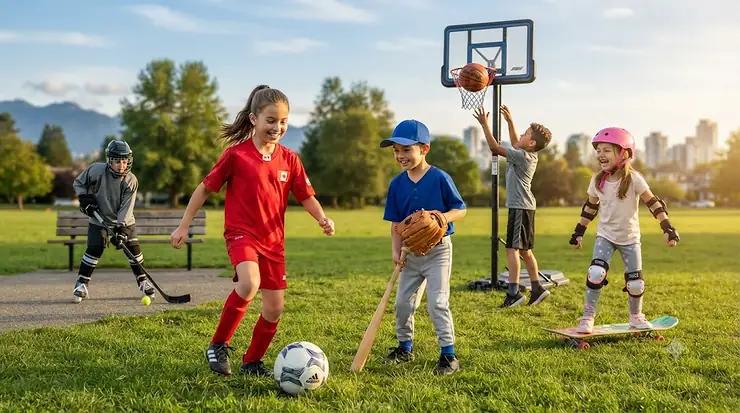
Somewhere between the third “watch me!” and the fourth scraped knee, most Canadian parents realize the same thing: kids sports equipment is not one purchase, it’s an ongoing negotiation with growth spurts, changing interests, and a driveway that somehow becomes a stadium every Saturday morning. Kids sports equipment refers to the balls, hoops, tees, ladders, and training tools designed at a scale, weight, and difficulty level appropriate for developing bodies — gear built to teach skills safely rather than simply shrink adult equipment down. Get the sizing wrong and a child either can’t control the ball or gets hurt trying. Get it right, and you’ve handed them a tool that actually builds confidence instead of frustration.
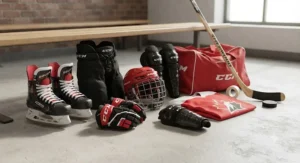
This guide walks through seven real products worth considering in 2026, from a C$10 practice ball to a basketball system that can grow with your child for a decade. We’ll dig into what the spec sheets don’t explain, compare real alternatives head to head, and cover the practical stuff — setup, common mistakes, and how much this all really costs over time. Everything here is grounded in actual product specifications and aggregated review sentiment, not invented testimonials, because Canadian parents deserve straight answers, not marketing copy dressed up as advice. Whether you’re outfitting a first-time soccer player or trying to keep a restless 10-year-old off the tablet, there’s a practical starting point below.
Quick Comparison Table
| Product | Best For | Price Range (CAD) | Skill Focus |
|---|---|---|---|
| Wilson Traditional Size 3 Soccer Ball | Absolute beginners, ages 5-8 | Under C$20 | Ball control, first touches |
| adidas Starlancer Club Size 3 Ball | Reluctant or style-motivated kids | C$20-C$30 | Ball control, confidence |
| Little Tikes Easy Score Basketball Set | Toddlers, 18 months-5 years | Under C$40 | Gross motor, hand-eye coordination |
| Lifetime Youth Portable Basketball System | Elementary-age driveway practice | C$130-C$180 | Shooting mechanics, rebounding |
| Lifetime 90040 Adjustable Basketball System | Growing kids, ages 8 and up | C$220-C$300 range | Full-court shooting progression |
| SKLZ Quick Ladder Pro | Ages 8-16, multi-sport athletes | C$30-C$45 | Footwork, agility, coordination |
| Franklin Sports MLB Adjust-A-Hit T-Ball Set | Ages 5-18, first swings | C$25-C$40 | Hand-eye coordination, batting mechanics |
Looking at the table above, notice how the price spread mirrors developmental stages more than it mirrors quality — the Little Tikes set isn’t cheap because it’s flimsy, it’s cheap because toddlers don’t need adjustable steel poles. Families with kids under six will likely spend under C$100 total, while parents of a committed 10-year-old basketball player should budget closer to C$250-C$350 once a real hoop enters the picture. The skill-focus column matters more than most parents realize when shopping: a soccer ball builds different neural pathways than an agility ladder, and stacking both into a weekly routine covers more developmental ground than either alone.
💬 Just one click — help others make better buying decisions too!😊
💬 Found a product below that fits your family? Take a screenshot and send it to your co-parent — decisions get made faster with two thumbs up.
Top 7 Kids Sports Equipment Picks: Expert Analysis
1. Wilson Traditional Size 3 Soccer Ball — the no-frills starter every coach recommends
The standout here isn’t flashy design, it’s restraint — Wilson kept the construction simple, which is exactly what a ball getting kicked into fences and left out in the rain needs. This is a machine-stitched size 3 ball (23-24″ circumference), the FIFA-aligned standard for players under 8, weighing roughly 300-320 grams so it won’t strain a developing kick. The lighter weight and smaller circumference matter in practice: heavier size 4 or 5 balls can cause young players to compensate with poor kicking form, which is harder to unlearn later than to avoid now. Based on the spec comparison with pricier training balls, this one skips the layered foam cores that improve touch feel, and that’s a fair trade at this price point.
Reviewers consistently report strong durability for backyard and driveway use, with the most common critique being that the surface feels harder underfoot than premium balls — noticeable mainly to older, more technical players rather than true beginners. It’s a reasonable pick for a family testing whether soccer sticks before investing further, and coaches often recommend exactly this tier of ball for house-league practice squads where balls go missing or get run over by minivans.
Pros:
- ✅ Correct size 3 spec for FIFA/youth soccer under-8 standards
- ✅ Inexpensive enough to buy two or three as spares
- ✅ Durable stitched construction holds up outdoors
Cons:
- ❌ Firmer touch than foam-core training balls
- ❌ Limited colour options compared to newer designs
Priced under C$20 in most cases, this is the easy first purchase — the value verdict is straightforward: buy this before spending more on a ball your child might outgrow interest in within a season.
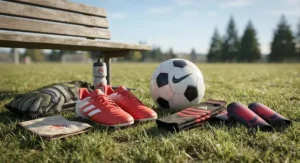
2. adidas Starlancer Club Size 3 Soccer Ball — bright colourways for kids who need a reason to show up
The standout feature is motivational, not technical: adidas leans on team-colour designs and club branding to make the ball itself something a kid wants to pick up, which matters more than spec sheets suggest for a child on the fence about a new sport. It shares the same size 3 circumference standard as the Wilson option, built for players seven and under, with a butyl bladder that most reviewers note holds air pressure noticeably longer between pumps. What most buyers overlook about this model is that the surface texture is slightly softer, which translates to marginally better first-touch control for a beginner still learning to trap the ball rather than deflect it.
Aggregated reviewer sentiment across major retailers points to strong air retention as the top praised feature, with occasional complaints about the ball arriving deflated — a shipping-cost practice common across this entire category, not a defect specific to adidas. For families choosing between the two soccer balls on this list, the deciding factor usually comes down to whether the child cares about the logo; if they do, that emotional buy-in can meaningfully extend how long they stick with practice.
Pros:
- ✅ Butyl bladder holds air longer between inflations
- ✅ Team-branded designs boost a hesitant kid’s motivation
- ✅ Softer surface aids first-touch control
Cons:
- ❌ Costs roughly 30-50% more than basic alternatives
- ❌ Ships deflated, requiring a pump on arrival
In the C$20-C$30 range, the adidas Starlancer earns its premium mainly through engagement value rather than pure performance — worth it if brand appeal is what gets your kid out the door.
3. Little Tikes Easy Score Basketball Set — the toddler hoop built to survive being climbed on
The standout advantage is the oversized rim, considerably wider than the included mini basketball, which is a deliberate design choice to guarantee early wins rather than early frustration. The set adjusts from roughly 2.5 to 4 feet in height and includes three junior-sized basketballs, built from thick, rounded plastic that tolerates toddlers using the pole as a climbing structure — something the spec sheet won’t mention but every parent review does. Here’s what to weigh: this is unmistakably a toy-grade product, not sports equipment in the strict sense, but for ages 18 months to roughly five years that’s precisely the right category, since real basketballs and 10-foot rims would be actively counterproductive at that age.
Reviewers consistently describe this as a long-lasting favourite that holds a child’s attention far longer than expected, with the most common complaint being that active four- and five-year-olds eventually max out the height range and need to graduate to a youth-sized system. That transition point is worth planning for in advance rather than being surprised by it.
Pros:
- ✅ Oversized rim builds early shooting confidence
- ✅ Sturdy base withstands rough toddler play
- ✅ Comes complete with three kid-sized basketballs
Cons:
- ❌ Height range tops out around age five
- ❌ Base can tip if not weighted per instructions
At under C$40, this is one of the cheapest entries on this list and arguably the best value-per-hour-of-play of any product here.
4. Lifetime Youth Height-Adjustable Portable Basketball System — the bridge between toy and real hoop
The standout feature is the reduced 15-inch rim paired with a genuine steel-framed backboard, which is the meaningful upgrade from toy-grade hoops: this is the first hoop on this list that uses an actual regulation-style rim, just sized down. Height adjusts from 5.5 to 7.5 feet in 6-inch increments, and the base can be filled with up to roughly 10 gallons of sand or water for stability, which matters enormously once kids start attempting actual layups instead of gentle underhand tosses. Based on the spec comparison with the toddler-tier hoop above, the jump in rebound quality is significant — the reinforced rim provides real bounce-back rather than absorbing the shot, which changes how rebounding and follow-up shots are learned.
Reviewers consistently flag this model as the sweet spot for elementary-age kids, praising the weather-resistant coating for surviving Canadian winters left outside, though several note that assembly takes a full afternoon and benefits from two people rather than one.
Pros:
- ✅ Reduced 15-inch rim suited to smaller hands and shots
- ✅ Weather-resistant coating handles year-round outdoor storage
- ✅ Portable base with wheels for repositioning
Cons:
- ❌ Assembly is lengthy and easier with two people
- ❌ Narrow base fill opening makes sand loading slow
In the C$130-C$180 range, this hoop typically lasts through the entire elementary school stretch before a child outgrows the lower height ceiling.
5. Lifetime 90040 Adjustable Portable Basketball System — the hoop that grows into a real court
The standout advantage is range: this system telescopes from 7.5 feet all the way to a full regulation 10 feet in 6-inch increments, which means it’s the only product on this list designed to last from roughly age eight into the teenage years without being replaced. It pairs a 44-inch polycarbonate backboard with a break-away rim and a 27-gallon fillable base, specs that matter in practice because a larger backboard actually improves rebound learning — smaller backboards on cheaper hoops give false feedback on shot angle. What most buyers overlook about this model is that the break-away rim isn’t just a durability feature; it teaches proper shooting mechanics because the rim gives slightly on a made basket, closer to how a regulation rim behaves than a rigid mini hoop does.
Aggregated reviewer sentiment is strongly positive on stability once properly filled with sand rather than water, with the most repeated critique being a multi-hour, two-person assembly process and some early reports of shakiness that resolve once the base is fully loaded.
Pros:
- ✅ Adjusts all the way to regulation 10-foot height
- ✅ Large 44″ backboard improves rebound and angle learning
- ✅ Break-away rim mimics real gameplay feedback
Cons:
- ❌ Assembly commonly takes several hours
- ❌ Requires the full sand fill to stay stable in wind
Priced around C$220-C$300, this is the premium pick on this list, and the value case is strong if you expect basketball to remain a multi-year interest rather than a passing phase.
6. SKLZ Quick Ladder Pro Agility Ladder — the footwork tool coaches actually recommend
The standout feature is the flat, hinged-rung design — unlike the round dowel rungs on cheaper ladders, flat rungs stay put underfoot instead of rolling, which removes a genuine tripping hazard during fast drills. It’s an 11-rung ladder with roughly 15-inch spacing, folding flat for storage and shipping with ground stakes to anchor it on grass. What the spec sheet won’t tell you, but coaches and reviewers note, is that footwork drills like the icky shuffle or lateral run don’t just build speed — they build the neuromuscular coordination that shows up later as better cutting and balance in soccer, basketball, and hockey alike, making this arguably the most cross-sport product on this entire list.
Reviewers consistently praise the price-to-durability ratio, noting that pricier ladders offer marginal material improvements that rarely justify the cost difference for youth training. The most common complaint is rung tangling out of the box, which is resolved with a simple feed-through fix rather than a product flaw.
Pros:
- ✅ Flat rungs eliminate the rolling-underfoot hazard
- ✅ Builds coordination that transfers across multiple sports
- ✅ Folds compactly with an included carry bag
Cons:
- ❌ Ladder can arrive tangled and needs untwisting
- ❌ Ground stakes work best on grass, not pavement
At C$30-C$45, this is inexpensive insurance for athletic development broadly, not tied to a single sport — a smart add-on to almost any other product on this list.
7. Franklin Sports MLB Adjust-A-Hit T-Ball Set — grow-with-me batting practice for first swings
The standout design choice is the dual-height system: a hanging tee suspends the ball 18 to 26 inches off the ground for the smallest hitters, and it converts into a traditional 25-to-36-inch batting tee once a child’s swing improves, meaning this single product covers roughly ages three through eight without a second purchase. Key specs with real-world meaning: the included plastic bat and self-stick foam balls are deliberately lightweight, which sounds like a limitation but is actually the point — heavier bats encourage kids to muscle a swing rather than learn proper rotation and hand-eye timing. Reviewers consistently note that the flexible post absorbs mis-hits without tipping the whole unit over, a detail that matters far more in daily use than the marketing copy suggests.
The honest caveat here, echoed across aggregated reviews, is that some users report the connecting stem breaking under repeated hard contact from older, stronger kids — a legitimate durability concern for households with a particularly enthusiastic six-year-old slugger.
Pros:
- ✅ Two-stage tee height grows with the child’s skill
- ✅ Lightweight foam ball and bat build proper swing mechanics
- ✅ Flexible post resists tipping on mis-hits
Cons:
- ❌ Connecting stem can crack under aggressive, repeated hits
- ❌ Included ball and bat are foam, not suited to advanced hitters
At C$25-C$40, this remains one of the most cost-effective entry points into any sport on this list, with a genuinely useful growth window built into the design.
Practical Usage Guide: Setting Up and Maintaining Kids Sports Equipment
Getting kids sports equipment out of the box is only step one — how it’s set up in the first week often determines whether it gets used for years or abandoned by September. Start with height: every adjustable product on this list, from the T-ball tee to the basketball hoop, should be set at the lowest comfortable setting first, not the setting you expect your child to “grow into.” Early wins build the motivation that makes practice self-sustaining, and starting too high just teaches frustration.
For basketball systems specifically, always use sand rather than water in the base if your climate allows storage above freezing — sand won’t expand and crack the base during a Canadian freeze-thaw cycle the way water can. Inspect soccer balls monthly for pressure loss using a simple squeeze test, and re-inflate before the ball feels noticeably soft, since underinflated balls distort a child’s sense of proper ball weight and touch. Common first-30-days mistakes include leaving portable hoops unweighted in windy conditions, over-tightening agility ladder ground stakes into hard-packed soil (which tears the rung fabric), and skipping the manufacturer’s height chart in favour of guesswork. A five-minute equipment check before each session — air pressure, base stability, rung spacing — catches most safety issues before they become injuries.
Real-World Scenarios: Matching Gear to Your Young Athlete
Consider three household profiles. First, a family with a four-year-old who’s shown interest in “sports” broadly but hasn’t picked a favourite: the Little Tikes Easy Score set paired with a size 3 soccer ball covers gross motor development across two sports without asking a preschooler to specialize, and both fit comfortably under C$60 combined. Second, an eight-year-old enrolled in a house-league basketball program who practices twice weekly in the driveway: this is the profile that justifies the Lifetime Youth or 90040 system, since the frequency of use amortizes the higher upfront cost quickly — a hoop used 100+ times a year works out to pennies per session within a single winter.
Third, a competitive 11-year-old playing both soccer and hockey who needs off-season conditioning: this is where the SKLZ agility ladder earns its keep, since footwork training transfers across sports in a way single-sport equipment doesn’t. Budget-conscious families juggling multiple kids of different ages often do best starting with the most flexible, cross-sport items — a soccer ball and an agility ladder — before committing to sport-specific big-ticket purchases like a basketball system.
Problem → Solution: Common Kids Sports Equipment Headaches
Problem one: a child loses interest within a few weeks of a new purchase. Solution — before buying anything past the C$50 range, borrow or rent similar equipment, or start with the cheapest viable option (like the Wilson soccer ball) to confirm genuine interest first. Problem two: equipment gets damaged faster than expected. Solution — match durability to usage intensity; a household with three siblings sharing one basketball hoop needs the steel-framed Lifetime models, not a toy-grade alternative. Problem three: a portable basketball hoop tips in wind. Solution — fill the base fully with sand per the manufacturer’s maximum capacity, and add a weighted sandbag on top during storm warnings, a trick most manuals don’t mention. Problem four: a soccer ball repeatedly goes flat. Solution — check the valve for debris buildup before assuming the bladder is punctured; most “flat ball” complaints are valve issues, not defects. Problem five: siblings of different ages want to share one piece of equipment. Solution — prioritize adjustable-height products like the Franklin T-ball tee or Lifetime basketball systems, which are specifically engineered to serve a wider age range than fixed-size alternatives.
How to Choose Kids Sports Equipment
- Match the equipment size strictly to your child’s current age and size, not their ambition — an oversized ball or bat teaches poor mechanics that take longer to correct later.
- Prioritize adjustability wherever the budget allows, since height-adjustable gear extends usable life by years rather than months.
- Weigh outdoor durability requirements against your local climate — Canadian freeze-thaw cycles are hard on plastics and unweighted bases specifically.
- Consider frequency of intended use before spending on premium materials; occasional backyard play doesn’t need the same durability as daily practice.
- Read aggregated review sentiment for assembly difficulty, not just performance, since a hoop that never gets built provides zero developmental value.
- Budget for accessories separately — pumps, extra balls, and ground stakes are frequently sold apart from the core product.
- When in doubt, choose the item your child has expressed genuine interest in over the one with marginally better specs; motivation drives usage more than engineering does.
Kids Sports Equipment vs Generic Toy-Store Gear
The core difference between purpose-built kids sports equipment and generic toy-aisle alternatives isn’t always obvious on a store shelf, but it shows up quickly in use. Sport-specific gear like a properly sized size 3 soccer ball or a break-away-rim basketball hoop is engineered against actual sport standards — FIFA ball circumference guidelines, regulation rim mechanics scaled down — while generic alternatives are often designed purely for shelf appeal, with sizing that’s approximate at best.
| Factor | Purpose-Built Sports Equipment | Generic Toy-Store Alternative |
|---|---|---|
| Sizing accuracy | Matches sport-standard specs by age | Often approximate, no standard followed |
| Durability | Built for repeated outdoor use | Frequently indoor-grade materials |
| Skill transfer | Mimics real sport mechanics | May teach habits requiring correction later |
| Best For | Kids showing sustained interest | Very first exposure or occasional play |
Interpreting this table plainly: generic gear isn’t worthless, it’s simply built for a different job — a first exposure to see if a sport clicks. Once a child shows sustained interest, usually after a full season, the case for upgrading to purpose-built equipment becomes strong, both for safety and for skill development that won’t need to be unlearned.
✨ Ready to Gear Up Their Season?
🔍 Compare current prices and availability on any product above before your child’s next practice — a few minutes now saves a scramble later. Check current pricing today!
Beginner Soccer Ball Size 3: What Every Parent Should Know
A beginner soccer ball size 3 is the correct starting point for nearly every child under eight beginning organized or backyard soccer, and getting this one sizing decision right matters more than any other soccer purchase. At 23-24 inches in circumference and roughly 300-320 grams, a size 3 ball is light enough to avoid straining developing leg muscles while still behaving predictably enough to teach real technique — dribbling, passing, first touches. Parents sometimes default to a size 4 or 5 “so it lasts longer,” but that instinct backfires: an oversized ball is genuinely harder to control, which slows skill development rather than accelerating it. Both soccer balls reviewed above meet the correct size 3 standard; the choice between them comes down to budget and how much a bright design motivates your particular child to actually go outside and practice.
Basketball Hoop Kids Outdoor: Choosing the Right Setup
An outdoor basketball hoop for kids needs to solve three separate problems that indoor toy hoops don’t: weather resistance, height progression, and genuine rebound feedback. Toddlers under five are well served by lightweight, low-height sets like the Little Tikes model, but once a child reaches elementary age, an outdoor basketball hoop kids can actually grow into — like the Lifetime Youth or 90040 systems — becomes the better long-term investment. The biggest mistake families make is buying a hoop sized for the child’s current age rather than their trajectory; a hoop maxing out at 7.5 feet gets outgrown within two or three years by an active player, while one reaching a full 10 feet lasts through the entire school-age window. Sand-filled, portable bases are almost always the right call for Canadian backyards and driveways, since they tolerate seasonal repositioning better than permanently mounted, in-ground systems.
Youth Sports Gear: Building a Starter Kit for Any Sport
Youth sports gear as a category spans far beyond a single ball or hoop — a genuinely useful starter kit typically includes one sport-specific item (a soccer ball, a T-ball set), one cross-training item (an agility ladder), and basic accessories like a pump and spare balls. The mistake many parents make is over-investing in a single expensive item, like a premium basketball system, before confirming a child’s actual interest level with cheaper youth sports gear first. A reasonable rule of thumb: spend under C$100 total in the first season of any new sport, then reassess based on genuine, sustained enthusiasm before committing to premium equipment. This staged approach protects the family budget while still giving a child every reasonable chance to fall in love with a sport.
Physical Activity Development: How the Right Equipment Builds Better Movers
Physical activity development in early and middle childhood isn’t just about calories burned — it’s about building the foundational motor patterns that make every future sport easier to learn. According to Canadian guidance on the topic, children aged five to eleven should accumulate at least one hour of moderate-to-vigorous physical activity daily, a target that structured equipment-based play helps meet more reliably than unstructured free time alone. Equipment that combines aerobic movement with skill acquisition — dribbling a basketball, running an agility ladder — checks more developmental boxes per minute than passive activities, because the child is simultaneously building cardiovascular fitness, coordination, and confidence. The practical takeaway for parents: rotating between two or three pieces of equipment weekly, rather than relying on one, tends to produce more well-rounded physical activity development than specializing in a single tool too early.
Outdoor Exercise Equipment for Kids: Beyond the Big-Ticket Items
Outdoor exercise equipment for kids doesn’t need to mean a full backyard gym — several products on this list already function as legitimate exercise tools on their own. A basketball hoop used for 20-30 minutes of shooting and rebounding drills delivers meaningful aerobic activity, and an agility ladder session builds both cardiovascular effort and coordination in short, high-intensity bursts well suited to shorter childhood attention spans. Canadian paediatricians have increasingly emphasized that unstructured outdoor play, including some acceptable risk, plays a crucial role in children’s physical and mental development, which reframes a driveway basketball hoop or backyard soccer ball less as a “toy” and more as a genuine developmental tool. The best outdoor exercise equipment for kids is simply whatever gets used consistently — expensive gear that stays in the garage provides zero benefit compared to a C$15 ball that gets kicked around daily.
Athletic Skill Building: Turning Backyard Play into Real Progress
Athletic skill building happens through repetition, not through owning premium equipment — a child dribbling a basic size 3 ball daily will out-develop one using a premium ball occasionally. That said, the right training-focused equipment, like the agility ladder reviewed above, accelerates skill building by isolating specific movement patterns — lateral quickness, foot placement — that general sport play doesn’t always target directly. Coaches typically recommend introducing structured athletic skill building tools like ladders and cones around age eight, once a child has mastered basic running mechanics, rather than earlier when the drills can create more frustration than benefit. Pairing one sport-specific item with one skill-building item, and rotating both into regular play, tends to produce faster, more well-rounded athletic skill building than either alone.
Common Mistakes When Buying Kids Sports Equipment
The single most common mistake is buying for the child’s ambition rather than their current ability — a regulation-height basketball hoop bought for an enthusiastic six-year-old just teaches bad shooting form as they compensate for a rim they can’t realistically reach. A close second is skipping the base-weighting step on portable basketball systems, which leads to tipping incidents that are entirely avoidable with proper sand fill. Parents also frequently underestimate assembly time, particularly for the premium Lifetime models, leading to rushed, incomplete builds. Finally, many families buy a single expensive item instead of a smaller starter kit, missing the chance to confirm genuine interest before the bigger investment — a costly mistake given how often young interests shift season to season.
Long-Term Cost & Maintenance
Looking at total cost of ownership rather than sticker price changes the calculus on several products above. A C$250 basketball system used weekly for five years works out to roughly C$1 per session, while a C$20 soccer ball replaced twice a season due to wear costs more per year than most parents expect. Maintenance costs are generally low across this category — occasional re-inflation, tightening loose bolts on basketball systems, and periodic sand top-ups — but neglecting them shortens equipment life significantly. Replacement cycles vary widely: soccer balls typically last one to two seasons of regular play, T-ball sets one to three years depending on hitting intensity, and steel-framed basketball systems can realistically last five to ten years with basic care, making them the best long-term value despite the higher upfront cost.
Safety, Regulations & Compliance Guide for Kids Sports Equipment in Canada
Canadian safety expectations for kids sports equipment lean heavily on general product safety standards rather than sport-specific federal regulation, so parents carry more responsibility for sensible use than in some equipment categories. Look for CSA-recognized testing on any electrical or structural components where applicable, and always follow manufacturer weight limits on portable basketball bases. Canadian paediatric guidance has also shifted meaningfully in recent years: a 2024 position statement from the Canadian Paediatric Society explicitly encourages supervised outdoor risky play, including climbing, running at speed, and rough-and-tumble activity, arguing that overly cautious equipment use can do more harm to development than the minor scrapes it prevents. Practical takeaways: supervise young children around unweighted or partially assembled equipment, inspect ground stakes and bolts seasonally for rust or looseness common after Canadian winters, and don’t over-restrict genuinely age-appropriate physical risk in the name of safety.
FAQ
❓ What size soccer ball should a 6-year-old use?
❓ How high should a kids basketball hoop be?
❓ Do I need special shoes for kids sports equipment activities?
❓ How much does a basic kids sports equipment starter kit cost in Canada?
❓ What age can kids start agility ladder training?
Conclusion
Kids sports equipment doesn’t have to mean an overwhelming shopping list or a garage full of half-used gear. The seven products above cover a realistic range — from a C$15 soccer ball that might be the only purchase a family needs for an entire season, to a basketball system built to last through elementary and into the teenage years. The throughline across all of it is fit: matching size, height, and durability to where your child actually is right now, not where you hope they’ll be in two years. Start small if there’s any doubt about genuine interest, prioritize adjustability when the budget allows it, and remember that consistent use of modest equipment beats occasional use of premium gear every time. Whatever you choose from this list, the best outcome isn’t a perfect purchase — it’s a kid who wants to go back outside tomorrow.
✨ Ready to help your young athlete take the next step? Browse current listings for any product above and check today’s availability before the next practice rolls around.
Recommended for You
- 7 Best Family Board Games for Canadian Game Nights (2026)
- Best LEGO Creator 3-in-1 Sets Canada 2026: Top 7 Expert Picks
- Best Star Wars LEGO 7 Year Old: Top 7 Picks for Canada (2026)
Disclaimer: This article contains affiliate links. As an Amazon Associate, I earn from qualifying purchases. If you purchase products through these links, we may earn a small commission at no additional cost to you.
✨ Found this helpful? Share it with another sports parent! 💬🤗
