

In This Article
Ride-on car battery replacement is the process of swapping a worn-out rechargeable battery in a child’s electric vehicle for a new one with the same voltage, a matching plug, and a suitable amp-hour rating. Most are 12V sealed lead-acid batteries, and the swap itself usually takes minutes.
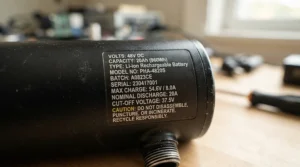
Picture the scene. It’s Saturday morning, the little driver is buckled in, the pedal goes down, and the car crawls ten feet before sighing to a stop. That’s the classic opening act of a ride-on battery not holding charge, and it’s rarely the toy’s fault. The battery is a consumable part, like a tire or a toothbrush. It wears out whether you baby it or not.
Here’s the good news. Ride-on car battery replacement is one of the cheapest, fastest repairs in the toy world. The bad news is that shopping for it is a minefield. Gray versus orange-top. 9.5Ah versus 12Ah. Square plugs, round plugs, bare metal terminals that need a harness you don’t own. Pick wrong and you’ve bought a very pricey paperweight.
This guide cuts through the noise. I compared seven real options (six batteries and one universal charger) using published specs, aggregated review sentiment, and plain-English analysis. None of it is hands-on lab testing; it’s research and reasoning, and I’ll flag where the data runs thin. If you want the science behind the advice, this primer on how lead-acid batteries work is a solid starting point.
Grab a screwdriver. Let’s get that car moving again.
Quick Comparison: 7 Ride-On Car Battery Replacement Options at a Glance
| Product | Type | Voltage / Capacity | Plug or Terminal | Price Range | Best For |
|---|---|---|---|---|---|
| Impact Battery 12V 12Ah | AGM sealed lead-acid | 12V / 12Ah | All-gray Power Wheels plug | Check current price | Longer runtime in gray-plug Power Wheels |
| Power Wheels 12-Volt Gray Battery | Sealed lead-acid (factory) | 12V / 12Ah listed | All-gray Power Wheels plug | Roughly $55-$100 | Buyers who want the factory part |
| Power Wheels Orange-Top Battery (00801-1776) | Sealed lead-acid (factory) | 12V (listings differ on Ah) | Orange vehicle plug, 40A breaker | Roughly $70-$95 | Higher-powered orange-plug models |
| Schumacher TB3 | Sealed lead-acid | 12V / 9.5Ah | Confirm in listing | Roughly $65-$110 | Matching original capacity with brand backing |
| Schumacher TB4 | Sealed lead-acid | 12V / 12Ah | Peg Perego fit | Near the $100 mark | Peg Perego 12V vehicles |
| Mighty Max ML12-12F2 | AGM sealed lead-acid | 12V / 12Ah | Bare F2 terminals | Around $28-$35 | Budget swaps with the right harness |
| Schumacher CR5 | Universal charger | 3A, 6V/12V | Quick-connect harness plus adapters | Around $70 | Households with mixed brands |
Looking at the table, the Mighty Max ML12-12F2 is the clear price leader, but it trades plug-and-play convenience for savings, because bare terminals often need a harness. The Impact Battery 12V 12Ah and the Power Wheels 12-Volt Gray Battery are the easy path for all-gray Power Wheels owners, while the Power Wheels Orange-Top Battery (00801-1776) exists for one narrow group of vehicles and is useless to everyone else. Treat the Schumacher CR5 as an infrastructure purchase rather than a battery rival.
💬 Just one click — help others make better buying decisions too!😊
Top 7 Ride-On Car Battery Replacement Options: Expert Analysis
1. Impact Battery 12V 12Ah — extra runtime for all-gray Power Wheels
If your Power Wheels takes the all-gray battery and you wish the car ran longer between charges, this is the most interesting third-party route I found. The Impact Battery 12V 12Ah (ASIN B07Y6P4NCP) is an AGM sealed lead-acid pack with an internal self-resetting fuse, and its listing names compatibility with Power Wheels part numbers 1001175653, 00801-0638 and 00801-1869. AGM means the electrolyte is soaked into glass mats, so the pack is non-spillable and shrugs off the tipping and bouncing of toddler driving. The 12Ah capacity is roughly 26% above a 9.5Ah factory pack on paper, which makes the seller’s claim of about 25% longer playtime plausible, though real runtime still depends on terrain and driver weight. Expect around 10 pounds on the scale.
Based on the spec comparison, this suits families whose gray-plug vehicle gets marathon sessions: grass, gentle hills, siblings trading seats. It’s not for orange-plug vehicles. Reviewers on the listing give it roughly 4.6 to 4.7 stars across about 1,000 ratings, and the recurring themes are an exact fit, an easy swap, and long life. One reviewer reports it still working like new after two years.
Pros:
- ✅ Fits all-gray Power Wheels part numbers listed
- ✅ Self-resetting fuse built into the pack
- ✅ 12Ah capacity adds runtime over 9.5Ah packs
Cons:
- ❌ Won’t fit orange-plug vehicles
- ❌ Around 10 pounds, heavier than 9.5Ah packs
I couldn’t confirm a stable price range at the time of research, so check current price. Reviewers repeatedly call it good value for the capacity.

2. Power Wheels 12-Volt Rechargeable Battery (Gray) — the factory part, zero guesswork
When you’d rather not experiment, the genuine part is the safe default. The Power Wheels 12-Volt Rechargeable Battery (Gray) (model G5894, cross-referenced under part 74777) is built for Advanced Series vehicles with the all-gray 12V system and includes an internal self-resetting fuse. Listings describe it as 12Ah and about 9.6 pounds, while many older vehicles shipped with a 9.5Ah pack. One reviewer with a 2017 Dune Buggy noted that the higher rating drops in fine, and the logic holds: voltage decides compatibility, while amp-hours decide how long the energy lasts. Just compare the dimensions against your compartment.
What most buyers overlook is availability. Some listings flag the older part number as discontinued by the manufacturer, so verify before you order. This is the pick for anyone who values an exact fit and a clean paper trail over savings. Reviewers on the listing mirror give it about 4.7 stars from more than 11,000 ratings, with common praise for easy installation and a lifespan close to the original.
Pros:
- ✅ Exact factory fit for all-gray vehicles
- ✅ Internal self-resetting fuse included
- ✅ Very large, consistently positive review pool
Cons:
- ❌ Costs more than third-party equivalents
- ❌ Some listings show older part numbers as discontinued
Expect roughly the $55-$100 range depending on seller; check current price. Verdict: pay the premium only if factory certainty matters to you.
3. Power Wheels Orange-Top Battery (00801-1776) — built for the orange-plug models
This is the battery people buy by mistake. The Power Wheels Orange-Top Battery (00801-1776), also sold under 00801-1661, is the official replacement for select vehicles that demand more than the standard gray pack. The giveaway is on the car, not the battery: if the plug coming from the vehicle’s wiring harness is orange, this is your battery, and if it’s black, you want the all-gray one. The critical difference is internal protection. The orange-top uses a 40-amp breaker, while the all-gray pack uses a 30-amp breaker, and the orange version also adds a small notch in the connector corner to block cross-installation.
Retailer listings disagree on capacity, with one bundle describing 9.5Ah and another saying both batteries are 12Ah. My advice: ignore the Ah argument and buy on the plug. Retailers cite routine recharge times of roughly 14 to 18 hours, so plan overnight. Review data here is thin; a large retailer listing shows about 3.8 stars from only 10 ratings, so treat that as directional, though one buyer says it holds a charge as it should.
Pros:
- ✅ Correct fit for orange-plug vehicles
- ✅ 40A breaker supports higher-powered models
- ✅ Notched connector prevents wrong installs
Cons:
- ❌ Useless for all-gray or black-plug vehicles
- ❌ Small review pool makes quality harder to judge
Roughly the $70-$95 range at the retailers checked; check current price. Verdict: non-negotiable if your plug is orange, a mistake otherwise.
4. Schumacher TB3 — brand-backed 9.5Ah match
The Schumacher TB3 is the Charge ‘n Ride 12V 9.5Ah replacement, sold as an alternative for popular Power Wheels models. Its rating matches the capacity of the classic gray factory pack, which in practice means you get original-equivalent runtime rather than a bump. The value here is the ecosystem: Schumacher also makes the matching universal charger covered later, and a recognizable brand makes warranty conversations easier than with anonymous sellers. I’d confirm the plug style in the listing before buying, because third-party fitment wording varies.
On paper, this suits parents who want a sealed lead-acid battery with a known maker and no surprises in runtime. The honest caveat is the review pool: a major retailer shows about 4.6 stars from 14 reviews, which is encouraging but small. I couldn’t verify a deep body of long-term durability reports, so I won’t pretend otherwise.
Pros:
- ✅ 9.5Ah matches the original pack’s capacity
- ✅ Established ride-on battery brand
- ✅ Pairs naturally with Schumacher’s universal charger
Cons:
- ❌ Pricier than generic 12Ah AGM options
- ❌ Small verified review pool
Expect roughly $65-$110 depending on retailer and sale timing; check current price. Verdict: reasonable for brand-conscious buyers, but the cheaper 12Ah picks offer more capacity per dollar.
5. Schumacher TB4 — drop-in power for Peg Perego 12V vehicles
Peg Perego owners often hit a wall because the brand uses its own battery format. The Schumacher TB4 is a 12V 12Ah rechargeable pack designed for Peg Perego 12V ride-ons, and Schumacher’s category page lists it with a replaceable fuse. Its manual states it’s for adult use only and not a toy, which is a useful reminder to install it yourself. One parts guide lists Peg Perego packs from 8Ah up to 15Ah, so a 12Ah unit sits comfortably in the middle: roughly 50% more capacity than an 8Ah original.
Schumacher notes the battery can be recharged with the supplied Peg Perego charger but recommends its CR6 3-amp universal charger for best results. Some retailer titles also mention Fisher-Price Power Wheels, so verify fitment against your exact vehicle rather than trusting the headline. Reviewers on a major retailer mention it working with a Peg Perego Gator, and another describes buying a larger ride-on after the battery performed well.
Pros:
- ✅ Designed for Peg Perego 12V vehicles
- ✅ Replaceable fuse for easy resets
- ✅ Works with the original Peg Perego charger
Cons:
- ❌ Premium price versus generic AGM options
- ❌ Listing wording on other brands is inconsistent
It tends to sit near the $100 mark at specialty retailers; check current price. Verdict: worth it for plug-and-play Peg Perego fit, but price-sensitive buyers should compare the next pick.
6. Mighty Max ML12-12F2 — the budget AGM workhorse
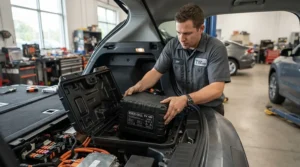
The Mighty Max ML12-12F2 is a generic 12V 12Ah AGM pack, and its popularity comes from one number: price. The brand lists dimensions of about 5.94 by 3.86 by 3.98 inches and roughly 8.4 pounds, with F2 terminals and a one-year warranty. The brand also publishes dozens of vehicle-specific listings (Kid Trax, Peg Perego, Little Tikes and others) that all point at the same basic battery. That’s the catch the spec sheet won’t tell you: F2 terminals are bare metal tabs, so unless the listing includes a harness, you may need a connector wire. One Peg Perego reviewer said exactly that.
Reviewers on a major retailer mirror give the ML12-12F2 about 4.5 stars across roughly 2,700 ratings, and the brand’s own site shows higher scores. Common themes are good fit for Kid Trax vehicles and strong value. One reviewer estimated 45 to 60 minutes of run time on a charge.
Pros:
- ✅ Lowest price of the batteries here
- ✅ AGM sealed construction, 12Ah capacity
- ✅ Compact and lighter than many 12Ah rivals
Cons:
- ❌ Bare F2 terminals may need an adapter harness
- ❌ One-year warranty
Around $28-$35 for a single pack; check current price. Verdict: the best value if you can handle the wiring.
7. Schumacher CR5 — the universal replacement charger for ride-on toy owners
A battery is only half the story. The Schumacher CR5 is a 3-amp, 6V/12V universal charger that Schumacher says charges about three times faster than standard chargers. It lists compatibility with Peg Perego, Power Wheels, Action Wheels, Kid Trax, Rollplay, Pulse, Dynacraft, Huffy, Razor and Schumacher batteries, includes TAMT6-12V (Action Wheels) and TAKT12V (Kid Trax) cable connectors, and adds LED indicators for charging, 80%, 100% and bad-battery states. Reverse hook-up protection, auto voltage detection, multi-stage charging and float-mode monitoring are on the feature list, and it carries UL certification.
Here’s the honest analysis. The listing doesn’t mention auto shutoff, so don’t treat it as an invisible set-and-forget gadget; follow the manual. Also verify how its harness mates with your plug, because the two included adapters don’t obviously cover the gray Power Wheels connector. I couldn’t find enough verified reviews to summarize customer sentiment, so I’m not inventing any.
Pros:
- ✅ Handles both 6V and 12V packs
- ✅ LEDs show 80%, 100% and bad-battery states
- ✅ Reverse hook-up protection included
Cons:
- ❌ Only two connector adapters included
- ❌ Costs more than basic OEM chargers
Around $70 at list price; prices may vary. Verdict: strong value for multi-brand households, overkill for a single gray-plug Jeep.
✨ Ready to Get the Ride Rolling Again?
🔍 Take your ride-on car battery replacement to the next level with these carefully selected products. Click any highlighted item to check current pricing and availability. These picks will help you keep your little driver’s weekend adventures going strong!
How to Choose Ride-On Car Battery Replacement: 7 Simple Steps
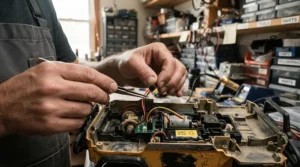
To choose the right ride-on car battery replacement, match voltage, plug, physical size, and amp-hour rating to your old battery, then verify fuse protection, chemistry, and charger compatibility. Here’s the sequence that prevents most mistakes.
- Confirm voltage. Read the label on the old pack. Common ride-on voltages are 6V, 12V and 24V, and a 12V rechargeable battery for kids’ car use won’t work in a 6V system.
- Identify the plug. Gray Power Wheels packs use a black vehicle-side plug; orange-top packs use an orange one. Check connector types before anything else.
- Measure the compartment. Compare length, width and height. A pack that’s half an inch too tall won’t close the lid.
- Pick the amp-hour rating. Match the original or go modestly higher for longer runtime. A lower rating shortens drives.
- Check fuse or breaker protection. The gray Power Wheels pack uses a 30A breaker, the orange-top uses 40A. Self-resetting or replaceable fuses save headaches.
- Choose the chemistry. Sealed lead-acid batteries are the affordable default; lithium is lighter but costs more.
- Plan the charger. Never assume your old charger fits the new battery’s plug.
Amp-Hour Rating and Connector Types: What Actually Matters
The amp-hour rating tells you how much energy the pack stores, not how fast the car goes. Think of it as the size of the fuel tank rather than the size of the engine. A 12Ah pack carries roughly a quarter more energy than a 9.5Ah pack, which usually means longer drives, not extra speed. Voltage, by contrast, is a hard compatibility rule.
Connector types are where good intentions go to die. Use the table to decode what you have.
| Connector / Terminal | How to Spot It | Where It Appears | Best For |
|---|---|---|---|
| All-gray Power Wheels plug | Black plug on the vehicle; 30A breaker | Many gray-battery Power Wheels | Impact Battery 12V 12Ah, Power Wheels 12-Volt Gray Battery |
| Orange-top Power Wheels plug | Orange plug on the vehicle; notched corner; 40A breaker | Select higher-powered Power Wheels | Power Wheels Orange-Top Battery (00801-1776) |
| Kid Trax blue grid connector | Two-wire harness with a roughly 1-inch blue grid plug | Kid Trax 12V vehicles | Chargers and cables built for Kid Trax |
| Round-hole charging port | Barrel-style charger plug | Best Choice Products and similar | Dedicated 12V barrel chargers |
| Bare F2 terminals | Flat metal tabs, no plug | Generic AGM packs | Mighty Max ML12-12F2 with the right harness |
The takeaway: color and brand name are weak signals, while the actual plug is the strongest one. If you land on a bare-terminal pack, budget a few dollars and a few minutes for the adapter. When in doubt, photograph the old plug and compare it against the listing images.
Sealed Lead-Acid Batteries vs Lithium: Which Chemistry Wins?
Nearly every ride-on in this guide uses sealed lead-acid batteries, and for good reason: they’re cheap, forgiving and widely available. Lithium (usually LiFePO4) pitches itself as the lighter, longer-lived upgrade. One retailer’s listing claims over 2,000 charge cycles with a built-in battery management system, though that’s a seller claim, not a measured result. A separate parts explainer puts sealed lead-acid at roughly 300 to 500 charge cycles.
| Factor | Sealed Lead-Acid | LiFePO4 Lithium | Best For |
|---|---|---|---|
| Upfront cost | Lower | Higher (Battery University says lithium-ion costs more than double lead-acid) | Budget buyers → lead-acid |
| Weight | Heavier | Lighter | Smaller kids → lithium |
| Cycle life | Hundreds of cycles | Seller claims in the thousands | Daily use → lithium |
| Plug-and-play fit | Common, many direct fits | May ship without the plug | Beginners → lead-acid |
Read this table as a decision about usage. If the car runs a few times a week, a Mighty Max ML12-12F2 or Schumacher TB3 will probably serve you well. If it runs daily and you want fewer replacements, lithium math starts to make sense, as long as you verify the connector and protection circuitry.
Ride-On Battery Not Holding Charge: A Problem-to-Solution Guide
A ride-on battery not holding charge is rarely mysterious. Here are the usual suspects, in the order I’d check them.
Problem 1: The car dies after a short drive, even after charging. Likely cause: a worn battery. Sealed lead-acid packs lose capacity with age and cycles, and reduced run time plus slower speed are the classic signs. Fix: measure resting voltage after a full charge, and replace if it sags quickly under load.
Problem 2: The battery sat dead for weeks. Likely cause: sulfation. Battery University explains that sulfation occurs when a lead-acid battery is deprived of a full charge, and long stretches at low charge can make it permanent. Fix: recharge promptly after every ride, never park it empty for the winter, and don’t rely on unproven revival gadgets.
Problem 3: Charges too quickly, drains too fast. Likely cause: undercharging from short charge cycles. The same source notes an overnight eight-hour charge may not saturate lead-acid. Fix: follow your manual, but don’t unplug at the first green light if you’re chasing capacity.
Problem 4: The battery tests fine but the car stutters. Likely cause: a loose or corroded connector, a tripping breaker, or a failing charger. One reviewer’s original charger died when its connector broke. Fix: inspect plugs, reseat everything, and test with a known-good charger.
Problem 5: New battery, same symptoms. Likely cause: charger mismatch or wiring. Fix: confirm the charger matches voltage and plug, then re-check connections.
Replacement Charger for Ride-On Toy: What to Check Before You Buy
A replacement charger for ride-on toy owners looks like a commodity until the plug doesn’t fit. Start with voltage: a 12V battery needs a 12V charger. Next, match the plug. Kid Trax vehicles use a blue grid connector, some Best Choice Products models use a round-hole port, and Power Wheels uses its own gray or orange connectors. Then check amperage. Genuine and replacement Power Wheels chargers are commonly listed around 1 amp, while universal units like the Schumacher CR5 step up to 3 amps.
Lead-acid batteries follow a constant-current, constant-voltage routine, and Battery University’s charging guide explains why correct voltage limits matter. Too low and you get sulfation, too high and you get grid corrosion. That’s why a charger designed for sealed lead-acid chemistry beats a random wall adapter, and why manufacturers such as Razor insist on supplied chargers.
The sensible buying logic: if you own one brand and one vehicle, a plug-matched OEM-style charger is simplest. If you own several brands, a universal charger like the Schumacher CR5 reduces clutter. Pairing it with a Schumacher TB4 also follows Schumacher’s own recommendation for that battery.

Practical Guide: Installing and Breaking In Your New Battery
A smooth install turns a $30 battery into a good investment.
- Unplug first. Disconnect the old battery and photograph the wiring so you can reverse the steps.
- Compare before you commit. Hold the old and new packs side by side. Plug, polarity and size should match.
- Connect and secure. Seat the plug firmly, tuck the leads so they can’t get pinched, and close the compartment. Loose leads detaching from a battery is a reported complaint on at least one budget pack, so check them.
- Charge fully before day one. Battery University notes a full charge on most lead-acid types takes 14 to 16 hours, and one retailer cites 14 to 18 hours for routine Power Wheels recharges. Skipping this step starts the battery’s life on the wrong foot.
- Build a routine. Recharge after rides, and if the car sits unused, top it up at least monthly. Lead-acid packs also shouldn’t be drained far past about 50%.
- Watch the first week. Note how long a charge lasts so you have a baseline.
Real-World Scenarios: Which Replacement Fits Your Family?
Scenario 1: The backyard-grass family. A four-year-old drives a gray-plug Power Wheels Jeep across lawn most afternoons. Budget is moderate, and runtime is the pain point. The Impact Battery 12V 12Ah adds capacity, while the Power Wheels 12-Volt Gray Battery keeps things factory-correct.
Scenario 2: The Peg Perego household. A Polaris-style ride-on sits in the garage. One parts guide lists the Polaris Outlaw as a 12Ah vehicle. The Mighty Max ML12-12F2 is the money-saver, and the Schumacher TB4 is the plug-and-play pick. Either way, verify the harness.
Scenario 3: The grandparents’ fleet. A grandparent keeps three vehicles from different brands for weekend visits. The Schumacher CR5 consolidates charging, and a spare battery means the next ride starts instantly. A spare Schumacher TB3 or Mighty Max ML12-12F2 keeps the fleet running while the other charges.
Frequency matters in all three. Occasional weekend use tolerates slow charging, while daily use rewards higher capacity and disciplined charging.
Common Mistakes When Buying Ride-On Car Battery Replacement
- Buying by color, not plug. Gray and orange-top packs are both 12V but not interchangeable, and the Power Wheels Orange-Top Battery (00801-1776) won’t suit a black-plug vehicle.
- Chasing the biggest Ah number. Capacity helps runtime, but size and plug still decide whether it fits.
- Ignoring dimensions. A pack that doesn’t fit the compartment is a return, not a repair.
- Assuming the old charger is fine. A mismatched charger can quietly shorten the new battery’s life.
- Leaving it dead. Storage at low charge accelerates sulfation.
- Skipping warranty terms. The Mighty Max ML12-12F2 carries a one-year warranty, and terms vary across sellers.
- Trashing the old pack. More on that below.
Most failures trace back to speed: rushing the order, rushing the first charge, rushing the install.
Long-Term Cost & Maintenance: The Cost-Per-Year Math
Here’s illustrative math, not a measured lifespan. Say a roughly $30 generic pack lasts one to two seasons and a roughly $90 factory pack lasts two to three. Per season, the cheaper pack runs around $15-$30 and the factory pack around $30-$45. Cheap often wins, as long as you handle the harness and the replacement happens before the next big family event.
Maintenance moves the needle more than brand does. Recharging after rides, avoiding deep drains, and keeping the pack out of extreme heat or cold all extend life. Add a charger purchase of around $30 to $70 once, and a spare battery if kids tend to ride until the car stops, and total ownership cost still stays modest. A spare also gives you a quick fix when the primary battery is charging, which is its own kind of value.
Safety, Regulations and Responsible Disposal
Sealed lead-acid batteries are sealed for a reason: they contain lead and sulfuric acid. The U.S. Department of Energy’s consumer battery recycling guide says lead-acid batteries shouldn’t go in the trash or municipal recycling bins and should be returned to a battery retailer or a household hazardous waste program.
A few practical rules follow. Never charge a visibly swollen, leaking or hot battery. Don’t let kids handle the battery or charger. Schumacher’s TB4 manual labels its battery adult-use only. Disconnect the charger once you’re done. And before you drop an old pack at a retailer, call ahead, since not every store accepts small sealed packs.

FAQ
❓ How long does a 12V rechargeable battery for kids' car usually last?
❓ Can I put a higher amp-hour rating battery in my ride-on?
❓ Is any replacement charger for ride-on toy safe to use?
❓ How much does ride-on car battery replacement cost?
❓ How long should I charge a new battery before the first ride?
Conclusion
Ride-on car battery replacement doesn’t have to be a gamble. Voltage and plug come first, capacity comes second, and the charger is the part everyone forgets. For all-gray Power Wheels, the Power Wheels 12-Volt Gray Battery is the safe factory choice and the Impact Battery 12V 12Ah is the runtime upgrade. If your plug is orange, the Power Wheels Orange-Top Battery (00801-1776) is the only sensible answer. Peg Perego families should compare the Schumacher TB4 with the Mighty Max ML12-12F2, and the Schumacher TB3 suits buyers who want original capacity with a known brand. Multi-brand households will appreciate the Schumacher CR5.
The bigger lesson is habit. The cheapest battery in the world dies young if it’s left empty in a cold garage. Charge after rides, verify every plug, and recycle the old pack responsibly. Do that, and the next “Dad, it stopped!” is a ten-minute fix.
Recommended for You
- Electric Ride-On Cars For Toddlers: 7 Best Picks For 2026
- Construction Toy Gifts For 3 Year Olds: 7 Ultimate Picks (2026)
- Toy Bulldozers For Preschoolers: 7 Best Picks Parents Love (2026)
Disclaimer: This article contains affiliate links. As an Amazon Associate, I earn from qualifying purchases. If you purchase products through these links, we may earn a small commission at no additional cost to you.
✨ Found this helpful? Share it with your friends! 💬🤗
