
In This Article
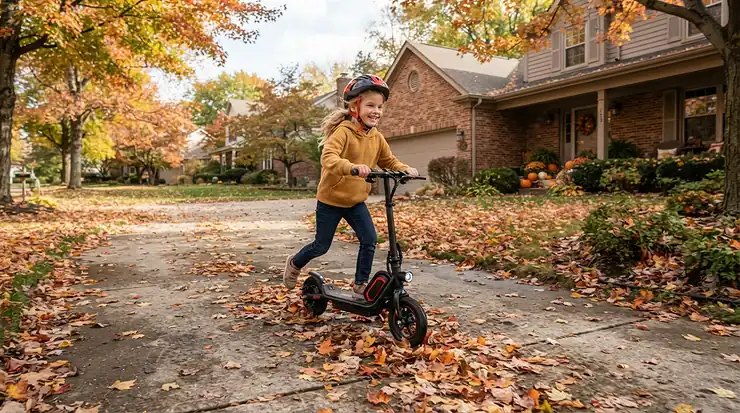
A folding kick scooter for kids is a two- or three-wheeled, foot-powered ride whose stem collapses toward the deck, so it fits in a trunk, a school cubby, or a hallway closet. Most pair a kid-sized deck with a height-adjustable handlebar and a simple rear brake. Think of it as a bicycle’s pocket-sized cousin.

Here’s the catch. Search the category and you’ll wade through hundreds of near-identical listings, each promising “sturdy,” “lightweight,” and “glow-in-the-dark fun.” The specs that decide whether a scooter survives a school year are the ones listings bury: the real deck weight limit, how the hinge locks, and whether the brake sits where small feet can reach it.
The idea isn’t new. According to Wikipedia’s kick scooter entry, a Swiss company built a foldable aluminum scooter with inline-skate wheels back in 1990. The Razor craze then swept through Japan and the wider world around 1999. Today’s models are lighter, brighter, and far more varied.
This guide compares seven real models: a budget pick, two classics, a toddler-friendly three-wheeler, and a premium option. We weigh each one on five factors: an adjustable-height scooter for children, a light-up wheel scooter, the deck weight limit, the folding mechanism, and the rear brake. Everything here comes from manufacturer specs, retailer listings, and aggregated review sentiment. It is research-based analysis, not hands-on testing.
Quick Comparison: 7 Folding Kick Scooters for Kids at a Glance
| Product | Best For | Deck Weight Limit | Rear Brake | Lights | Price Range |
|---|---|---|---|---|---|
| Jetson Orbit | Budget light-up starter | 132 lb | Foot brake | In-frame LEDs plus motion-activated wheels (3 AA) | $30-$40 range |
| Razor A Kick Scooter | Durable, no-frills daily rider | 143 lb | Rear-fender | None | $40-$50 range |
| Razor S Folding Kick Scooter | Simple glow for younger 5-year-olds | 110 lb | Rear-fender | LED wheels | $40-$50 range |
| Skidee Kick Scooter | Ages 2-6 beginners | 110 lb | Rear brake | LED wheels | Check current price |
| Jetson Jupiter | Maximum light show | 132 lb | Verify on listing | 100+ LEDs | $35-$50 range |
| Jetson Mars | Bigger or taller kids | 150 lb | Rear foot brake | LED wheels, deck, stem | $40-$55 range |
| Micro Maxi Foldable LED | Premium long-term rider | 110 lb | Rear brake | Motion-powered LED wheels | $170-$200 range |
Looking at the table, the Jetson Orbit is the cheapest way into lights, while the Jetson Mars is the only model here rated above 143 lb. The Razor S Folding Kick Scooter glows but, according to Razor’s own comparison chart, does not adjust in height. The Micro Maxi Foldable LED costs roughly four times as much as the budget picks. The sections below explain what that premium actually buys.
💬 Just one click — help others make better buying decisions too!😊
Top 7 Folding Kick Scooters for Kids: Expert Analysis
Each pick below is judged on what its specs mean in practice, plus the genuine aggregated review themes we could verify. Ratings come from public retailer listings at the time of research (November 2026) and will drift.
1. Jetson Orbit — cheapest way into light-up wheels
The Jetson Orbit is built for parents who want the glow without a big bill. It has a 132 lb deck weight limit, weighs about 6 lb, and rolls on 4-inch wheels. Its folding lever collapses the frame to roughly 24 x 10 x 8.5 inches. That’s small enough to slide under a classroom bench or a car seat.
The lights come from in-frame LEDs with switchable flashing patterns, plus motion-activated wheel lights. It needs three AA batteries that aren’t included, so buy them before the gift is wrapped. Based on the spec comparison, the 4-inch wheels are the trade-off. Small wheels transmit every sidewalk crack to a child’s hands, so this is a smooth-pavement scooter.
Retailer data shows about 4.4 out of 5 across roughly 2,400 ratings, with around 77% at five stars and roughly 8% at one star. Reviewers consistently praise value, working wheel lights, fast assembly, and a compact fold. The recurring complaint is wheels that misalign, wobble, or loosen. That makes a monthly bolt check worthwhile.
Pros:
- ✅ Very low entry price for lights plus folding
- ✅ Compact fold fits cubbies and trunks
- ✅ Fast assembly with few tools
Cons:
- ❌ Small 4-inch wheels feel harsh on rough pavement
- ❌ Needs batteries, and wheel wobble is a common complaint
Price range: roughly $30-$40. For a first scooter, that’s strong value if you stay on smooth ground.
2. Razor A Kick Scooter — the no-nonsense original
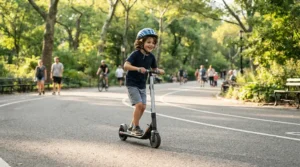
The Razor A Kick Scooter earns its place by doing little and doing it consistently. It has an aluminum T-tube and deck and a 143 lb weight limit. Razor lists a frame weight around 4.6 lb. It has 95 mm urethane wheels, a rear-fender brake, and a 17.3 x 3.6 inch deck. The handlebar adjusts, and Razor USA has said it reaches about 34 inches from the ground when fully extended.
On paper, that 143 lb deck weight limit is generous for the 5-and-up age bracket. Even a tall ten-year-old and a school backpack stay under it. The rear-fender brake is the classic “step on the fender” design, so there’s no lever to learn. The A has no lights, though Razor sells a separate light-up A variant that’s worth checking if glow matters.
Roundup reviewers consistently describe quick folding and light weight as the big wins. Two caveats come up: the folding mechanism takes a little practice, and the deck can swing when you carry it folded. One retailer lists a six-month limited warranty, so confirm current terms.
Pros:
- ✅ High 143 lb limit leaves room to grow
- ✅ Very light aluminum frame
- ✅ Simple rear-fender brake kids learn instantly
Cons:
- ❌ No built-in lights for dusk riding
- ❌ Fold takes practice to do smoothly
Price range: around $40-$50. It’s a safe, proven choice if you don’t need lights.
3. Razor S Folding Kick Scooter — light-up wheels in a classic shell
The Razor S Folding Kick Scooter is essentially a scaled-down A with LED lights in the urethane wheels. Razor lists a 110 lb maximum rider weight, ages 5 and up, an aluminum deck with steel parts, and 95 mm wheels. The brake is a rear fender, and the weight sits roughly between 5.4 and 6 lb depending on the source.
Here’s the detail most buyers miss. Razor’s own comparison chart marks the S as not height-adjustable. So it is not really an adjustable-height scooter for children. A small five-year-old will love it, but an eight-year-old will likely hunch over it. If your child is average-sized for 5-7, the S is a fit. Otherwise the A or the Jetson Mars gives you more growth room.
Retailer listings show roughly 4.6 out of 5 across about 400 ratings. We couldn’t verify detailed complaint themes from public sources, so read the most recent 1-3 star reviews on the listing before ordering. The lower deck weight limit also matters if your child is already tall.
Pros:
- ✅ Light-up wheels with a trusted rear-fender brake
- ✅ Light and easy to carry once folded
- ✅ Clean, simple design with few parts to loosen
Cons:
- ❌ Fixed handlebar height limits long-term use
- ❌ 110 lb limit is lower than the A or Jetson Mars
Price range: around $40-$50. It’s good for younger kids, but weaker value for fast growers.
4. Skidee Kick Scooter — a three-wheeler for the youngest riders
The Skidee Kick Scooter is a different animal: three wheels, lean-to-steer, and a removable, adjustable seat. The listing shows a 110 lb limit, a weight near 8.1 lb, and a rear brake. LEDs in the wheels light up as the scooter moves. It lists an unusually wide 2-to-12 age range.
Treat that range with healthy skepticism. A three-wheeler with an 8 lb frame and a small deck is realistically a ride for toddlers through early elementary school. Lean-to-steer builds balance and is forgiving for beginners, but older children will outgrow it quickly. The listing says “easily foldable” without detailing the folding mechanism, so look closely at photos and reviews before buying.
Retailer data shows about 4.6 out of 5 across roughly 280 ratings. Reviewers highlight tool-light assembly, a stable and smooth ride, bright colors, and lights that glow during motion. Some find it smooth but hard to maneuver. One reviewer claims the lights are solar, which conflicts with the listing’s “no battery” claim, so the lighting details are unclear. The sample we could verify was small.
Pros:
- ✅ Three wheels make balance forgiving for beginners
- ✅ Removable seat suits the youngest riders
- ✅ Motion-activated wheel lights
Cons:
- ❌ Heavier than two-wheel folding scooters
- ❌ Folding details are thin on the listing
Price range: check current price, since comparable three-wheel LED models appear in the budget-to-mid tier. It suits ages 2-6 best.
5. Jetson Jupiter — the biggest light show of the group
The Jetson Jupiter advertises more than 100 LEDs across the stem, wheels, and deck. It has a 132 lb limit, weighs about 6 lb, and has a 17.25 x 4 inch deck. It folds to about 25 x 10 x 9 inches. One retailer lists the handlebar range at 20 to 29 inches, though brands measure that differently, from the deck or from the ground. Compare the numbers to your child’s height rather than to other brands’ charts.
In the Reviewed.com roundup, this scooter was named best two-wheel option, with a bumpy ride noted as the drawback. That tracks with its small wheels. It rewards smooth sidewalks and punishes cracked ones.
Verify the brake on the listing, because we couldn’t confirm it from public sources. Jetson’s other two-wheel models use a rear foot brake. There’s also a Target Q&A thread where a customer reports a stuck folding latch, which Target’s team addressed. One thread isn’t a pattern, but it’s a reason to test the fold the day it arrives, while returns are easy.
Pros:
- ✅ Lights on stem, deck, and wheels
- ✅ 132 lb deck weight limit for growing kids
- ✅ Compact fold for tight storage
Cons:
- ❌ Small wheels transmit a bumpy ride
- ❌ At least one report of a sticky fold latch
Price range: roughly $35-$50. It’s a showy, fair-value pick for kids who care about lights.

6. Jetson Mars — highest weight limit in the group
The Jetson Mars stands out on size. It has a 150 lb limit, a 20.5 x 4.4 inch deck, and 4.66-inch wheels. The handlebar adjusts from 25.5 to 34.5 inches. It weighs about 7 lb, folds to 27.5 x 11.75 x 8.75 inches, and has a rear foot brake. The LEDs sit in the wheels, deck, and stem, and the manual lists a power button for the lighting.
What do those numbers mean? The longer deck gives both feet room, which matters for a ten-year-old whose sneakers have outgrown a compact deck. The larger wheels roll over small imperfections better than 4-inch wheels. The extra pound compared with the lightest options is the price: it’s noticeable when a child carries it up steps.
Retailer reviews show about 4.6 out of 5, with roughly 94% recommending it. Parents describe it as a good beginner choice and a smooth step up from a three-wheeler. We couldn’t verify detailed complaint themes. It appears to be the sturdiest option here for bigger kids.
Pros:
- ✅ 150 lb limit, the highest in this group
- ✅ Longer deck and 4.66-inch wheels
- ✅ Wide handlebar height range
Cons:
- ❌ Heavier at about 7 lb
- ❌ Lights are switchable, so check the power details
Price range: around $40-$55. It’s strong value for taller kids who’d outgrow the others.
7. Micro Maxi Foldable LED — premium three-wheeler that folds
The Micro Maxi Foldable LED is the splurge. It’s a Swiss-designed lean-to-steer scooter for ages 5-12 with a 110 lb limit and a weight near 6.2 lb. Micro lists a T-bar height of 26.5 to 35.75 inches, a 13 x 5.5 inch deck, and 120 mm front and 80 mm rear wheels. It folds to about 23.7 x 10.2 x 8.2 inches and carries a two-year defect warranty.
Its LED wheels are motion-powered, so there are no batteries to replace. The folding mechanism collapses the T-bar so it fits in a locker or trunk. Lean-to-steer is the design’s signature: kids steer by shifting weight, which many parents find easier for balance.
Micro’s own site shows a 5.0 average from about 260 reviews. That’s brand-site data, which tends to run rosier than independent listings. Roundup reviewers still praise the premium build, quiet ride, and resale value. The most common complaints are the price and occasional reports of loose front wheels.
Pros:
- ✅ Battery-free LED wheels
- ✅ Two-year defect warranty and strong resale appeal
- ✅ Wide T-bar range for ages 5-12
Cons:
- ❌ Costs far more than any other pick here
- ❌ Occasional loose-front-wheel reports
Price range: roughly $170-$200. It’s worth it only if the scooter will be passed down.
Top 7 Specs Side by Side
| Product | Scooter Weight | Wheels | Folded Size | Rating Source | Best For |
|---|---|---|---|---|---|
| Jetson Orbit | ~6 lb | 4 in | ~24 x 10 x 8.5 in | ~4.4/5, ~2,400 retailer ratings | Budget buyers |
| Razor A Kick Scooter | ~4.6 lb frame | 95 mm | Not listed | Roundup reviewers | Durability seekers |
| Razor S Folding Kick Scooter | ~5.4-6 lb | 95 mm | Not listed | ~4.6/5, ~400 retailer ratings | Younger riders |
| Skidee Kick Scooter | ~8.1 lb | Not listed | Not listed | ~4.6/5, ~280 retailer ratings | Toddlers |
| Jetson Jupiter | ~6 lb | Small | ~25 x 10 x 9 in | Reviewed.com pick | Lights fans |
| Jetson Mars | ~7 lb | 4.66 in | ~27.5 x 11.75 x 8.75 in | ~4.6/5, ~94% recommend | Taller kids |
| Micro Maxi Foldable LED | ~6.2 lb | 120/80 mm | ~23.7 x 10.2 x 8.2 in | 5.0/5 on brand site | Hand-me-downs |
The Razor A Kick Scooter is the lightest by frame weight, while the Skidee Kick Scooter is the heaviest. Folded size matters more than it seems, since a few inches decide whether a scooter fits a school locker. Ratings from brand sites like the Micro Maxi Foldable LED deserve a discount against independent retailer data.
Practical Usage Guide: Your First 30 Days With a Folding Kick Scooter for Kids
A scooter’s first month decides whether it becomes a daily habit or a garage ornament. Here is a simple routine.
Day one: set up and fit. Tighten every bolt, then check the handlebar height. For an adjustable-height scooter for children, the grips should land around waist height so the child stands tall, not stooped. Have them practice unfolding and folding with you watching, because a folding mechanism that’s fumbled early gets abandoned.
Week one: practice in a flat, open space. The American Academy of Orthopaedic Surgeons advises practicing in a safe open area, learning to steer and brake properly, and supervising closely the first few rides. It also recommends protective gear such as a helmet and wrist guards.
Weekly: a two-minute check. Wiggle the stem for play, spin each wheel, and press the rear brake to check it still grips. Wipe grit from the hinge.
Monthly: tighten and clean. Loose bolts are the most common failure on budget scooters, and wobbling wheels are a recurring theme in listing reviews. A drop of light lubricant on the hinge pivot keeps the fold smooth.
Common first-30-day mistakes:
- Letting the child ride in the street before they can stop confidently.
- Leaving the scooter in rain, which rusts bolts and hinges.
- Skipping the helmet “just for a quick ride.”
Real-World Scenarios: Which Folding Kick Scooter for Kids Fits Your Family?
Specs are abstract. Here are three profiles, each matched to a pick and the reasoning behind it.
The preschool pickup parent. Your four-year-old is just learning balance, and you need something that survives being dropped on the porch. Budget is modest and storage is tight. The Skidee Kick Scooter fits: the three wheels and lean-to-steer forgive wobbly balance, and the removable seat adds a rest option. Plan to upgrade around age six or seven.
The walk-to-school family. Your seven-year-old covers about half a mile each way and the scooter rides in a locker. A compact fold and a reliable rear brake matter most. The Razor A Kick Scooter is the safest bet, with a high weight limit and simple brake. If lights matter for winter mornings, the Jetson Orbit adds visibility at a lower cost.
The hand-me-down household. You have two or three kids who’ll share one scooter over several years. Here the Micro Maxi Foldable LED makes financial sense, since its premium build and resale appeal spread the cost across children. If budget is tight, the Jetson Mars, with its 150 lb limit and wide height range, is the sturdier value option.
Problem → Solution Guide: Fixing Common Scooter Headaches
Most scooter frustrations repeat across households. Here are the common ones, with practical fixes.
Problem: the handlebar wobbles. Usually a loose clamp or stem bolt. Tighten it with the included hex key, and re-check weekly.
Problem: the folding latch sticks. Dirt in the hinge is the likely culprit. Clean the joint with a dry cloth, add a drop of light lubricant, and avoid forcing it. If a latch is physically damaged, contact the seller promptly, since a Target Q&A thread on the Jetson Jupiter shows this can happen.
Problem: the lights stopped working. For battery-powered models like the Jetson Orbit, swap the three AA cells first. Motion-powered wheels, as on the Micro Maxi Foldable LED, depend on spinning, so check the wheels aren’t binding.
Problem: your child outgrew the handlebar. This is common with fixed-height scooters like the Razor S Folding Kick Scooter. Measure before buying and choose a height range that covers at least two growth spurts.
Problem: the scooter won’t fit your storage. Compare folded dimensions on the spec sheet. The Micro Maxi Foldable LED and Jetson Orbit are the most compact in this group.
✨ Ready to Pick Your Ride?
🔍 Click any highlighted product name above to check current pricing and availability. Match the scooter to your child’s height, weight, and daily route, and you’ll end up with a ride they actually use.
How to Choose a Folding Kick Scooter for Kids
Choosing well comes down to six steps. Work through them in order.
- Measure your child and check the age range. Most two-wheel folding scooters list ages 5 and up, so a younger child usually belongs on a three-wheeler.
- Verify the deck weight limit. Pick a limit comfortably above your child’s current weight plus a backpack.
- Confirm height adjustability. An adjustable-height scooter for children saves you from a second purchase in two years.
- Inspect the folding mechanism. Look for a lock that engages with a clear click and has a secondary safety latch.
- Check the rear brake. The brake should be easy for a small foot to reach and press.
- Decide on lights. A light-up wheel scooter adds visibility and fun, but battery-powered lights add upkeep.
A final tip: read the 1-3 star reviews rather than the glowing ones. They reveal how a folding kick scooter for kids ages under real use.
Adjustable-Height Scooter for Children: Sizing That Lasts
A handlebar that doesn’t fit is the quickest way to turn a good scooter into a bad one. Too low, and your child hunches and steers poorly. Too high, and they can’t control it.
The practical test is simple: with the child standing on the deck, the grips should sit near waist height. An adjustable-height scooter for children typically offers three or four positions, so you can raise the bar as they grow. The Jetson Mars offers a wide range of 25.5 to 34.5 inches, and the Micro Maxi Foldable LED reaches about 35.75 inches. The Razor A Kick Scooter extends to roughly 34 inches.
There’s a measuring trap, though. Brands quote handlebar height differently: some from the deck, others from the ground. That’s why the Jetson Jupiter‘s 20 to 29 inch listing and the Jetson Mars‘s 25.5 to 34.5 inch range can’t be compared directly. Always compare against your child’s height using the same reference point.
The Razor S Folding Kick Scooter is the cautionary example: it’s a fine ride, but its fixed height makes it a shorter-lived purchase. An adjustable-height scooter for children costs a little more upfront and usually pays it back.
Deck Weight Limit: The Number Parents Misread
The deck weight limit is the maximum rider weight the manufacturer rates for the scooter. It’s often printed in small type, and it matters more than most buyers realize.
In this group, limits range from 110 lb (the Razor S Folding Kick Scooter, Skidee Kick Scooter, and Micro Maxi Foldable LED) to 150 lb (the Jetson Mars). The Razor A Kick Scooter sits at 143 lb, and the Jetson Orbit and Jetson Jupiter at 132 lb.
What does that mean in practice? A deck weight limit isn’t just about a heavy child. It includes a backpack, the occasional sibling hop-on, and the stress of jumping off curbs. A scooter operating near its limit will flex and loosen sooner.
A sensible rule of thumb: choose a limit well above your child’s weight, so the scooter isn’t working at its ceiling for years. Also resist the temptation to let adults test it. A kid-rated deck weight limit exists for a reason, and a bent deck is a safety issue, not just a cosmetic one.

Folding Mechanism: Where Cheap Scooters Cut Corners
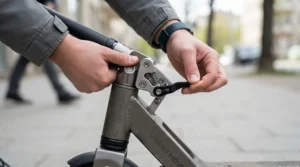
The folding mechanism is the single most failure-prone part of any folding kick scooter for kids. It’s a hinge that’s expected to lock rigidly under a moving child, then release smoothly on command.
The designs differ. Razor describes its approach as a folding downtube with a lock mechanism, and roundup reviewers note it takes practice to fold smoothly. The Jetson Mars uses a quick-release lever. The Jetson Orbit uses a simple folding lever for easy carrying. Micro says the Micro Maxi Foldable LED‘s newer mechanism folds the bar with one hand.
What should you inspect? First, whether the lock engages with a firm click. Second, whether there’s a secondary safety latch or clamp. Third, whether the joint shows any play when locked. A little looseness here translates to a wobbly handlebar under load.
The Jetson Jupiter‘s sticky latch reports are a good reminder: test the folding mechanism the day it arrives. Fold it, unfold it, and wiggle the stem ten times. If anything feels off, return it while you still can.
Rear Brake: What Kids Actually Need
Every scooter here has some form of rear braking, and for good reason. A child stops by pressing a foot down, and rear placement keeps the front wheel steering freely.
There are two styles. A rear-fender brake, used on both Razor models, is a flexible fender that presses onto the wheel when stepped on. A rear foot brake, used on the Jetson Mars, works similarly with a dedicated pad. The Jetson Orbit lists a foot brake, and the Skidee Kick Scooter and Micro Maxi Foldable LED list rear brakes.
The rear brake is only as good as your child’s habit of using it. The Consumer Product Safety Commission recommends children wear a helmet meeting the bike helmet standard, plus knee and elbow pads. Combine that gear with brake practice in an empty lot before any sidewalk riding.
One more detail: brake pads wear. If the fender looks thin or stopping gets sluggish, replace it before the next ride.
Light-Up Wheel Scooter: Gimmick or Smart Safety Add-On?
A light-up wheel scooter is irresistible to kids, but is it useful? Partly.
The upside is real. Lights improve visibility at dusk and on overcast days, and kids tend to ride more when the scooter looks cool. Several models here, including the Razor S Folding Kick Scooter, Skidee Kick Scooter, and Micro Maxi Foldable LED, light up from motion, so there are no switches to forget.
The downside is nuance. Lights on a scooter don’t replace reflective gear or a front light for night riding. And battery-powered lights, like the Jetson Orbit‘s, add maintenance. A light-up wheel scooter with motion-powered LEDs avoids that chore but costs more.
Our take: treat lights as a bonus, not a safety system. If your child rides mostly in daylight, the Razor A Kick Scooter gives you a sturdier frame for the same money. If dusk rides are common, a light-up wheel scooter plus reflective clothing is the smarter combination.
Folding Kick Scooter for Kids vs Alternatives
Before committing, it helps to compare the folding kick scooter for kids against other options.
| Option | Strengths | Weaknesses | Best For |
|---|---|---|---|
| Folding two-wheel scooter (Razor A Kick Scooter, Jetson Mars) | Portable, light, grows with child | Needs balance, so not for toddlers | School commutes, ages 5+ |
| Three-wheel lean-to-steer (Skidee Kick Scooter, Micro Maxi Foldable LED) | Stable, forgiving for beginners | Heavier, outgrown sooner | Ages 2-7, first scooters |
| Fixed non-folding scooter | Stiffer frame, no hinge to fail | Bulky to store and carry | Home or driveway use |
The folding two-wheel scooter wins on portability and longevity, while three-wheelers win on beginner confidence. A non-folding model skips the hinge entirely but costs you storage space. For most families, a folding kick scooter for kids hits the best balance, with a three-wheeler as the exception for the youngest riders.
Long-Term Cost & Maintenance
Sticker price tells only part of the story. Total cost of ownership depends on durability, upkeep, and resale.
| Product | Price Range | Value Verdict | Best For |
|---|---|---|---|
| Jetson Orbit | $30-$40 range | Best cost-per-ride on a budget | Starters |
| Razor A Kick Scooter | $40-$50 range | Excellent durability for the money | Everyday riders |
| Razor S Folding Kick Scooter | $40-$50 range | Good, but fixed height shortens its life | Smaller kids |
| Jetson Mars | $40-$55 range | Strong for tall or fast-growing kids | Older kids |
| Micro Maxi Foldable LED | $170-$200 range | Costly, but resale and warranty offset | Hand-me-downs |
Looking at the table, the cheapest option isn’t always the lowest cost over time. A $35 scooter that lasts one year costs more per month than a $45 scooter that lasts three. The Micro Maxi Foldable LED only wins if multiple children use it or you plan to resell.
Maintenance is minimal: tighten bolts, clean the hinge, check the brake, and replace batteries on lit models like the Jetson Orbit. Budget a few dollars a year for replacement parts, and store the scooter indoors to prevent rust.

Frequently Asked Questions
❓ What is the best folding kick scooter for kids under $50?
❓ What age should a child start on a two-wheel folding kick scooter?
❓ Do light-up wheels on kids scooters need batteries?
❓ What if my child is close to the scooter's deck weight limit?
❓ Does my child need a helmet on a folding kick scooter?
Conclusion
Choosing a folding kick scooter for kids doesn’t have to be a research project. Start with your child’s height, weight, and age, then match the deck weight limit, handlebar range, and brake to those numbers.
For most families, the Razor A Kick Scooter is the safest all-round bet: high weight limit, simple rear-fender brake, and a durable aluminum frame. If lights matter, the Jetson Orbit is the budget route, and the Jetson Mars is the pick for bigger kids who need a longer deck and a 150 lb limit. The Skidee Kick Scooter suits toddlers learning balance, while the Jetson Jupiter satisfies the light-show crowd. The Micro Maxi Foldable LED is the premium choice for households passing a scooter down. Skip the Razor S Folding Kick Scooter only if height adjustability is a must.
Whatever you choose, pair it with a helmet. The Consumer Product Safety Commission has said that wearing a bicycle helmet can cut the risk of head injury by as much as 85 percent, and it advises helmets for scooter riding too. Fold-test the scooter on day one, tighten the bolts monthly, and let your kid ride.
Recommended for You
- 12V Vs 24V Ride-On Cars: 7 Proven Picks Compared (2026)
- Ride-On Car Battery Replacement: 7 Proven Picks For 2026
- Electric Ride-On Cars For Toddlers: 7 Best Picks For 2026
Disclaimer: This article contains affiliate links. As an Amazon Associate, I earn from qualifying purchases. If you purchase products through these links, we may earn a small commission at no additional cost to you.
✨ Found this helpful? Share it with your friends! 💬🤗
