
In This Article
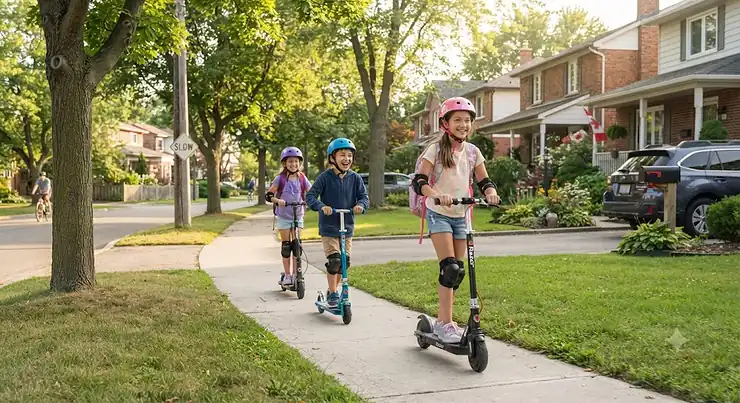
Somewhere between the driveway and the end of the block, an electric scooter kids ride for the first time turns into the loudest ten minutes of their week. That grin, the wobble, the “again, again” — it’s the whole point. But here’s the thing nobody tells you at the toy aisle: not every electric scooter kids can safely handle is built the same way, and the difference between a happy Saturday and a skinned knee often comes down to a 150-watt motor spec you glossed over. This guide breaks down seven real, currently available models — budget picks, mid-range all-rounders, and a couple of premium options for the pre-teens who’ve outgrown the driveway loop — based on genuine manufacturer specs and aggregated review sentiment, not marketing copy.
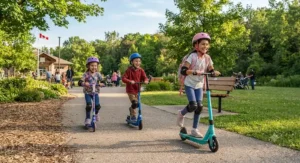
What is an electric scooter for kids? It’s a battery-powered, throttle-controlled riding toy designed for children roughly ages 6 to 14, typically capped between 10 km/h and 24 km/h, built with safety features like foot brakes, low ground clearance, and weight limits under 70 kg. Unlike adult e-scooters, most kid models are intended for private property — driveways, parks, and closed neighbourhoods — not public roads. We’ll get into why that distinction matters a lot in Canada. Every product here also gets the honest treatment: what reviewers actually say, where the marketing oversells, and who each scooter genuinely suits. Let’s find the right one before your kid finds the wrong one first.
Quick Comparison Table
| Scooter | Top Speed | Ideal Age | Best For |
|---|---|---|---|
| Razor Power Core E90 | 16 km/h | 8+ | Entry-level durability |
| Gotrax GKS Mini | 12 km/h | 6-12 | Youngest first-timers |
| Segway Ninebot Zing C20 | 20 km/h | 10+ | Growing teens who want range |
Looking at this snapshot, the pattern that jumps out is speed scaling almost directly with age recommendation — which is exactly how it should work, though it’s not how every brand actually labels its boxes. The Razor Power Core E90 sits at the classic “first electric ride” sweet spot, while the Segway Ninebot Zing C20 is really a bridge product for kids about to graduate into adult-style commuting. Notice, too, that the cheapest option isn’t always the safest fit — the Gotrax GKS Mini‘s lower top speed is a feature, not a limitation, for a six-year-old.
💬 Just one click — help others make better buying decisions too!😊
Top 7 Electric Scooters for Kids: Expert Analysis
1. Razor Power Core E90 — best all-rounder for a first electric ride
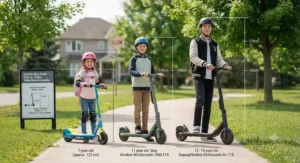
The standout here is Razor’s Power Core hub motor, a maintenance-free design that quietly eliminates the chain-and-belt headaches of older scooter generations. The 85 to 90-watt hub motor pushes riders to a top speed of 16 km/h (10 mph), and the 12-volt sealed battery delivers roughly 40 to 80 minutes of continuous ride time depending on the specific version — in practice, that’s the difference between “quick spin before dinner” and “actually explores the whole cul-de-sac.” Based on the spec comparison against other sub-C$200 models, the all-steel frame and airless rear tire are what set this apart: no flats, no pump, no drama. This is the scooter for parents who want a genuine Razor scooter electric option that survives being dropped in the driveway forty times before September. Reviewers consistently report that the battery outlasts expectations and that assembly takes under fifteen minutes, though several parents note the non-adjustable handlebars become a limiting factor once a kid hits a growth spurt. It suits ages 8 and up, riders under 54 kg, and families wanting a proven, low-fuss entry point rather than the flashiest option on the shelf.
Pros:
- ✅ Maintenance-free hub motor with no chain to adjust
- ✅ Airless rear tire eliminates flat-tire frustration
- ✅ Hand-operated front brake for real stopping control
Cons:
- ❌ Handlebars don’t adjust for height as kids grow
- ❌ Ride time varies noticeably with rider weight
Priced around C$130-160 depending on retailer and colourway, at the time of research this remains one of the better value-per-dollar entries in the category — check current price before buying, since ranges shift seasonally.
2. Gotrax GKS Mini — lightest option for the youngest riders
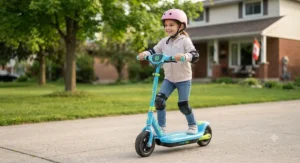
What immediately stands out about the GKS Mini is how deliberately Gotrax throttled it back: a 150-watt motor capped at just 12 km/h (7.5 mph), with a gentle 2.4 km/h creep mode before the throttle even engages. The 6-inch solid rubber tires won’t ever go flat, and at under 9 kg assembled, this is genuinely one of the lightest scooters a six-year-old can wheel around themselves. What most buyers overlook about this model is that the deliberately low top speed isn’t a corner Gotrax cut — it’s the entire design brief, aimed squarely at first-time riders who’ve never handled a throttle before. The UL 2272-certified electronics and dual electronic-plus-foot brake system back that up with real safety engineering, not just a warning label. Aggregated review sentiment describes the GKS Mini as an excellent “training wheels” scooter, though several reviewers flag the compact, non-folding frame as awkward for apartment storage and the roughly 6 km range as short for anything beyond neighbourhood loops. This is the pick for parents of six- to nine-year-olds who want a genuinely beginner-paced first ride rather than something that outpaces a child’s reaction time.
Pros:
- ✅ Deliberately capped speed suits true beginners
- ✅ UL 2272-certified electronics and dual braking
- ✅ Under 9 kg, easy for small kids to manage
Cons:
- ❌ Doesn’t fold, which complicates storage
- ❌ Short range limits longer outings
Expect a price in the C$150-180 range at the time of research, with prices may vary by retailer promotion.
3. Gotrax GKS Pro — best step-up speed for slightly older kids
The GKS Pro’s headline feature is its 9 mph (14.5 km/h) top speed on the same 150-watt platform as the Mini, which on paper sounds modest but translates into a noticeably livelier ride for a kid who’s already outgrown the entry-level pace. Gotrax’s “Safe Step” throttle technology requires a two-stage activation — foot down, then thumb throttle — which functionally prevents the accidental full-speed launches that plague cheaper single-stage throttles. Here’s what to weigh: the 5-mile range is a real improvement over the Mini, and reviewers on Gotrax’s own product pages and third-party retail sites note the upgraded battery holds up well across multiple riding sessions without daily recharging. The spec sheet won’t tell you this, but user reports suggest the slightly wider deck also makes a meaningful difference for kids riding in sneakers versus the narrower decks on some competitors. This model suits ages 8-12 who’ve already mastered a beginner scooter and are ready for a bit more speed without jumping straight to a 20 km/h teen model.
Pros:
- ✅ Two-stage throttle prevents accidental launches
- ✅ 5-mile range covers a full afternoon of riding
- ✅ Noticeably faster than entry-level Gotrax models
Cons:
- ❌ Still capped low for kids nearing their teens
- ❌ Non-adjustable handlebar height
At the time of research, pricing sits in the C$190-230 range — always check current price, since Gotrax runs frequent seasonal promotions.
4. Razor Black Label E90 — sleekest build with the strongest frame
The Black Label E90 shares its Power Core drivetrain with the standard E90 but wraps it in a redesigned, more rigid all-steel frame that Razor markets as its toughest build in the E90 line. Reviewers and Razor’s own spec sheet cite up to 40 minutes of continuous ride time from the 12-volt rechargeable battery, with a thumb-activated throttle and foot-activated rear-fender brake replacing the hand brake found on the base model — a design choice that, based on the spec comparison, actually suits younger riders better since it removes the coordination challenge of squeezing a hand lever while steering. What most buyers overlook is that “Black Label” here signals build quality and styling rather than a speed upgrade; top speed stays at the same 16 km/h as the standard E90. Aggregated customer sentiment across major retailers consistently praises the sturdier feel underfoot and the striking two-tone colourways, though a recurring complaint is that the foot brake takes a session or two for younger kids to learn compared to a hand brake. This is the scooter for parents prioritizing durability and looks over top-speed bragging rights, particularly for riders age 8 and up weighing under 54 kg.
Pros:
- ✅ Reinforced all-steel frame feels noticeably sturdier
- ✅ Foot-activated brake suits younger coordination levels
- ✅ Distinctive styling kids genuinely want to show off
Cons:
- ❌ No speed advantage over the standard E90
- ❌ Foot brake has a short learning curve
Pricing typically falls in the C$170-210 range at the time of research, positioning it as a mid-tier step above the standard Power Core E90.
5. Segway Ninebot eKickScooter Zing E12 — best for growing kids who need room to grow
The Zing E12 replaced the well-reviewed E10 in Segway’s lineup, and the standout feature is adjustability: the handlebar height actually grows with your kid, addressing the single most common complaint across nearly every other scooter on this list. Segway lists a top speed around 18 km/h (11.2 mph) and roughly 6.2 miles of range, aimed at riders 8 to 14 years old and up to about 60 kg. Based on the spec comparison with the discontinued E10 — which independent reviewers praised for its ruggedness and water resistance — the E12 appears to carry forward that same durable, IPX-rated build while extending usable lifespan by a couple of growth spurts. Here’s what to weigh: multiple riding modes (a gentler “safe mode” and a punchier “turbo mode”) let parents dial in the experience as confidence builds, which is a genuinely useful feature that budget scooters simply don’t offer. Reviewers who tested the earlier E10 flagged occasionally unclear activation instructions and no side reflectors as minor gaps; there’s no reason to expect the E12 solved both, so a set of add-on reflective strips is a smart C$10 add. This suits families wanting one scooter to last from age 8 through early teens rather than replacing the whole unit as their kid grows.
Pros:
- ✅ Adjustable handlebar height grows with your kid
- ✅ Multiple ride modes for beginner-to-confident riders
- ✅ Durable, water-resistant build quality
Cons:
- ❌ Missing reflectors on some units, per past model reports
- ❌ Higher price point than entry Razor or Gotrax models
Expect to pay in the C$380-440 range at the time of research — a meaningful step up, but one that buys real longevity.
6. Segway Ninebot eKickScooter Zing C20 — best for tweens ready for near-teen speed
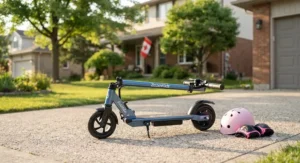
Segway built the C20 explicitly for ages 10 and up, and it shows: a 150-watt motor delivers a genuine 20 km/h (12.4 mph) top speed with a claimed 12.4-mile range, alongside cruise and turbo modes plus a dedicated “safe mode” for supervised early rides. What most buyers overlook about this model is that the 165 lb (75 kg) weight capacity and IPX4 water resistance rating mean it comfortably accommodates a growing tween who might otherwise need to jump straight to an adult-sized scooter. The high-toughness steel frame and quick-release folding mechanism at 23.4 lbs make it genuinely portable for families splitting time between a house and a cottage, something none of the budget options on this list can claim. Based on the spec comparison, the C20’s speed range edges close enough to Ontario’s public-road e-scooter threshold that this is squarely a private-property and supervised-park scooter, not a sidewalk cruiser — worth flagging clearly to any tween eager to test its limits on the street. Reviewers of the broader Zing lineup consistently highlight the UL 2272 certification and TPR anti-skid grips as reassuring safety details for parents handing over something this quick.
Pros:
- ✅ Genuine near-teen speed with three riding modes
- ✅ Foldable design at a manageable 23.4 lbs
- ✅ IPX4 water resistance and UL 2272 certification
Cons:
- ❌ Speed demands closer parental supervision
- ❌ Premium price relative to entry models
At the time of research, pricing lands around C$420-480 — check current price, as Segway periodically bundles accessories with this model.
7. Jetson Ember — best premium pick for tweens and teens who’ve outgrown “kiddie” scooters
The Ember’s headline trick is a built-in Bluetooth speaker with LED lights that pulse to the music, which sounds gimmicky until you realize it’s also what gets a reluctant 13-year-old excited about a “scooter” instead of asking for a moped. Under the fun factor sits a genuinely capable 200-watt hub motor (250-watt peak) reaching 24 km/h (15 mph), a 5Ah lithium battery rated for roughly 8 miles of range, and three selectable speed modes so parents can lock in a slower cap while trust is being built. Jetson recommends this for riders 14 and up, which places the Ember at the very top edge of what most people mean by an electric scooter kids ride — it’s really a youth transportation option bridging childhood scooters and adult commuter models, and families should treat the 15 mph top mode with the same seriousness as handing over car keys for the first time. Based on the spec comparison, the anti-slip deck, sturdy steel frame, and USB-C fast charging are genuinely strong for the price tier, though independent analysis notes hill-climbing and acceleration are middling rather than exceptional — fine for flat neighbourhood commuting, less fine for hilly terrain. This suits older tweens and teens using it for short, supervised commutes rather than younger kids still building basic scooter skills.
Pros:
- ✅ Multiple speed modes let parents cap top speed
- ✅ USB-C fast charging and solid 8-mile range
- ✅ Sturdy steel frame with anti-slip deck
Cons:
- ❌ Top speed demands a mature, experienced rider
- ❌ Hill-climbing performance is average at best
Pricing typically runs C$320-380 at the time of research, positioning it as a premium option best reserved for older, more responsible riders.
Practical Usage Guide: Setup, First Rides, and Maintenance
Getting a new electric scooter kids will actually use safely starts before the first ride, not during it. Most models arrive 80% assembled — expect to attach the handlebar column, tighten a folding clamp, and charge the battery fully before the maiden voyage, since shipping batteries are rarely charged past 30%. Set the throttle to its lowest available mode for the first week regardless of what the box promises; nearly every model reviewed above includes a “safe” or “eco” setting precisely for this reason, and skipping straight to turbo mode is the single most common first-ride mistake parents make. Establish a flat, obstacle-free practice zone — a driveway or empty parking lot, not a sloped street — and have your kid practice the foot brake or hand brake at walking pace before ever touching full throttle. This kind of motorized outdoor play genuinely benefits from a short “scooter contract”: helmet always on, no riding after dark without lights, no passengers, no hills until the brake is second nature.
Maintenance-wise, the hub-motor designs featured here (Razor’s Power Core, Gotrax’s sealed units) need almost nothing beyond wiping down the deck and checking tire pressure on air-filled models monthly. Battery longevity improves significantly if you avoid letting lithium-ion packs sit fully drained for weeks at a time — top up to at least 50% before long storage, like over winter. In the first 30 days, the most common mistake is over-tightening the folding clamp bolts, which can strip threads on lighter aluminum frames; snug is sufficient, and a torque wrench is overkill for a kid’s scooter.
Real-World Scenarios: Matching the Right Scooter to Your Kid
Picture a seven-year-old who’s never ridden anything faster than a tricycle. For that rider, the Gotrax GKS Mini‘s deliberately slow 12 km/h cap and light 9 kg frame remove nearly every variable that causes early falls — there’s simply not enough speed to get into real trouble, which is exactly the point during month one.
Now picture a ten-year-old who’s already comfortable on a bike and rides most days after school. The Razor Power Core E90 or Gotrax GKS Pro fits that profile well: enough speed to feel genuinely fun, a proven safety track record, and a price point that survives the inevitable driveway spill without financial heartbreak.
Finally, picture a twelve-year-old commuting a short, flat half-kilometre to a friend’s house or the community rink, already trusted with more independence. The Segway Ninebot Zing C20 or Jetson Ember make sense here — both offer adjustable speed modes so a parent can start conservative and loosen the cap as trust builds, plus the range and durability to handle regular use rather than occasional weekend fun.
Problem → Solution: Fixing Common Kids’ Scooter Headaches
Problem: The scooter won’t hold a charge like it used to. Lithium-ion batteries lose capacity fastest when stored fully drained or in extreme heat. Solution: charge to roughly 50% before off-season storage, and keep the scooter out of a hot garage in summer.
Problem: My kid keeps riding it barefoot or in sandals. Solution: treat closed-toe shoes as non-negotiable safe riding equipment, the same way a helmet is — foot injuries from a slipped pedal are far more common than most parents expect.
Problem: The throttle feels “too sensitive” for a nervous first-timer. Solution: nearly every model above includes a lower-speed mode; use it for at least the first two weeks regardless of how confident your kid claims to feel.
Problem: My kid wants to ride on the sidewalk or road. Solution: redirect to a driveway, empty lot, or park path — most of these scooters are designed and marketed for private property, and Canadian e-scooter road rules generally set minimum ages well above what these products target.
Problem: The scooter doesn’t fold, and storage is tight. Solution: wall-mounted bike hooks work just as well for non-folding scooters like the GKS Mini, keeping them off a cluttered garage floor.
How to Choose an Electric Scooter for Kids
- Match top speed to actual riding experience, not aspirational age — a confident nine-year-old may outride an anxious twelve-year-old.
- Check the weight limit against your kid’s current weight, with room to grow for at least a year or two of use.
- Prioritize a foot brake or simple hand brake over anything requiring complex coordination for first-time riders.
- Confirm UL 2272 or equivalent certification on the battery and electronics, which every model in this guide carries.
- Consider range honestly — a 3-mile range is plenty for driveway play but frustrating for an actual neighbourhood loop.
- Factor in storage space, since non-folding models take up real square footage in a garage or hallway.
- Budget for safe riding equipment separately — a certified helmet, knee pads, and closed-toe shoes typically add another C$60-100 that’s easy to forget when comparing sticker prices.
Common Mistakes When Buying an Electric Scooter for Kids
The single most common mistake is buying based on top speed alone, treating a higher number as automatically “better” the way it might for an adult commuter scooter. For a first-time seven-year-old rider, the Segway Ninebot Zing C20‘s 20 km/h capability is a liability, not a selling point — the Gotrax GKS Mini‘s modest 12 km/h cap is the smarter buy. A second frequent misstep is ignoring the weight limit printed in fine print; overloading a budget scooter’s motor and battery shortens its lifespan dramatically and can affect braking distance. Parents also regularly skip reading aggregated review sentiment about a specific model’s real-world battery life, trusting the “up to” range figure at face value when actual performance often runs 15-20% lower depending on rider weight and terrain. Finally, treating the helmet and pads as an optional add-on rather than a bundled non-negotiable purchase remains a widespread and preventable oversight.
Electric Scooter vs Kick Scooter vs Bike for Kids
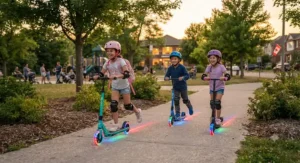
A traditional kick scooter demands more physical effort but builds genuine coordination and leg strength, and it never runs out of battery mid-ride — for kids under six, it’s often still the better starting point before graduating to anything electric. An electric scooter kids can throttle-control removes the propulsion effort, letting younger riders focus entirely on balance and steering, which is precisely why models like the GKS Mini deliberately cap speed so low. A bike, by contrast, offers a fundamentally different skill set — pedalling stamina, gear awareness, road positioning — and typically suits kids a year or two older than a comparable electric scooter rider, given the added complexity of clipping in and balancing without a low deck. In practice, plenty of families use all three at different ages: kick scooter around five or six, electric scooter from roughly eight, and bike graduation happening in parallel rather than as a strict sequence. The honest takeaway is that an electric scooter isn’t a replacement for bike skills — it’s a distinct, lower-effort form of motorized outdoor play best suited to shorter, supervised distances.
What to Expect: Real-World Performance
On paper, a 150-watt motor and a 7.5 mph top speed sound modest — in practice, that translates to a rider covering a typical driveway in about four seconds flat, which feels considerably faster from a low deck than the number suggests. Range figures also behave differently in the real world than on a spec sheet: a claimed 5-mile range assumes flat pavement and a lighter rider, and actual performance for a 40 kg kid on mixed grass and pavement often runs closer to 70-80% of the advertised figure. Braking distance is the detail most parents underestimate — a scooter capped at just 12 km/h can still take two to three metres to stop on a hand brake with an untrained rider, which is exactly why the practice-zone advice above matters more than it sounds. Battery charge time across this lineup runs three to five hours typically, meaning an after-school ride usually requires charging the night before rather than a quick top-up.
Scooter Helmets & Provincial Safety Rules in Canada
Finding a scooter helmet kids Canada parents can actually trust starts with certification, not price. Helmets sold in Canada should carry a CSA, CPSC, Snell, or ASTM certification label, and according to the Canadian Paediatric Society, a standard certified bike helmet is also the correct choice for scooter riding — no separate “scooter helmet” category exists, and skateboard-specific helmets serve a different fall pattern. Kids e-scooter safety hinges heavily on helmet fit: the helmet should sit level, two finger-widths above the eyebrows, with straps forming a “V” under each ear and no more than one finger’s gap under the chin. Health Canada notes that helmets are typically designed for either single or multiple impacts, and a bike-style helmet used for scootering should be replaced after any real fall, even without visible damage.
It’s worth being direct about something most retail listings gloss over: nearly every scooter in this guide is built and marketed for private property use — driveways, parks, closed paths — not public roads. Provincial e-scooter laws in Canada generally set a minimum rider age of 16 for on-road use, with helmets mandatory for anyone under 18, and speeds capped around 24 km/h; Ontario’s rules, for instance, are outlined at ontario.ca, and even that framework only applies where individual municipalities have opted in. That’s a completely separate legal category from the kid-oriented products reviewed here, and it’s precisely why keeping young riders on sidewalks-adjacent private property, rather than roads, matters as much as the helmet itself. Parachute Canada also recommends knee and elbow pads as standard safe riding equipment for younger or newer riders, not just a helmet — a detail worth budgeting for alongside the scooter itself.
Features That Actually Matter (And Those That Don’t)
Foot brakes and certified electronics matter enormously; flashy LED underglow lighting, while fun, matters far less for actual safety despite dominating a lot of marketing photography. Adjustable handlebars matter more than most parents realize upfront, since they directly extend how many years a single scooter stays useful — the Segway Ninebot Zing E12‘s growth-friendly design is a genuine practical advantage over fixed-height budget models. Bluetooth speakers, as seen on the Jetson Ember, are pure fun-factor rather than function, though they do measurably increase how often an older kid actually wants to ride. Weight capacity and certified braking, by contrast, directly affect safety outcomes and deserve more scrutiny than colour options or app connectivity ever will.
Price Range & Value Analysis
| Scooter | Price Range (CAD) | Cost Per Year of Use (est.) | Best For |
|---|---|---|---|
| Gotrax GKS Mini | C$150-180 | Low | Budget-conscious first-timers |
| Razor Power Core E90 | C$130-160 | Low-Moderate | Best overall value |
| Segway Ninebot Zing C20 | C$420-480 | Moderate-High | Long-term tween use |
Interpreting the table above, the Razor Power Core E90 delivers the strongest cost-per-use ratio of anything on this list, largely because its proven, low-maintenance drivetrain tends to outlast cheaper alternatives by a full riding season or more. The Segway Ninebot Zing C20 costs roughly three times as much upfront, but its adjustable modes and sturdier IPX4-rated build mean it can realistically serve a single kid from age ten through early teens without replacement — a genuine total-cost-of-ownership argument even though the sticker price looks steep. Budget buyers should note that the Gotrax GKS Mini‘s appeal is time-limited by design: most kids outgrow its deliberately slow pace within a year or two, making it closer to a rental-grade purchase than a long-term investment.
✨ Don’t Miss These Exclusive Deals!
🔍 Take your family’s outdoor playtime to the next level with these carefully selected scooters. Click on any highlighted item to check current pricing and availability. These picks will help you create real neighbourhood memories your kids will actually remember!
FAQ
❓ How fast can an electric scooter kids ride actually go?
❓ Do kids need a licence for an electric scooter in Canada?
❓ What age is appropriate for a kids electric scooter?
❓ Is a bike helmet okay for scooter riding?
❓ How long do kids electric scooter batteries last per charge?
Conclusion
Choosing the right electric scooter kids will actually love riding — safely, and for more than one season — comes down to matching real riding experience to real specs, not chasing the highest top speed on the box. The Gotrax GKS Mini and Razor Power Core E90 remain the smartest starting points for true beginners, the Gotrax GKS Pro and Razor Black Label E90 bridge the gap for slightly more confident riders, and the Segway Ninebot Zing E12, Segway Ninebot Zing C20, and Jetson Ember carry older, trusted kids into genuine short-distance youth transportation territory. Pair whichever model fits with a properly certified helmet, closed-toe shoes, and a clear driveway-only ground rule for the first few weeks, and you’ve covered the two variables that matter most: the machine and the habits around it. Prices, as always, shift — check current listings before you commit, and prioritize the fit over the flash.
✨ Ready to pick the right scooter for your kid? Compare today’s prices and grab the one that fits your family best!
Recommended for You
- Arduino Starter Kit Kids: 7 Proven Picks for 2026
- 7 Best Robotics Kits for 10 Year Old Kids in 2026
- Best Pokemon Cards Storage & Protection: 7 Top Picks (2026)
Disclaimer: This article contains affiliate links. As an Amazon Associate, I earn from qualifying purchases. If you purchase products through these links, we may earn a small commission at no additional cost to you.
✨ Found this helpful? Share it with your friends! 💬🤗
