
In This Article
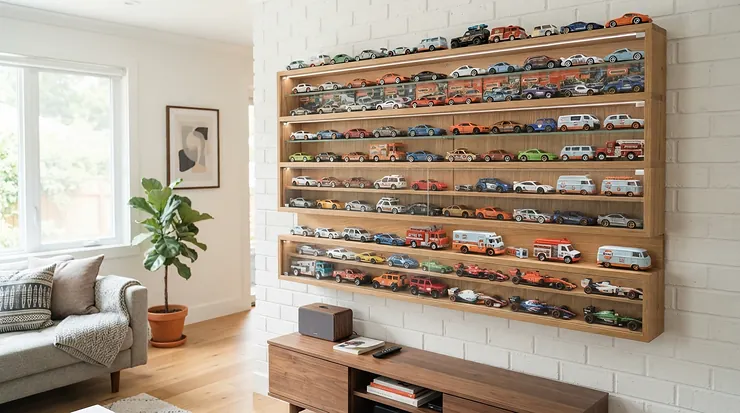
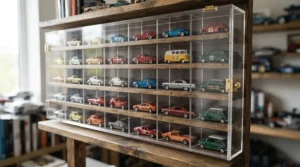
A die-cast car display case is a clear, dust-resistant enclosure, usually acrylic, sometimes a wood frame with a glass or acrylic door. It holds small metal model cars, most often at 1:64 scale, so they stay clear of dust, fingerprints and accidental tumbles while remaining easy to admire.
Here’s the thing about 1:64. According to Wikipedia’s entry on 1:64 scale, most mass-market die-casts in this size are only nominally 1:64, because makers size cars to fit packaging, not a strict ratio. A tiny Mini and a hulking pickup both land in “1:64” and need very different amounts of room. That’s why one-size-fits-all shopping goes sideways so fast.
Think of the case as the frame around a painting. A great casting in a cheap, wobbly, dusty container looks like a thrift-store find. The same casting behind clean acrylic, lit well and spaced properly, looks like it belongs in a gallery.
This guide compares seven real options: single cases, interlocking modules, a wall-mounted toy car display, a cabinet and a blister-card board. You’ll also get hardware advice, spacing math, and a straight comparison of acrylic and glass. Prices are CAD ranges only, and “check current price” is the golden rule on Amazon.ca.
Quick Comparison: Die-Cast Car Display Case Picks at a Glance
Before the deep dive, here’s the bird’s-eye view. Capacities and features come from manufacturer and retailer listings gathered during research, and prices are rounded ranges, not quotes.
| Product | Holds | Mounting | Approx. Price Range (CAD) | Best For |
|---|---|---|---|---|
| Greenlight 55025 Acrylic Display Case | 1 car | Tabletop (stackable) | Around C$10-C$20 | Hero pieces on a budget |
| Greenlight 55012 6-Car Interlocking Case | 6 cars | Shelf or wall (optional hardware) | C$20-C$35 | Growing collections |
| HEKORE 1/64 Acrylic 6-Level Case | 24 cars | Desktop or wall | Mid C$40s-C$70 | Maximum cars per dollar |
| Mijo Showcase 12-Car Wall Mount (MJ10012) | 12 cars | Wall | C$35-C$45 | First wall display |
| Mijo Premium Collector Single Case with Shelf & Cover (MJ15020) | 1 carded or loose car | Shelf | C$25-C$45 | Carded and boxed grails |
| TJ.MOREE 12-Tier Wall-Mounted Cabinet | 12 tiers | Wall | Roughly C$80-C$130 | Furniture-grade look |
| Mascar Displays 1:64 Blister-Card Case | Carded cars | Wall | C$120-C$140 | Serious carded collections |
The pattern is simple: pay a little for protection, pay more for capacity and mounting, pay the most for craftsmanship. If you only have a handful of prized pieces, the Greenlight 55025 Acrylic Display Case gives the best protection per dollar. For a dozen or more cars on a wall, the Mijo Showcase 12-Car Wall Mount (MJ10012) is the sensible entry point. Anyone with carded cars should skip straight to the Mijo Premium Collector Single Case with Shelf & Cover (MJ15020) or the Mascar Displays 1:64 Blister-Card Case, because loose-car cases simply don’t fit packaging.
💬 Just one click — help others make better buying decisions too!😊
Top 7 Die-Cast Car Display Case Options: Expert Analysis
Every pick below is a real product with a real listing, and each is read through its specs and reported review themes, not hands-on testing. I couldn’t verify Amazon.ca review counts at the time of research. Where I cite sentiment, it comes from retailer listings and round-up sites, and you should confirm current ratings before buying.
1. Greenlight 55025 Acrylic Display Case — cheapest way to protect one hero car
This is the entry ticket. The Greenlight 55025 Acrylic Display Case pairs a clear acrylic cover with a black plastic base, and listings describe it as roomy enough for larger 1:64 castings. The design also allows several cases to stack.
In practice, the black base does half the visual work. It frames the car like a plinth and hides the shelf behind it, so a single casting reads as a “feature” rather than clutter. Because the cover is a single piece, there are no seams or hinges to collect dust, and the base keeps the car off direct contact with the shelf surface.
This is the case for the car you’d grab in a fire. It isn’t the answer for fifty cars, because the cost per car climbs fast. Treat it as a spotlight, not storage.
I couldn’t verify Amazon.ca review counts, but retailer listings in the same family describe the case as simple and sturdy, which fits how little there is to go wrong.
Pros:
- ✅ Clear cover shows every angle
- ✅ Black base frames the car
- ✅ Stackable design saves shelf space
Cons:
- ❌ Poor cost per car for big collections
- ❌ No wall-mount option
Expect to pay around C$10-C$20 per case. Excellent value for one showpiece.
2. Greenlight 55012 6-Car Interlocking Case — the modular budget builder
The Greenlight 55012 6-Car Interlocking Case is the quiet workhorse of budget collecting. Listings describe an opening front panel, six display slots, an interlocking design and optional wall-mounting hardware in the box.
“Interlocking” matters more than it sounds. Because the cases lock top, bottom and sides, you can buy one, then add more as your collection grows, ending up with a seamless grid on a shelf or wall. It’s a collector-friendly way to commit without a big upfront spend, and it’s the closest thing in this price bracket to a wall of identical, gallery-style cells.
Reviewers on resale listings describe it as light and durable, and note you can hang it or simply stand it on a shelf. That “either/or” flexibility is its real selling point. If you rent and aren’t sure about drilling, start on a shelf.
Pros:
- ✅ Locks together for custom wall layouts
- ✅ Optional wall hardware included
- ✅ Lightweight and easy to reposition
Cons:
- ❌ Individual slots feel snug for larger castings
- ❌ Plastic hinges and panels need gentle handling
At roughly C$20-C$35 per unit, this is a smart starting point for new collectors.
3. HEKORE 1/64 Acrylic 6-Level Case — 24 cars without a fuss
The HEKORE 1/64 Acrylic 6-Level Case is built around capacity: six levels, 24 cars, a magnetic door and no assembly. A recent round-up of the category lists it around 4.6 out of 5, though that is an editorial rating, not a verified Amazon.ca average.
Two details stand out. First, magnetic doors are quiet and fast, so you aren’t fighting a hinge every time you rearrange. Second, the no-assembly build means no stripped screws and no wobbling shelves, a real pain point with flat-pack cabinets.
Here’s what the spec sheet won’t tell you, but the category generally implies: tall, narrow stacks of 24 tiny cars can look busy. If you’re a “curator” who likes breathing room, this is a storage-forward case rather than a gallery piece. If you like density, it’s superb value.
Pros:
- ✅ 24 cars in a compact footprint
- ✅ Magnetic door opens and closes cleanly
- ✅ No assembly required
Cons:
- ❌ Dense layout feels crowded for showpieces
- ❌ Reported pricing varies between sellers
Plan on the mid C$40s to about C$70. Check current price, because it moves.
4. Mijo Showcase 12-Car Wall Mount (MJ10012) — the cleanest first wall display
The Mijo Showcase 12-Car Wall Mount (MJ10012) is a clear acrylic wall-mount case for twelve 1:64 cars, listed as a 2022 release by Mijo Exclusives, a name collectors know for display gear. A black-backed MJ08012 variant exists too, usually at a steeper price.
Clear-backed acrylic is a deliberate choice. Your wall colour becomes the backdrop, which is brilliant if you’ve painted a deep navy or charcoal accent wall, and less brilliant against busy wallpaper. If you prefer more contrast, the black variant makes bright paint pop.
Reviewers across retailers generally praise Mijo’s build as sturdy for the price. Still, I couldn’t verify Amazon.ca-specific feedback, so read the latest reviews before buying.
This is the model I’d point most people to for a first wall-mounted toy car display: affordable, simple, and expandable by adding a second one.
Pros:
- ✅ Twelve cars in a tidy wall grid
- ✅ Clear back lets wall colour show
- ✅ Trusted collector brand
Cons:
- ❌ Clear back shows wall imperfections
- ❌ Hardware may need upgrading for heavy loads
Price lands around C$35-C$45. Strong value.
5. Mijo Premium Collector Single Case with Shelf & Cover (MJ15020) — a car display shelf with dust cover for carded grails
Meet the answer to “what do I do with my carded cars?” The Mijo Premium Collector Single Case with Shelf & Cover (MJ15020) measures 6 × 2⅛ × 8 inches (about 15 × 5.4 × 20 cm), and the maker says it accommodates clamshell blister packaging from lines like Mini GT, M2, Johnny Lightning, Auto World and Hot Wheels Premium.
Notice what’s in the name: “shelf & cover.” The shelf lets you present a single carded model upright, while the cover works as a dust shield. That makes it the most literal take on a car display shelf with dust cover in this list.
If your collection has a premium card or two worth protecting, this is a lovely, low-cost solution. It’s overkill for loose basics, where the Greenlight 55025 Acrylic Display Case does the job for less.
Pros:
- ✅ Fits clamshell packaging properly
- ✅ Shelf and cover work together
- ✅ Compact footprint suits desks and shelves
Cons:
- ❌ One car per case
- ❌ Not suited to loose-car collections
Expect about C$25-C$45, and check current price.
6. TJ.MOREE 12-Tier Wall-Mounted Cabinet — a furniture-grade take on the wall display
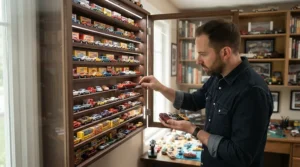
The TJ.MOREE 12-Tier Wall-Mounted Cabinet moves the conversation from “case” to “cabinet.” Round-up listings describe a solid wood frame, a lockable door and wall mounting, with an editorial rating of about 4.6 out of 5.
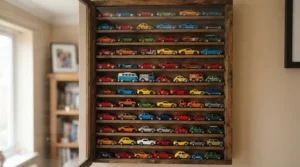
Wood changes the look entirely. Acrylic grids say “collector’s shelf.” A black wood frame says “piece of furniture,” which matters if the display shares a living room with guests. The lockable door is a bonus for households with kids or curious cats.
The trade-off is weight. A solid-frame cabinet with twelve loaded tiers is heavier than a thin acrylic grid, so wall-mount hardware stops being an afterthought. Plan on a stud if you can find one.
Pros:
- ✅ Wood frame looks like real furniture
- ✅ Lockable door protects from little hands
- ✅ Strong presence for living-room display
Cons:
- ❌ Heavier, so demands solid wall anchoring
- ❌ Higher price than acrylic grids
A rough budget of C$80-C$130 seems realistic, but prices vary by seller.
7. Mascar Displays 1:64 Blister-Card Case — the premium board for carded collections
The Mascar Displays 1:64 Blister-Card Case is a different animal. It measures 26 × 20 inches (about 66 × 51 cm), comes in black or white, and is designed for standard Hot Wheels and Matchbox blister cards. Listings call it made in the U.S.A.
The big idea is displaying cars in their packaging, which preserves card condition and value. Think of it as a framed poster, except the poster is your collection.
Reviewers of similar premium boards usually mention how much better carded cars look flat against a uniform backdrop than loose on a shelf. I couldn’t confirm Amazon.ca reviews for this exact model, so treat that as category sentiment, not a verdict.
This is the one to buy if your cars live in their cards. It makes no sense for loose cars.
Pros:
- ✅ Keeps cards flat and presentable
- ✅ Choice of black or white
- ✅ Substantial, gallery-style presence
Cons:
- ❌ Highest price in this guide
- ❌ Large size demands generous wall space
Budget about C$120-C$140. It’s a premium buy for a serious collection.
Here’s how all seven line up on specs, value and review signal.
| Product | Capacity | Size Note | Price Range (CAD) | Review Signal | Best For |
|---|---|---|---|---|---|
| Greenlight 55025 Acrylic Display Case | 1 | Single cover and base | C$10-C$20 | Listing-level feedback; verify | Single showpieces |
| Greenlight 55012 6-Car Interlocking Case | 6 | Interlocks on all sides | C$20-C$35 | Described as light and durable | Beginners |
| HEKORE 1/64 Acrylic 6-Level Case | 24 | Six levels | C$40-C$70 | About 4.6/5 on a round-up | Capacity |
| Mijo Showcase 12-Car Wall Mount (MJ10012) | 12 | Wall grid | C$35-C$45 | Generally sturdy for price | First wall display |
| Mijo Premium Collector Single Case with Shelf & Cover (MJ15020) | 1 carded | 15 × 5.4 × 20 cm | C$25-C$45 | Collector-brand reputation | Carded models |
| TJ.MOREE 12-Tier Wall-Mounted Cabinet | 12 tiers | Wood frame | C$80-C$130 | About 4.6/5 on a round-up | Living rooms |
| Mascar Displays 1:64 Blister-Card Case | Carded | 66 × 51 cm | C$120-C$140 | Verify on Amazon.ca | Carded collectors |
The honest takeaway: the Mijo Showcase 12-Car Wall Mount (MJ10012) and the HEKORE 1/64 Acrylic 6-Level Case deliver the best capacity per dollar, while the TJ.MOREE 12-Tier Wall-Mounted Cabinet earns its premium purely through looks and the lockable door. Notice that the Greenlight 55012 6-Car Interlocking Case costs less per car than the single-car options, which is why modular systems win for growing collections. The Mascar Displays 1:64 Blister-Card Case only makes sense if you’re committed to carded storage.
Wall-Mount Hardware: How to Hang a Die-Cast Car Display Case Safely
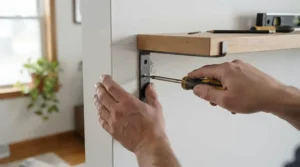
Wall-mount hardware is where good displays go to die, and not because the cases are weak. The wall is usually the weak link. A shelf-building guide puts it plainly: the bottleneck is almost always the wall, not the shelf.
Step 1: Weigh the load, not the case. Put the loaded case on a kitchen scale. A packed acrylic unit can feel light empty; one 40-car acrylic unit with LED lighting listed at about 1.76 kg (3.9 lb) before any cars went in. Add the cars, then add a safety margin.
Step 2: Find a stud. Fastener guidance consistently says to drive screws at least 2.5 cm (1 inch) into a stud when possible. In Canadian wood-frame homes, studs commonly sit 16 inches (about 40 cm) apart on centre, though older houses vary. A basic stud finder takes the guesswork out.
Step 3: When there’s no stud, use proper anchors. Typical drywall anchors suited to shelf-type loads are described as holding roughly 25-50 lb (11-23 kg) in practice, and capacity depends on wall condition and anchor type. Spread the load across multiple anchors instead of trusting one.
Step 4: Check your wall type. Older Canadian homes often have plaster and lath. Plaster needs plaster-specific anchors, or you must hit a stud at every mounting point.
Step 5: Level before you drill. A small bubble level matters more with grids than with single frames, because crooked rows make cars look like they’re sliding off.
Common first-30-day mistakes: trusting the hardware included in the box for a heavy cabinet, mounting directly above a radiator (heat and dry air stress acrylic), and loading every slot before testing the mount for a few days.
For lightweight acrylic grids like the Mijo Showcase 12-Car Wall Mount (MJ10012), the included hardware plus decent anchors is often fine. For the TJ.MOREE 12-Tier Wall-Mounted Cabinet, upgrade the fasteners and find a stud.
1:64 Display Spacing: Layouts That Look Intentional
Most collectors obsess over the case and ignore spacing, then wonder why the result looks like a parking lot. Good 1:64 display spacing is a design discipline.
Start with the cars themselves. A standard 1:64 casting is usually somewhere around 7-8 cm (2.75-3.1 in) long, and as the Wikipedia entry notes, “1:64” is nominal, so vans, trucks and wide-bodied tuners can run larger. Individual interlocking acrylic boxes sold for this scale measure roughly 9 cm × 4 cm × 4 cm (3.6 × 1.6 × 1.6 in), which is a handy sanity check for the minimum comfortable cell.
Here’s a practical rulebook:
- Leave 5-10 mm of side clearance per car. Mirrors, wings and fender flares add visual width the base casting doesn’t show.
- Allow 4-5 cm of height. Roof racks, spoilers and light bars cause the “wedged in” look.
- Group by theme, not by size. Rows of Japanese imports, then American muscle, read better than a random sequence.
- Mix heights. Put taller trucks at the ends and low sports cars in the middle for a gentle visual arc.
- Repeat colours. Three red cars in different rows tie a grid together.
The math on grids helps too. A 12-compartment wall unit measuring about 75 × 30 cm leaves roughly 12 cm per cell if it’s laid out six across, which is generous for a single car. Compare that to dense 24-car stacks like the HEKORE 1/64 Acrylic 6-Level Case, where each car gets a tighter berth by design.
If spacing feels cramped, resist the urge to cram. Leave one slot empty in each row. That small gap does what white space does on a page: it lets the eye rest, and it gives you somewhere to add your next find.
Which Case Fits Which Collector? Three Real-World Scenarios
The “best” die-cast car display case depends on who’s buying. Here are three buyer profiles, with reasoning.
Scenario 1: The apartment renter with 15 cars and a no-holes lease. Budget is around C$100, and drilling is off the table. The sensible move is two or three Greenlight 55012 6-Car Interlocking Case units on a shelf or dresser. They interlock into a grid, they’re light, and they leave no marks. If the landlord ever allows hardware, the optional mounting kit is already in the box.
Scenario 2: The homeowner with a finished basement and 60+ cars. Budget stretches to C$250-C$350, and drywall is available. Go bigger with a pair of Mijo Showcase 12-Car Wall Mount (MJ10012) units, plus one or two HEKORE 1/64 Acrylic 6-Level Case units for overflow. Mount into studs wherever possible, and use the spacing rules above to keep rows breathing. This creates a wall that looks planned instead of accumulated.
Scenario 3: The carded-collection hobbyist. This person keeps premium cards in mint condition, and budget is flexible. The Mascar Displays 1:64 Blister-Card Case handles the bulk of the wall, while the Mijo Premium Collector Single Case with Shelf & Cover (MJ15020) protects individual grails on a desk. Keep this display out of direct sunlight, since card artwork fades. It’s a plan built around preserving condition and resale value.
What ties these together is that each starts with a constraint (lease, space, packaging), not a product. Pick the constraint first, and the right case nearly picks itself.
Dust, Fade, Tip, Sag: Problems and Fixes
Every collector hits the same handful of problems. Here are the fixes.
Problem 1: Dust returns within weeks. Open-front grids collect dust fast. Fix: choose a car display shelf with dust cover, such as the Mijo Premium Collector Single Case with Shelf & Cover (MJ15020), for your best pieces, and keep a soft microfibre cloth for wipe-downs. Anti-static cleaner is gentler on acrylic than household sprays.
Problem 2: Colours fade near windows. Light damage is cumulative and irreversible, which the Canadian Conservation Institute explains in its guidance on light, ultraviolet and infrared damage. Fix: keep cases away from direct sun, and favour LED lighting or indirect light.
Problem 3: Cars tip or roll. On slippery acrylic shelves, low sports cars can slide. Fix: use a tiny dab of removable museum putty under tyres, or choose a case with a ridged base.
Problem 4: The wall unit sags. Plastic anchors can slowly loosen under load. Fix: move to stud mounting or upgraded toggle anchors, and re-check after the first month.
Problem 5: Fingerprints and haze. Acrylic shows every touch. Fix: wipe with a damp microfibre cloth, dry gently, and avoid paper towels, which can leave fine scratches.
These aren’t exotic issues. They’re the predictable cost of displaying small, detailed objects, and a few minutes of setup prevents most of them.
How to Choose a Die-Cast Car Display Case
Short on time? Here are the seven decisions that matter most, in order.
- Decide loose or carded. Loose cars suit acrylic grids and single covers. Carded cars need packaging-sized cases like the Mijo Premium Collector Single Case with Shelf & Cover (MJ15020) or the Mascar Displays 1:64 Blister-Card Case.
- Count your cars, then add 30%. Collections grow, and a case you outgrow in a year is a false saving.
- Pick a mount style. Shelf-only suits renters; wall-mount suits anyone with a feature wall and the right hardware.
- Match the material to your light. Bright rooms favour UV-rated acrylic or glass; dim basements are more forgiving.
- Check clearances. Confirm slot dimensions against your tallest and widest castings, using the spacing rules above.
- Plan for dust. Closed fronts or covers cost more but save endless cleaning.
- Think modular. Interlocking and stackable designs, like the Greenlight 55012 6-Car Interlocking Case, let you expand without starting over.
| Priority | Choose This | Why | Best For |
|---|---|---|---|
| Lowest cost per car | HEKORE 1/64 Acrylic 6-Level Case | 24 cars in one unit | Bulk collectors |
| Expandable | Greenlight 55012 6-Car Interlocking Case | Locks together | Beginners |
| Looks like furniture | TJ.MOREE 12-Tier Wall-Mounted Cabinet | Wood frame, lockable | Living rooms |
| Carded protection | Mascar Displays 1:64 Blister-Card Case | Packaging-sized | Mint-card hobbyists |
Notice how the table splits by goal, not by price. The cheapest unit isn’t the best choice for carded storage, and the most expensive isn’t ideal for a first-timer. Use it as a shortlist generator, then check current price and reviews on Amazon.ca.
Acrylic Versus Glass: Which Die-Cast Car Display Case Material Wins?
This is the most-asked question in the category, and the honest answer is “it depends on your room.”
Weight and safety. Acrylic is roughly half the weight of glass, which matters for wall mounting, and it doesn’t shatter into dangerous shards. For a wall-mounted toy car display above a couch or in a kid’s room, that’s a major point in acrylic’s favour.
Scratching. Glass wins here. Untreated acrylic scratches more easily, though minor scratches can often be buffed out, while glass scratches are far harder to repair.
Clarity and ageing. Quality acrylic is crystal clear, but cheap or poorly stabilised acrylic can yellow or haze over time. Glass stays chemically stable.
UV protection. Here the Canadian Conservation Institute offers rare hard numbers. In its note on ultraviolet filters, regular glass reduced UV by only about 26% (±11%), glass filters made for museums averaged about 83% (±14%), and acrylics with UV filtering that meet ASTM D4802-10 cut at least 95%. The same note stresses that visible light also causes fading, so blocking UV alone doesn’t stop it.
| Feature | Acrylic | Glass | Best For |
|---|---|---|---|
| Weight | About half of glass | Heavy | Wall-mounting (acrylic) |
| Shatter risk | Resists breaking | Can shatter | Homes with kids (acrylic) |
| Scratch resistance | Lower | Higher | High-touch use (glass) |
| UV protection | Often better when UV-rated | Minimal unless treated | Sunny rooms (UV acrylic) |
| Cost | Usually lower | Usually higher | Budget buyers (acrylic) |
For most collectors, acrylic wins on weight, safety and price, which is why nearly every case in this guide uses it. Glass earns its place in a premium cabinet where scratch resistance and a furniture feel matter more than weight. The practical caveat: most retail cases don’t publish a UV rating, so don’t assume protection. If a seller claims it, look for a specific percentage or standard.
Wall-Mounted Toy Car Display vs Shelf, Bin and Blister Card Storage
Not everyone needs a wall display, so here’s how the main options compare.
| Option | Visibility | Protection | Space Needed | Best For |
|---|---|---|---|---|
| Wall-mounted toy car display | Excellent | Good to excellent | Wall area only | Showing off 12+ cars |
| Open shelf | Good | Poor (dust) | Floor or shelf | Casual play collections |
| Storage bins | None | Fair | Closet space | Bulk, hidden storage |
| Original blister cards on hooks | Good | Fair | Wall area | Mint-card collectors |
| Single acrylic cases | Excellent | Excellent | Shelf space | A few showpieces |
A wall-mounted toy car display wins when floor space is tight, which is common in Canadian condos and townhomes. It gets cars off horizontal surfaces, where dust and elbows live. Bins win on pure storage density, but you never see the cars, which defeats the point.
The sweet spot for most people is a hybrid: single acrylic cases like the Greenlight 55025 Acrylic Display Case for hero pieces, a wall unit like the Mijo Showcase 12-Car Wall Mount (MJ10012) for the rotation, and a bin for the overflow.
Acrylic Car Case for Collectors: Features That Actually Matter (And Those That Don’t)
Listings love buzzwords. Here’s how to filter them.
Features that matter:
- Wall thickness and rigidity. A thin, flexing wall looks flimsy and can bow under load. Listings rarely state thickness, so check images and reviews.
- Opening mechanism. Magnetic doors, like the HEKORE 1/64 Acrylic 6-Level Case, are quick and quiet. Hinged panels, like the Greenlight 55012 6-Car Interlocking Case, are fine but need gentle handling.
- Interlocking or stackable design. This is what makes a collection scalable.
- Back panel colour. Clear, black or mirrored backs change the mood dramatically.
Features that don’t (much):
- “Premium” or “luxury” labels. These are marketing, not specs.
- LED strips. Nice, but heat and light add fading risk, so use sparingly.
- Extra locks on low-risk displays. Useful with kids, overkill otherwise.
A good acrylic car case for collectors earns its keep through clarity, fit and construction, not packaging claims. When a listing leans hard on adjectives and light on dimensions, assume the dimensions are the problem.
Common Mistakes When Buying a Die-Cast Car Display Case
Almost every regret traces back to a handful of avoidable errors.
Buying by price per case instead of price per car. A C$15 single case sounds cheap until you need forty of them. Do the division first.
Ignoring slot dimensions. “Fits 1:64” is a loose promise, because 1:64 is nominal. Measure your biggest casting and check clearance.
Skipping the dust plan. Open grids look great on day one and grimy by week six. A cover or door pays for itself.
Trusting included hardware for heavy cabinets. Bundled screws are sized for the lightest realistic installation. For a wood unit like the TJ.MOREE 12-Tier Wall-Mounted Cabinet, upgrade.
Overlooking sunlight. A beautiful display on a south-facing wall is a slow-motion fade. Position matters as much as product.
Forgetting growth. Interlocking systems such as the Greenlight 55012 6-Car Interlocking Case exist for exactly this reason.
Long-Term Cost & Maintenance
A display case is a small purchase with a long tail, so total cost of ownership matters.
Upfront cost per car. Divide the case price by capacity. A C$40 unit holding 24 cars (the HEKORE 1/64 Acrylic 6-Level Case) works out to under C$2 per car, while a C$15 single case is C$15 per car.
Maintenance. Acrylic needs a soft cloth and an anti-static or mild soapy cleaner. Avoid ammonia-based sprays, which can craze the surface. Glass is more forgiving, but heavier to handle when cleaning.
Lifespan. Conservation guidance notes that UV-filtering plastics and films may last roughly 10-15 years before their filtering performance fades, so treat UV claims as time-limited. That’s a long runway for a hobby purchase, but not forever.
Replacement and upgrade. Modular systems let you swap one unit without scrapping everything, which lowers lifetime cost.
For most households, the cheapest long-term choice is a mid-range acrylic unit plus decent anchors. Spend more only where it solves a real problem, like carded protection or a furniture-grade look.
Safety and Home Considerations for Canadian Collectors
Displays live in homes with kids, pets and earthquakes of toddler energy, so safety deserves a section.
Anchor everything above waist height. A loaded wall unit that falls is a hazard to people and to your collection. Use studs or properly rated anchors, as covered in the hardware section.
Mind small parts. Loose die-casts can be small enough to be a choking risk for very young children. Closed or lockable fronts, like the door on the TJ.MOREE 12-Tier Wall-Mounted Cabinet, help in homes with toddlers. For specific product-safety rules, check current guidance from Health Canada.
Respect heat and humidity. Winter heating dries the air, and basements can run damp. Keep acrylic away from radiators and vents, and avoid damp walls.
Pick lighting wisely. Cooler LED lighting runs less hot than older bulbs, and lower light levels slow fading.
Think about earthquakes and bumps. Anchoring and closed fronts also protect against accidental knocks in busy hallways.
A few minutes of planning here protects people first and collectables second, which is the right order.
FAQ
❓ How many cars fit in a wall-mounted toy car display?
❓ Does an acrylic car case for collectors yellow over time?
❓ Can I put a die-cast car display case in a sunny room?
❓ What is the safest way to clean acrylic?
❓ Do loose cars need a car display shelf with dust cover?
Conclusion
Choosing a die-cast car display case comes down to three honest questions: how many cars, loose or carded, and wall or shelf. Answer those, and the shortlist writes itself.
For one showpiece, the Greenlight 55025 Acrylic Display Case is hard to beat. For a growing collection on a budget, the Greenlight 55012 6-Car Interlocking Case scales with you. If you want a proper wall, the Mijo Showcase 12-Car Wall Mount (MJ10012) is the friendliest start, and the HEKORE 1/64 Acrylic 6-Level Case squeezes the most cars out of each dollar. Collectors with packaging to protect should look at the Mijo Premium Collector Single Case with Shelf & Cover (MJ15020) or the Mascar Displays 1:64 Blister-Card Case, and anyone after a furniture-grade look can consider the TJ.MOREE 12-Tier Wall-Mounted Cabinet.
Get the hardware right, respect the spacing, keep the sun at bay, and your collection will look better than the sum of its cars. Always confirm current prices, availability and reviews on Amazon.ca before you buy.
🚗 Ready to give your collection the home it deserves?
Pick your favourite from the list, check current pricing, and start building a display you’ll love showing off!
Recommended for You
- RC Crawler Cars Review: 7 Best Trail Rigs For Canada In 2026
- Slot Car Sets For Adults: 7 Best Picks For Canada (2026)
- Die-Cast Cars For Kids: 7 Best Picks Parents Love In 2026
Disclaimer: This article contains affiliate links. As an Amazon Associate, I earn from qualifying purchases. If you purchase products through these links, we may earn a small commission at no additional cost to you.
✨ Found this helpful? Share it with your friends! 💬🤗
