
In This Article
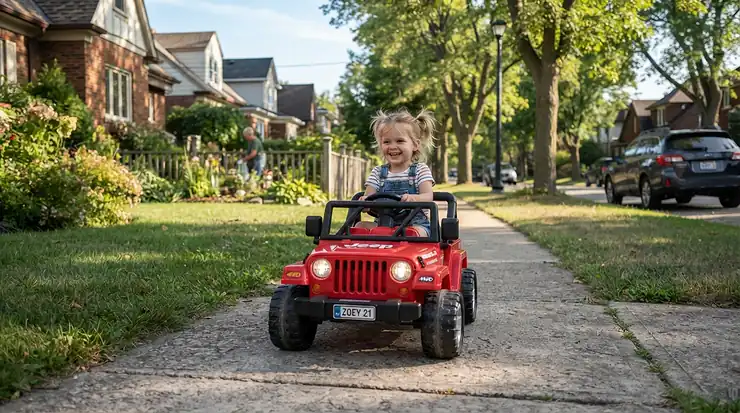
Electric ride-on cars for toddlers are small battery-powered vehicles, usually 6V or 12V, that a child sits in and steers with a pedal or push button. Models built for this age normally add a seat belt or harness, a low top speed, and a parental remote control so an adult can steer or stop the car.
Here’s the catch. The category is crowded, and listings blur together. A “toddler” car on one page is rated for ages 1.5 to 4. Another one, with nearly identical photos, is rated for ages 3 to 5 and tops out at a faster speed. Weight capacity ranges from the low 40s to the mid-60s in pounds. Some cars have a real parental remote control. Others only have a joystick the child can mash.
This guide sorts through that. The research covers manufacturer specs, retailer listings and the pattern of real buyer reviews. Where I couldn’t verify something, I say so. The focus is on the features that matter most for a small driver: a 6V ride-on car for toddlers is gentler than a 12V truck, a ride-on car with seat belt keeps a wiggly child seated, and a kids’ battery-powered car with parental remote lets you stay in charge.
The American Academy of Pediatrics notes that ride-on toys support gross motor development, and it also says toy safety depends on the toy’s features and on how much supervision it needs, so read what to look for in a toy before you buy. Prices below are ranges only and shift often, so check current price before you decide.
Quick Comparison: Electric Ride-On Cars for Toddlers at a Glance
| Product | Battery | Listed Age Range | Parental Remote | Seat Belt / Harness | Best For |
|---|---|---|---|---|---|
| Radio Flyer Grow With Me Racer | 6V | 1.5-4 years | Yes | Seat belt | Youngest toddlers, grow-with-me modes |
| Best Choice Products 6V Kids Ride-On Truck | 6V | 3-5 years | Yes | 5-point harness | Preschoolers who want a truck |
| Best Choice Products 6V Bumpin’ Bumper Car | 6V | 1.5-6 years | Yes | 5-point harness | Indoor play, wide age span |
| Garvee 6V Electric Bumper Car | 6V | 2-6 years | Yes | Seat belt | Budget-minded bumper-car fans |
| M8TRX 6V Mercedes-Benz Ride-On | 6V | Toddlers (check listing) | Yes | Seat belt | Kids who want a “real car” look |
| Lil’ Rider 6V Kids Ride-On Car | 6V | 3-6 years | Yes | Check listing | Simple, low-cost remote model |
| Peg Perego John Deere Mini Tractor | 6V | 1.5-3 years | No | Check listing | Brand durability, auto-brake pedal |
Look at the pattern in the table. Six of the seven models include a parental remote control, and six are 6V. The Peg Perego John Deere Mini Tractor is the odd one out: it has no remote, but it brakes automatically when the pedal is released. If your child is under 2, the Radio Flyer Grow With Me Racer and the Best Choice Products 6V Bumpin’ Bumper Car have the youngest listed starting age (1.5 years), and both include a remote.
💬 Just one click — help others make better buying decisions too!😊
Top 7 Electric Ride-On Cars for Toddlers: Expert Analysis
1. Radio Flyer Grow With Me Racer — best for the youngest drivers
The standout feature here is the three-stage design. The car can be fully adult-driven, child-driven with adult override, or fully child-driven. Radio Flyer rates it for ages 1.5 to 4, and its instruction manual lists a 43-pound maximum weight.
On the spec sheet, it runs on a 6V rechargeable battery and tops out around 2 mph. It weighs under 17 pounds, which makes it light enough to lift into a trunk. The remote range is listed at 60 to 80 feet depending on the listing. Radio Flyer’s own page says the car shuts off automatically if it goes out of range, which is a smart safeguard. Based on the spec comparison, this is the most toddler-specific design in this group.
Who is it for? Parents of a 15-to-24-month-old who want to steer from behind. The remote lets you stop the car immediately. Older kids near the upper weight capacity will outgrow it quickly.
Aggregated review sentiment is positive but not flawless. Reviewers repeatedly say toddlers love it and that the remote is a big selling point. Others report remote steering problems or a charging fault. In at least one case, a reviewer said the company’s warranty team resolved a bad control board.
Pros:
- ✅ Three driving modes grow with your child
- ✅ Remote auto-shuts-off car when out of range
- ✅ Lightweight and compact for small spaces
Cons:
- ❌ Lowest weight capacity in this group at 43 pounds
- ❌ Some reviewers report remote or charging faults
The price is typically in the $130-$210 range depending on retailer, which puts the Radio Flyer Grow With Me Racer at the premium end. For a child under 2, that cost is justified by the remote and the lower speed.
2. Best Choice Products 6V Kids Ride-On Truck (4-Wheel Suspension) — best for truck-loving preschoolers
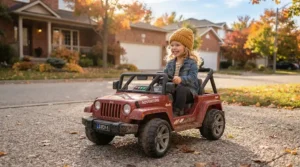
The headline here is the 4-wheel suspension, which smooths out bumps that would rattle a toddler on a cheaper chassis. Listings describe a 5-point harness, locking doors, LED headlights, and a parental remote control. Overall dimensions are about 34.5″ x 23.25″ x 22.75″, and the weight capacity is 44 pounds.
Most retailer listings put the age range at 3 to 5 and the top speed between 2 and 3.1 mph. That’s the catch. The advertised speed is higher than some other cars in this guide, so I’d treat this as a model for a confident three-year-old rather than a 20-month-old. The 5-point harness, though, is a nicer restraint than the single lap belts on some competitors.
Who is it for? A preschooler who wants something that looks like a truck and can handle a driveway or flat yard. Parents of twins should know one reviewer noted the remotes look identical, which makes pairing confusing with two cars.
Aggregated review sentiment is solid, with roughly 4 stars across nearly 1,900 ratings on one major retailer’s listing. Reviewers consistently mention easy assembly and the value of the remote. Some say it makes wide turns, so it works better in open areas than small rooms.
Pros:
- ✅ 5-point harness and locking doors for security
- ✅ 4-wheel suspension handles uneven pavement
- ✅ Parental remote control included
Cons:
- ❌ Wide turning radius in tight spaces
- ❌ Top speed up to 3.1 mph is fast for toddlers
Expect to pay in the $110-$150 range, and check current price since it swings. As a mid-range 6V pick, the Best Choice Products 6V Kids Ride-On Truck delivers the most truck for the money.
3. Best Choice Products 6V Bumpin’ Bumper Car — best for indoor play with a wide age span
The standout is the 360-degree spin and the soft bumper ring, which make this one forgiving indoors. It’s listed for ages 1.5 to 6, with a 66-pound weight capacity and a 5-point harness. The body is roughly 27.5 inches square, so it’s compact.
The car offers two ways to drive: the child uses a joystick, or the parent uses the 2.4GHz remote. One independent roundup lists a top speed of just 1.2 mph for this model, which is slow enough for a child just learning. Based on the spec comparison, it’s probably the gentlest of the seven. The caveat is that speeds vary between listings, so verify before you buy.
Who is it for? A family with limited outdoor space, or one with a 2-year-old and a 5-year-old who will take turns. The higher weight capacity means it can outlast the 43-to-44-pound cars.
Review sentiment is genuinely mixed. Positive comments describe it as sturdy and say the remote works well. Several negative reviews on a major retailer’s page describe a joystick that stopped working after a few months, and some say replacement parts weren’t available and customer support was slow to respond.
Pros:
- ✅ 66-pound weight capacity outlasts smaller cars
- ✅ Slow speed and bumper ring suit indoor use
- ✅ Wide 1.5-to-6 age range
Cons:
- ❌ Reviewers report joystick failures within months
- ❌ Replacement parts can be hard to get
The price is generally in the $110-$160 range. It’s a fun, flexible car, but the durability complaints mean you should buy from a seller with a clear return policy.
4. Garvee 6V Electric Bumper Car — best budget-friendly bumper-car style
The hook is a retailer listing that pairs a 360-degree spin with a remote and seat belt at a lower tier. It’s described as suitable for ages 2 to 6, with forward and reverse driving, lights, a horn, music, and a soft PVC bumper. The listed top speed is about 1.9 mph.
At 1.9 mph, it’s a bit faster than the slowest bumper cars here, but still within a comfortable walking-pace range. The seat belt is a single belt rather than a 5-point harness, so it won’t hold a squirmy toddler as snugly as the Best Choice Products 6V Bumpin’ Bumper Car.
Who is it for? Parents who want the bumper-car format and a remote without spending much. It’s an option for a child around 2 to 3 who will mostly ride with a parent steering.
I couldn’t verify a meaningful pool of independent reviews for this exact model, so I won’t characterize owner sentiment. That is a real limit. The retailer listing gives specs but not a long track record.
Pros:
- ✅ Remote, seat belt, and soft bumper included
- ✅ 360-degree spin for indoor fun
- ✅ Compact build suits small homes
Cons:
- ❌ Limited independent review history to judge durability
- ❌ Single seat belt is less secure than a 5-point harness
Comparable 6V bumper cars in this guide sit in the $100-$160 range, and the Garvee 6V Electric Bumper Car should be checked against that. Treat it as a value experiment, not a proven favorite.
5. M8TRX 6V Mercedes-Benz Ride-On — best for kids who want a “real car” look
The attraction is styling. This is a 6V Mercedes-Benz-style ride-on with a parental remote, a working steering wheel with music and sounds, forward, reverse and neutral controls, and a spacious seat with a seat belt, according to the retailer listing.
Having a neutral setting is useful. It means a child can’t accidentally lurch forward when climbing in. What the listing doesn’t make clear is the weight capacity and exact age range, so confirm those on the product page before buying. Those two numbers decide whether it fits your child.
Who is it for? A toddler who recognizes cars and wants to “drive” like grown-ups do. The remote lets you stay in control while the child enjoys the dashboard controls.
I couldn’t verify enough independent reviews for this specific model, so there’s no review summary here. Similar licensed-style 6V cars from other sellers carry mixed ratings, which suggests reading recent feedback before you commit.
Pros:
- ✅ Realistic styling kids recognize
- ✅ Forward, reverse and neutral controls
- ✅ Parental remote control included
Cons:
- ❌ Weight capacity and age range need verification
- ❌ Little independent review data available
Licensed-style 6V cars like this typically fall in the roughly $100-$140 range, so use that to sanity-check the M8TRX 6V Mercedes-Benz Ride-On. It makes sense when looks matter more than a long reputation.
6. Lil’ Rider 6V Kids Ride-On Car with Remote Control — best simple low-cost remote model
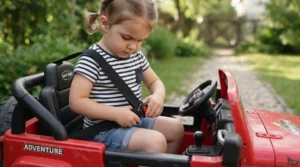
The hook is simplicity. It’s a 6V car with a parental remote that lets you fully operate it or assist a child learning to drive on hard, flat surfaces. The listing recommends ages 3 to 6.
That “hard, flat surfaces” wording is honest and useful. Six-volt cars struggle on thick grass and gravel, and this listing is upfront about it. Based on the spec comparison, this is a basic, no-frills option rather than a feature-rich one.
Who is it for? Families who want a remote-equipped car at a modest price, mainly for a driveway, patio, or garage. It’s a better fit for a 3-year-old than a 20-month-old, given the stated age range.
On review sentiment, one retailer shows about 4.1 stars across 63 ratings, while another listing for the same product shows lower scores across a few hundred. The numbers are modest, and reviewers describe it as cute and well-sized for toddlers around 2 to 4.
Pros:
- ✅ Parental remote lets adults fully drive or assist
- ✅ Straightforward 6V setup for easy use
- ✅ Clear guidance for hard, flat surfaces
Cons:
- ❌ Recommended age skews older than 2
- ❌ Smaller review pool, with ratings around 4 stars
The price lands around $100, so the Lil’ Rider 6V Kids Ride-On Car is a reasonable value pick when you want the basics.
7. Peg Perego John Deere Mini Tractor — best for brand durability and an auto-brake pedal
What sets it apart is the pedal. Retail descriptions say the vehicle stops automatically when the foot pedal is released, and that it’s designed for ages 1.5 to 3. It’s a 6V tractor with working lights.
An auto-brake is a safety feature that matters more than extra speed. When a toddler lifts their foot, the tractor stops. That is arguably more valuable than a fancy dashboard. The tradeoff is no parental remote control, so you can’t steer from behind. Supervision has to be hands-on, with you walking beside the vehicle.
Who is it for? A toddler who already has some pedal coordination and who will play in a fenced yard or on a flat patio with you close by. If you need remote override, pick another car in this list.
Review sentiment on one major retailer’s listing sits around 4.1 stars across nearly 200 ratings. Peg Perego is also a well-known name in the category, which matters when you need a replacement battery or parts.
Pros:
- ✅ Auto-brake stops the tractor when pedal is released
- ✅ Well-known brand with accessible parts
- ✅ Suited to ages 1.5 to 3
Cons:
- ❌ No parental remote control
- ❌ Price varies widely between retailers
I’ve seen it listed anywhere from the mid-$80s to the mid-$170s depending on the seller, so check current price. The Peg Perego John Deere Mini Tractor is the choice for brand reliability over remote features.
How the Seven Models Stack Up
| Product | Listed Weight Capacity | Reported Top Speed | Remote | Best For |
|---|---|---|---|---|
| Radio Flyer Grow With Me Racer | 43 lb | ~2 mph | Yes | Under-2 drivers |
| Best Choice Products 6V Kids Ride-On Truck | 44 lb | 2-3.1 mph (varies) | Yes | Confident 3-year-olds |
| Best Choice Products 6V Bumpin’ Bumper Car | 66 lb | ~1.2 mph (one source) | Yes | Indoor play, siblings |
| Garvee 6V Electric Bumper Car | Check listing | ~1.9 mph | Yes | Budget bumper-car fans |
| M8TRX 6V Mercedes-Benz Ride-On | Check listing | Check listing | Yes | Style-focused kids |
| Lil’ Rider 6V Kids Ride-On Car | Check listing | Check listing | Yes | Simple remote option |
| Peg Perego John Deere Mini Tractor | Check listing | Check listing | No | Brand durability |
The big takeaway is the spread in weight capacity and speed. The Best Choice Products 6V Bumpin’ Bumper Car offers the highest listed weight capacity and, by one source, the slowest top speed, which is an unusually gentle combination for a young child. The Best Choice Products 6V Kids Ride-On Truck is the opposite: its advertised speed can reach 3.1 mph, so buyers with a young toddler should treat it with extra care. And where a cell says “check listing,” that’s a real gap in what I could confirm, not an omission.
How to Choose Electric Ride-On Cars for Toddlers
- Start with your child’s age and size, not the picture. Check the manufacturer’s recommended age range and compare your child’s weight against the weight capacity. A 20-month-old belongs in a 1.5-plus model. A confident 4-year-old may find those cars tiny.
- Decide how much control you want. If your toddler can’t steer yet, a parental remote control is close to essential. If you plan to walk beside them, an auto-brake pedal may be enough.
- Look for restraints. A 5-point harness holds a small child better than a single belt. A seat belt only works if the child will tolerate it, so check that the buckle is easy for you to operate.
- Pick the voltage that matches the child. For first-time drivers, 6V models run slower and feel less intimidating.
- Check speed behavior. Look for a real speed limiter or lower speed setting. Advertised top speeds vary between listings, so compare more than one source.
- Think about the surface. Six-volt cars favor hard, flat surfaces. Grass and gravel can bog them down.
- Read the negative reviews first. Failures tend to cluster around remotes, joysticks, and chargers, so see whether the seller responds to problems.
6V Ride-On Car for Toddlers: Why Voltage Matters
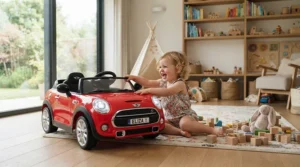
A 6V ride-on car for toddlers is designed for the youngest drivers. Lower voltage means lower torque and lower top speed, so a 6V vehicle accelerates more gently than a 12V truck. For a child who is still learning that the pedal makes the car move, that gentleness is a feature.
The trade-off is performance. Six-volt cars generally prefer hard, flat surfaces such as a driveway, patio, or garage. One Best Choice Products spec sheet lists a 6V 7Ah battery with an 8 to 12 hour charge time and about 1 to 2 hours of run time. That means a long overnight charge for a modest play session, so plan around it.
What most buyers overlook is how the battery ages. Sealed lead-acid batteries lose capacity when left discharged or stored dead, which makes a 6V ride-on car for toddlers feel weaker after a winter in the garage. Charging promptly and storing the car indoors extends life.
For older or heavier kids, a 12V model offers more power and a higher weight capacity, but it also brings higher speeds. If your priority is a calm first experience, a 6V ride-on car for toddlers is usually the safer starting point.
Parental Remote Control: What It Actually Does
A parental remote control is the feature that separates toddler-friendly cars from pure kid-operated toys. In practice it does three things: it lets you drive the car for the child, it lets you override the child’s steering, and it lets you stop the car instantly.
The Radio Flyer Grow With Me Racer shows how this can be done well. Radio Flyer describes parent drive, adult correcting, and child-driven stages, and the remote can stop a child immediately for safety. The same maker’s page says the car shuts off if it goes beyond the remote’s range.
Remote quality varies, though. Reviewers of several models report remotes that only drive forward and back but won’t steer, or that look identical when you own two cars. Check what the remote actually controls: steering, forward and reverse, speed selection, or only stop. Some Best Choice Products listings mention forward and reverse controls, a parking function, and speed selection on the remote.
Also consider battery logistics. Many remotes use AAA or AA batteries, so keep spares. A dead remote on a hill is a bad moment to discover you have none.
Ride-On Car With Seat Belt: Restraints That Actually Hold
A ride-on car with seat belt is the baseline expectation in this category. The real question is how good that restraint is. A 5-point harness, as on the Best Choice Products 6V Kids Ride-On Truck and the Best Choice Products 6V Bumpin’ Bumper Car, secures shoulders and lap. A single lap belt, as on the Garvee 6V Electric Bumper Car, is simpler but allows more movement.
Restraints matter because a toddler’s balance is still developing, and bumper cars spin 360 degrees. A child who leans out during a spin can tip. A harness keeps them centered.
Practical tips: adjust the belt each time, because toddlers grow and wear different clothes. Check that the buckle clicks fully. And don’t rely on the belt alone, since the AAP also stresses supervision. A ride-on car with seat belt is a safety feature, not a substitute for watching.
If a listing doesn’t clearly mention a belt, such as the Lil’ Rider 6V Kids Ride-On Car in this guide, confirm it on the product page. Don’t assume.
Speed Limiter: Keeping Toddler Speeds Sensible
A speed limiter is any feature that caps how fast a toddler can go. In ride-on cars, that usually means a low fixed top speed, a selectable low gear, or remote-controlled speed settings. The wording on listings is inconsistent, so look for specifics.
Advertised top speeds in this guide range from about 1.2 mph to as high as 3.1 mph. That’s a big spread for a small child. For context, a slow adult walk is around 3 mph. A model like the Best Choice Products 6V Bumpin’ Bumper Car sits near the bottom of that range, while the Best Choice Products 6V Kids Ride-On Truck can reach the top.
A useful speed limiter lets you choose the lowest setting for a beginner and raise it later. Some Best Choice Products truck listings describe three speed settings, and the remote can pick speed. A 12V example from another brand, the Gotrax RT1 toddler ATV, advertises a 1.5 mph maximum and a 66-pound load limit, which shows even larger-battery models can be capped low.
Speed also depends on the surface and the child’s weight, so a car may feel faster on smooth pavement. Whatever the spec sheet says, test at the slowest setting first.
Weight Capacity: Reading the Numbers Right
Weight capacity is the maximum load a ride-on car is designed to carry, and it’s one of the most overlooked specs. In this guide it runs from 43 pounds on the Radio Flyer Grow With Me Racer to 44 pounds on the Best Choice Products 6V Kids Ride-On Truck and 66 pounds on the Best Choice Products 6V Bumpin’ Bumper Car.
Why does that matter? A child close to the limit puts more strain on the motor and gearbox, slows the car, and may shorten battery run time. One reviewer of a bumper car wrote that an 11-year-old fit alongside a toddler, but that too much weight can strain it. That is anecdotal, yet it matches the logic.
The age range and the weight capacity also don’t always agree. A truck rated “ages 3-5” with a 44-pound limit can be too small for a tall five-year-old. Federal rules do address this: CPSC’s toy-standard documents describe a more stringent overload test for ride-on and seated toys, but they don’t remove the need to follow the label.
Rule of thumb: pick a car where your child sits comfortably below the weight capacity, with room to grow for a year. And never add a sibling to push past the limit.

Kids’ Battery-Powered Car With Parental Remote vs Traditional Alternatives
| Option | Power | Parent Control | Speed Control | Best For |
|---|---|---|---|---|
| Kids’ battery-powered car with parental remote (e.g., Radio Flyer Grow With Me Racer) | 6V battery | Remote steering and stop | Low fixed or selectable | Toddlers who can’t steer yet |
| Kids’ battery-powered car without remote (e.g., Peg Perego John Deere Mini Tractor) | 6V battery | Walk-alongside supervision | Auto-brake pedal | Toddlers with pedal skill |
| Push car or foot-to-floor ride-on | Child’s feet | Full physical control | Child’s own pace | Under-2s learning to move |
| Pedal tricycle | Child’s legs | Push handle on some | Child’s own pace | Building leg strength |
A kids’ battery-powered car with parental remote costs more than a push car but offers something nothing else does: you can steer, slow, and stop a child who can’t yet do it. For a 15-month-old, that’s the whole point.
Push cars and trikes build strength and balance, and they never run out of charge. The trade-off is that the child must supply all the effort. A battery model makes sense when you want a longer, calmer ride or when physical limits make pedaling hard.
In other words, the Radio Flyer Grow With Me Racer suits a toddler who isn’t ready to steer, while the Peg Perego John Deere Mini Tractor suits one who can. Neither replaces the push car for the youngest riders.
✨ Don’t Miss These Exclusive Deals!
🔍 Take your toddler’s first driving experience to the next level with these carefully selected products. Click on any highlighted item to check current pricing and availability. These cars will help you create safe, joyful memories your family will love!
Setup and First 30 Days: A Practical Guide
Day one: charge before you play. Radio Flyer’s manual says the 6V battery must be fully charged before use, and the Best Choice Products spec sheet lists an 8 to 12 hour charge. Plug in overnight, and don’t let the child ride on a partial first charge.
Assemble on a flat surface. Follow the instructions, tighten the wheel and steering hardware, and secure the battery with its retainer. Use only the charger that came with the car. Radio Flyer’s manual specifically warns against swapping in other batteries or modifying the electrical system.
Test with no child inside. Press the pedal, try forward and reverse, and check the parental remote control’s range and stop function.
First rides. Start in an open, flat area with the slowest speed. Keep your hand on the remote and let your child get used to the sound and motion.
Weeks two to four. Check the belt fit, wipe the wheels, and look at the battery connector for loose wires. Common first-month mistakes include forgetting to charge after each session, riding on wet grass, and leaving the car outside overnight.
If the car stops mid-ride, check three things in order: the battery connection, the charge level, and the remote batteries. Most “dead car” moments come from one of those.
Real-World Scenarios: Matching the Car to the Kid
Scenario one: the 18-month-old in an apartment. Budget around $150, mostly indoor use, daily short sessions. The Best Choice Products 6V Bumpin’ Bumper Car fits best thanks to its slower reported speed, bumper ring, and 1.5-year starting age. The Radio Flyer Grow With Me Racer is the alternative if you want the adult-drive stage.
Scenario two: the 3-year-old with a driveway. Weekend use on smooth concrete, budget around $130. The Best Choice Products 6V Kids Ride-On Truck gives the 5-point harness and suspension, and the remote handles the tricky parts. Start at the lowest speed.
Scenario three: grandparents’ house. A car that sits for weeks between visits. The Peg Perego John Deere Mini Tractor has brand support for batteries and an auto-brake, but you’ll need to walk beside it since there’s no remote. Charge before each visit, and store the battery per the manufacturer’s guidance.
Scenario four: two siblings, 2 and 5. Here the weight capacity matters most. The 66-pound listed limit on the Best Choice Products 6V Bumpin’ Bumper Car gives the most room, but take turns, because the limit is per car.
Long-Term Cost and Maintenance
Sticker price is only part of the cost. Over a few years, the battery is the main ongoing expense. Sealed lead-acid batteries lose capacity, and listings for compatible Peg Perego 6V battery and charger kits show replacement costs that can reach a meaningful fraction of the car’s price. Brand-specific parts matter here.
Cost per use favors the cheaper cars if they last. A car in the $100-$150 range that survives two siblings is a better value than a $200 car that dies in a year. But the reviews above show the tension: some budget cars draw complaints about joysticks, remotes, and parts availability.
Practical maintenance steps keep the cost down: charge promptly after use, store the car indoors, don’t leave the battery sitting dead for months, and keep spare remote batteries. If warranty coverage is clear, that adds value. One reviewer reported Radio Flyer shipped a replacement control board after testing, which suggests responsive support from at least some brands.
When you compare value, consider resale too. A well-kept car from a known brand tends to find a second home more easily.
Safety, Regulations and Recalls
Toys sold in the U.S. must comply with the mandatory toy standard. The CPSC explains that ASTM F963 is a mandatory standard for children’s toys under the Consumer Product Safety Improvement Act. A reputable listing should reflect that, though the standard sets minimums, not guarantees.
Recalls show where problems tend to hide. In 2017, Dynacraft recalled battery-operated ride-on toys because the acceleration pedal could stick, creating fall and crash hazards. Older CPSC notices have involved chargers that could overheat. A 2024 notice covered Mario Kart 24V ride-on racers for a crash hazard, which underlines that bigger voltage isn’t automatically safer.
Hospital toy-safety guides commonly note that ride-on toys are the most common source of toy injuries, though not linked to higher death rates, which is a reason to keep supervision and helmet use in your routine, especially near driveways or slopes.
Practical steps: register the product if the maker offers it, check cpsc.gov for recalls before buying a used car, use only the supplied charger, and never let a toddler ride near streets or water.

Frequently Asked Questions
❓ How long does a 6V ride-on car for toddlers run on one charge?
❓ Can a child under 2 use electric ride-on cars for toddlers?
❓ Are electric ride-on cars for toddlers okay on grass?
❓ Is a kids' battery-powered car with parental remote worth the extra cost?
❓ Where should I get a replacement battery or charger?
Conclusion
If you take one thing from all of this, make it the pairing of a low speed and a real parental remote control. Those two features do more for a small driver’s safety than any styling or music package.
For the youngest riders, the Radio Flyer Grow With Me Racer is the most toddler-specific design here, with its adult-drive modes and out-of-range shutoff. For indoor play and siblings, the Best Choice Products 6V Bumpin’ Bumper Car brings the highest weight capacity and a gentle reported speed, though you should read recent durability reviews first. For a preschooler who wants a truck, the Best Choice Products 6V Kids Ride-On Truck gives a 5-point harness and suspension. The Lil’ Rider 6V Kids Ride-On Car, the Garvee 6V Electric Bumper Car and the M8TRX 6V Mercedes-Benz Ride-On are budget-minded options where you’ll want to confirm specs before buying. And the Peg Perego John Deere Mini Tractor is the pick if brand support and an auto-brake matter more than a remote.
Match the car to the child’s age and weight, keep speeds low, use the seat belt every ride, and stay close. That’s how electric ride-on cars for toddlers become a joy instead of a worry.
Recommended for You
- Construction Toy Gifts For 3 Year Olds: 7 Ultimate Picks (2026)
- Toy Bulldozers For Preschoolers: 7 Best Picks Parents Love (2026)
- Toy Crane Trucks For Kids: 7 Best Safe Picks In 2026
Disclaimer: This article contains affiliate links. As an Amazon Associate, I earn from qualifying purchases. If you purchase products through these links, we may earn a small commission at no additional cost to you.
✨ Found this helpful? Share it with your friends! 💬🤗
