
In This Article
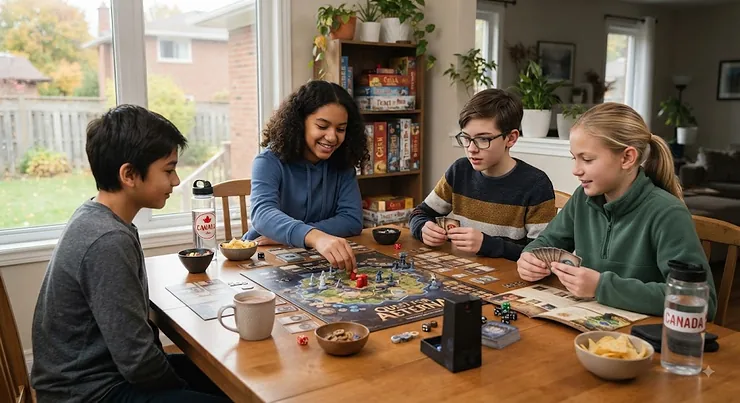
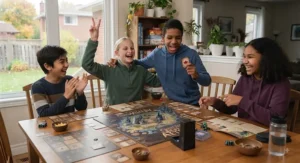
Somewhere between the last Lego set and the first eye-roll about “family time,” there’s a golden window where tweens still, secretly, want to sit at the table with you. You just have to bring something worth sitting down for. That’s the entire premise behind this guide to strategy board games tweens actually ask to play twice — not the dusty Monopoly box that ends in a screaming match over hotel money, but games built around real decisions, real trade-offs, and the kind of quiet triumph that comes from out-thinking your little brother fair and square.
Strategy board games tweens gravitate toward share a few traits: quick enough rules that nobody’s reading a rulebook for twenty minutes, but deep enough that winning feels earned. Think resource management, tile drafting, route planning, and cooperative problem-solving — mechanics that reward pattern recognition and forward planning rather than luck alone. That distinction matters more than it sounds. The Public Health Agency of Canada notes that Canadian screen-time guidelines recommend limiting recreational screen use for school-aged kids, and a genuinely engaging board game is one of the few things that competes with a tablet on its own terms — engagement, challenge, and a dopamine hit from winning.
This guide walks through seven real, currently available games spanning budget, mid-range, and premium price points, with honest analysis pulled from spec sheets, publisher documentation, and aggregated reviewer sentiment — never invented quotes or fabricated testing claims. You’ll get a quick comparison table, a deep dive on each game, practical setup advice, real-world buying scenarios, and answers to the questions Canadian parents actually type into Google at 11 p.m. the night before a birthday party.
Quick Comparison Table: Strategy Board Games Tweens Should Know About
| Game | Players | Age | Playtime | Price Range (CAD) | Best For |
|---|---|---|---|---|---|
| Catan | 3-4 (up to 6 with expansion) | 10+ | 60-90 min | C$65-C$85 | Deep trading strategy |
| Pandemic | 2-4 | 8+ | 45-60 min | C$50-C$60 | Cooperative teamwork |
| Azul | 2-4 | 8+ | 30-45 min | C$35-C$45 | Visual, tactical thinkers |
| Ticket to Ride | 2-5 | 8+ | 30-60 min | C$55-C$70 | Beginner-friendly strategy |
| Splendor | 2-4 | 10+ | 30 min | C$30-C$40 | Fast, replayable sessions |
| Carcassonne | 2-5 | 7+ | 35-45 min | C$35-C$45 | Budget-friendly tile play |
| King of Tokyo | 2-6 | 8+ | 30 min | C$35-C$45 | Competitive, high-energy play |
A quick scan of the table above tells most of the story: if your household leans cooperative rather than cutthroat, Pandemic is the obvious pick, while families chasing pure tactical bragging rights should look at Catan or King of Tokyo. Budget matters too — Carcassonne and Splendor deliver strong strategic depth for roughly half the price of Catan, without feeling like a compromise. Group size is the other hidden variable; Ticket to Ride and King of Tokyo both stretch comfortably to five or six players, which matters a lot more at a birthday party than it does on a Tuesday night.
💬 Just one click — help others make better buying decisions too!😊
Top 7 Strategy Board Games Tweens Will Love: Expert Analysis
Choosing from the shelf at a big-box store is a gamble. Choosing from real spec sheets, publisher data, and aggregated reviewer sentiment is a strategy — which, fittingly, is the whole point of this list. Below are seven genuinely well-regarded, currently available games spanning entry-level to premium.
1. Catan — best all-rounder for deep trading strategy
The hexagonal board that launched a thousand family arguments deserves its reputation. Catan (6th Edition) is built for 3-4 players ages 10 and up, with games running 60-90 minutes, and it’s the closest thing this list has to a “gateway drug” into the hobbyist board game world. Every hex represents a resource — brick, wood, wheat, sheep, or ore — and the entire game is a negotiation engine disguised as a settlement-building race. What most buyers overlook about Catan is that the randomized board setup means no two games play the same way twice, which is exactly what keeps a strategy board game in rotation instead of gathering dust after two plays. For families researching Catan Canada availability, the base game and its 5-6 player expansion are both widely stocked through mainstream Canadian retailers and remain in steady supply as of this writing. This is a game for the tween who likes to negotiate, calculate probability on the fly (that dice-roll math becomes second nature fast), and hold a grudge about a broken trade for exactly one round before moving on. Reviewers consistently report that the trading mechanic is what separates kids who “like” Catan from kids who become mildly obsessed with it — the social negotiation layer rewards a kind of tactical charm that pure numbers games don’t. On the downside, some aggregated reviews note that new players can feel boxed out early if the dice are unkind to their starting resources, and games can run long with four inexperienced players still learning the trade-offs.
Pros:
- ✅ Randomized board keeps every session strategically fresh
- ✅ Builds real probability intuition through dice and resource math
- ✅ Massive expansion ecosystem extends replay value for years
Cons:
- ❌ Early bad dice rolls can frustrate new players
- ❌ Full games can run past 90 minutes with first-timers
Expect to pay in the C$65-C$85 range for the base 6th Edition set; given the replay value and expansion support, it holds up well as a long-term investment rather than a one-season novelty.
2. Pandemic — best cooperative strategy game for team players
Not every tween wants to compete against their own family, and that’s exactly the gap Pandemic fills. This cooperative strategy game puts 2-4 players ages 8 and up in the roles of disease-fighting specialists racing to cure four outbreaks before the world succumbs, with games wrapping up in 45-60 minutes. Here’s what the spec sheet won’t tell you: the real challenge in Pandemic isn’t the dice or the cards, it’s the communication. Players have to talk through their moves, plan two or three turns ahead as a group, and accept that a single bad call can sink everyone’s shared effort — a genuinely different skill set than the “outsmart your rival” strategy games on this list. For anyone researching Pandemic board game Canada stock levels, it remains one of the more consistently available cooperative titles at major Canadian retailers, likely because of its enduring popularity as both a family game and a hobbyist gateway title. Aggregated reviewer sentiment frequently highlights that Pandemic plays noticeably better with four engaged players than with two, since more character roles means more strategic asymmetry to exploit. On the flip side, some reviewers note that a single dominant player can effectively “solve” the game for the table, which shortchanges quieter tweens who might otherwise enjoy contributing ideas.
Pros:
- ✅ Builds group communication and shared planning skills
- ✅ No player elimination — everyone wins or loses together
- ✅ Scales well in difficulty with optional harder Epidemic cards
Cons:
- ❌ One vocal player can dominate group decisions
- ❌ Losing as a team can sting more for competitive personalities
Priced in the C$50-C$60 range at most Canadian retailers, Pandemic offers strong value for households that want strategic depth without turning game night into a rivalry.
3. Azul — best tile-drafting game for visual, tactical thinkers
If chess had a stained-glass window phase, it might look something like Azul. Designed for 2-4 players ages 8 and up, with games clocking in at a brisk 30-45 minutes, Azul tasks players with drafting colourful tiles from shared display markets and arranging them into scoring patterns on a personal board — all while trying not to hand an opponent the exact tiles they need. Winner of the 2018 Spiel des Jahres (Game of the Year), it’s earned its reputation the hard way: through genuinely clever, tension-filled decisions rather than flashy components alone. Based on the spec comparison with other tile-placement games, Azul‘s “draft and deny” mechanic is what elevates it above a simple pattern-matching puzzle — every tile you take is also a tile your opponent can’t have, so tactical decision making happens on every single turn, not just at big game-defining moments. For families researching Azul game Canada pricing, it typically retails toward the accessible end of the strategy category, making it an easy first “real” strategy purchase. Aggregated reviews consistently praise the tactile resin tiles and the “just one more round” replayability, though a recurring criticism is that the penalty scoring for leftover tiles takes new players a game or two to fully internalize.
Pros:
- ✅ Fast 30-45 minute sessions fit easily into a weeknight
- ✅ Satisfying tactile components tweens genuinely enjoy handling
- ✅ Easy to teach in under five minutes despite real depth
Cons:
- ❌ Penalty scoring confuses some players in the first game or two
- ❌ Two-player games feel less tense than three or four
At around C$35-C$45, Azul is one of the strongest value picks on this list relative to how much strategic depth it packs into a half-hour box.
4. Ticket to Ride — best beginner-friendly route-building strategy
For a tween who’s never played a “real” strategy game before, Ticket to Ride is often the smoothest on-ramp. Built for 2-5 players ages 8 and up with games running 30-60 minutes, the objective sounds almost too simple: collect matching train cards, claim railway routes across a map, and complete secret destination tickets for bonus points. What that summary undersells is the spatial-planning tension baked into every turn — claim a route too early and you tip off your strategy; wait too long and a rival snakes the connection you were counting on. Reviewers consistently note that Ticket to Ride hits a rare sweet spot: light enough for a first-time player to understand within one round, yet strategic enough that experienced players still have to plan routes three or four moves ahead. The included Alexa-compatible digital companion (available on some editions) is a nice touch for tech-comfortable families, though it’s entirely optional to gameplay. On the downside, some aggregated feedback flags that the two-player experience feels comparatively sparse — the board has more room to breathe than it should, and the blocking tension that makes the game exciting mostly kicks in at four or five players.
Pros:
- ✅ Extremely low barrier to entry for first-time strategy players
- ✅ Route-blocking tension scales up nicely with more players
- ✅ Attractive, colourful components that appeal across ages
Cons:
- ❌ Two-player games lack competitive tension
- ❌ Card-luck can occasionally overshadow planning
Expect a price range around C$55-C$70, positioning it as a solid mid-range gift that earns repeat plays well past the first unboxing.
5. Splendor — best fast, replayable engine-builder
Splendor is proof that a strategy game doesn’t need a sprawling board to deliver real depth. Designed for 2-4 players ages 10 and up, with games wrapping in about 30 minutes, it tasks players with collecting gem tokens to purchase development cards that, in turn, discount future purchases — a small, elegant engine-building loop that snowballs surprisingly fast. On paper this means simple set collection; in practice, it means constantly recalculating which cards your opponents are eyeing and adjusting your purchases to deny them just enough to matter. What most buyers overlook about Splendor is how quickly a session moves — because turns are simple (take tokens or buy a card), there’s very little downtime waiting for other players, which keeps tween attention spans from wandering. Aggregated review sentiment frequently singles out the chunky poker-chip-style gem tokens as a standout production detail that makes the game feel more premium than its price tag suggests. A common critique, however, is that the theme (Renaissance-era gem trading) is thin — this is a mechanically driven game first and a thematic one a distant second, which won’t bother tactical thinkers but may underwhelm story-hungry kids.
Pros:
- ✅ Roughly 30-minute playtime fits easily into busy schedules
- ✅ Minimal downtime keeps every player engaged every turn
- ✅ Compact box travels well for cottage weekends or sleepovers
Cons:
- ❌ Thin theme may not hold story-focused kids’ interest
- ❌ Best experienced with 3-4 players, less so at two
At roughly C$30-C$40, Splendor is one of the most cost-efficient strategy board games tweens can own relative to how often it actually gets played.
6. Carcassonne — best budget-friendly tactical tile game
Carcassonne proves that a strategy board game doesn’t need a hefty price tag to reward genuine tactical thinking. Suited for 2-5 players ages 7 and up, with games running roughly 35-45 minutes, players draw and place landscape tiles to build a shared medieval countryside, then deploy wooden “meeples” to claim cities, roads, cloisters, and farms for points. Here’s what the box won’t tell you: the real skill in Carcassonne is timing — knowing when to commit a meeple to a half-built city versus holding back for a bigger score later, since meeples are a limited resource that can’t be reused until a feature is completed. Based on the spec comparison with other tile-layers, Carcassonne‘s open-tile-placement system (anyone can add to anyone’s structure) creates a level of tactical interference that keeps even a two-player game genuinely competitive. The base set also ships with two mini-expansions (The Abbot and The River) built in, adding variety without requiring a separate purchase. Reviewers consistently highlight strong two-player performance as a differentiator versus similarly priced tile games, along with an expansive expansion catalogue for families who fall in love with the core loop. The trade-off is a relatively simple core theme and modest component “wow factor” compared to pricier titles on this list.
Pros:
- ✅ Excellent two-player experience, unusual for this genre
- ✅ Two mini-expansions included in the base box
- ✅ Large expansion catalogue extends long-term replay value
Cons:
- ❌ Component quality feels modest next to premium titles
- ❌ Meeple-timing strategy takes a session or two to click
Typically priced around C$35-C$45, Carcassonne delivers some of the best value-per-play on this entire list.
7. King of Tokyo — best competitive, high-energy strategy showdown
Every list needs a game that lets siblings settle scores loudly and legally, and King of Tokyo is that game. Built for 2-6 players ages 8 and up, with fast 30-minute rounds, players control giant monsters battling for control of Tokyo, rolling custom dice across up to three attempts per turn to rack up victory points, gain energy for card-based upgrades, or smash rival monsters into submission. What most buyers overlook about King of Tokyo is that despite the dice-heavy premise, the re-roll mechanic (choosing which dice to keep across three throws) is a genuine risk-assessment exercise — designer Richard Garfield, also known for Magic: The Gathering, built real competitive strategy into what looks like a simple push-your-luck game. Energy-card purchases add a light engine-building layer on top of the dice combat, rewarding players who plan a longer-term build rather than just attacking on impulse. Aggregated reviewer sentiment consistently praises how quickly new players pick up the rules — often within a single explained round — while still leaving room for smarter dice-management to consistently outperform luck alone over repeated plays. A recurring critique is that eliminated players can be knocked out fairly early in unlucky games, which means a “loser’s table” of siblings watching the rest finish is a real possibility to plan around.
Pros:
- ✅ Rules explainable in under five minutes for new players
- ✅ Genuine risk-management strategy beneath a simple dice mechanic
- ✅ Scales up to six players for parties and group game nights
Cons:
- ❌ Player elimination can sideline unlucky players early
- ❌ Direct-attack theme may not suit conflict-averse kids
At around C$35-C$45, King of Tokyo rounds out this list as the pick for tweens who want their strategy with a side of good-natured chaos.
Practical Usage Guide: Setting Up Strategy Board Game Nights for Tweens
Buying the right box is half the battle; getting it to the table regularly is the other half, and that’s where most strategy board games tweens own actually go to die — shelved after two plays because nobody wants to re-explain the rules from scratch. The first-30-days trick is to run a short “teaching game” at half rules complexity: skip optional modules like Catan‘s trade embargo cards or Pandemic‘s Epidemic difficulty cards on the very first play, then add them back in once the core loop clicks. Keep a small notebook or phone note of house-rule tweaks your family lands on (many households cap Catan trading at two offers per turn to speed things up), because consistency across sessions matters more to tweens than strict rulebook accuracy. Store components in labelled zip bags inside the original box — loose meeples and gem tokens are the single biggest cause of “we’re missing a piece” game nights, and it’s a five-minute fix during setup rather than a scavenger hunt mid-game. Finally, rotate who picks the game each week; tweens are far more likely to stay engaged with a strategy board game they had a hand in choosing than one that’s simply handed to them.
Real-World Scenarios: Matching Strategy Board Games to Your Tween’s Personality
Consider three fairly common household profiles. First, the methodical planner — a tween who colour-codes their homework binder and gets genuinely upset by chaos. This kid thrives with Catan or Splendor, where success comes from patient resource accumulation and long-view planning rather than snap decisions. Second, the social connector — a tween who’d rather negotiate a trade than win outright, and who lights up during group activities. Pandemic and Ticket to Ride both reward this personality, since cooperative problem-solving and light route negotiation play directly to their strengths. Third, the competitive live-wire — a tween who wants a clear winner, a bit of noise, and a fast rematch. King of Tokyo and Azul‘s draft-and-deny tension both deliver that immediate, visible competitive payoff without dragging into a 90-minute commitment. Budget and household size matter here too: a family of five hosting frequent sleepovers gets more mileage from King of Tokyo or Ticket to Ride‘s five-to-six-player scalability than from Splendor‘s tighter two-to-four range, while a household of three casual players will find Carcassonne and Azul deliver strong two-player experiences that many strategy games simply don’t.
Problem → Solution: Common Strategy Board Game Frustrations, Solved
Problem: Games take too long and tweens lose focus halfway through. Solution — start with Splendor or Azul, both averaging 30-45 minutes, rather than a 90-minute Catan session until attention spans build up. Problem: One sibling always wins and the others stop wanting to play. Solution — rotate in Pandemic on tough-loss nights, since its cooperative structure removes the “my sibling beat me” sting entirely. Problem: Rules feel too complicated to re-explain every session. Solution — write a one-page house-rules cheat sheet after the first playthrough and tape it inside the box lid; this single habit dramatically cuts setup friction. Problem: A game gets boring after a handful of plays. Solution — this is precisely what expansions solve, and Catan, Carcassonne, and Pandemic all have deep, well-supported expansion catalogues designed to extend a base game’s life by years rather than months. Problem: Younger siblings want to join in but can’t keep up. Solution — Carcassonne (ages 7+) and King of Tokyo (ages 8+) have the lowest entry-level complexity on this list and are the easiest to fold a younger sibling into without derailing the whole game.
✨ Ready to Build Your Game Night Shelf?
🔍 These seven picks cover every budget and personality type on this list. Click through to check current pricing and availability, and start building a rotation your whole family will actually look forward to.
How to Choose Strategy Board Games Tweens Will Actually Play
- Match complexity to actual attention span, not just stated age. A published “ages 8+” rating reflects reading level and rule comprehension, not necessarily patience for a 90-minute session — start shorter and build up.
- Prioritize player count around your real household size, not a hypothetical one. A game that shines at four players will disappoint a family of three most weeknights.
- Weigh cooperative versus competitive structure honestly. Some tweens genuinely thrive on rivalry; others check out the moment losing feels personal. Know which type you’re buying for.
- Check for included variety, like mini-expansions or modular rules, since a game that can scale in complexity (easy mode first, harder mode later) has a longer shelf life than one that’s fixed forever.
- Consider component durability for repeated handling. Cardboard tiles that get shuffled weekly wear differently than resin tiles or wooden pieces — reviewer sentiment on long-term wear is worth a quick search before buying.
- Read aggregated reviews for two-player performance if your household is smaller, since several strategy games (notably Ticket to Ride) are noticeably weaker at two than at four.
- Budget for the base game first, expansions later. Every title on this list works completely on its own; expansions are a “if they love it” upgrade, not a day-one requirement.
Public libraries across the country have also embraced this shift — some Canadian regional library systems have started lending out board game collections specifically to encourage in-person collaboration and literacy among young patrons, which is worth checking before committing to a purchase if you’re unsure a specific title will land with your tween.
Features That Actually Matter (And Those That Don’t)
Marketing copy loves to lean on “premium components” and “hundreds of pieces,” but not every feature translates into real gameplay value for a tween audience. What actually matters: turn length (shorter turns keep everyone engaged, longer turns cause attention drift), meaningful decisions per turn (a strategy game should ask you to choose between real trade-offs, not just execute one obvious best move), and rules that teach in under ten minutes, since a tween’s patience for setup instructions is genuinely finite. What matters far less than the box art suggests: raw piece count (a 300-piece game isn’t automatically deeper than a 60-piece one — Splendor proves that with just gem tokens and cards), and theme complexity for its own sake, since Azul‘s abstract tile mosaic outsells far more “storied” competitors precisely because the mechanics carry the fun. If you’re comparing two similarly priced games, skip the box copy entirely and look at average playtime versus decision density — that ratio predicts long-term engagement far better than component count ever will.
Tactical Decision-Making Skills Tweens Build Through Strategy Play
The phrase “tactical decision making” gets thrown around loosely in toy marketing, so it’s worth being specific about what it actually means at the table. In Azul, tactical decision making shows up as constant risk assessment — every tile drafted is a tile denied to an opponent, forcing players to weigh personal gain against blocking a rival, turn after turn. In Ticket to Ride, it looks like probability management — calculating the odds a needed train card appears before a rival claims your route. In Catan, it’s negotiation under uncertainty, reading which trade offers actually benefit you once you factor in what your opponents gain in return. None of this is abstract “brain training” marketing fluff; it maps directly onto skills tweens use everywhere else — weighing homework priorities, managing allowance, or reading a group dynamic at recess. What differs from screen-based games is pacing: a board game forces a visible pause between decision and consequence, giving a tween’s brain time to actually process the trade-off rather than react on reflex. That deliberate pacing is, frankly, the single biggest developmental argument for strategy board games over fast-twitch mobile games, and it’s a big part of why cognitive and developmental researchers keep circling back to tabletop play as a genuinely useful tool rather than just a nostalgia purchase.
Competitive Strategy vs Cooperative Play: Which Fits Your Tween?
| Factor | Competitive Strategy | Cooperative Play |
|---|---|---|
| Example Games | Catan, Azul, King of Tokyo, Splendor | Pandemic |
| Core Skill Built | Individual planning, risk-taking, negotiation | Group communication, shared decision-making |
| Emotional Risk | Losing can sting for sensitive tweens | Shared loss softens the blow |
| Best Household Fit | Tweens who enjoy rivalry and clear winners | Mixed-confidence groups or conflict-averse kids |
| Replay Motivation | “I want a rematch” | “Let’s beat that harder difficulty together” |
Competitive strategy games sharpen individual planning and risk-tolerance in a way cooperative games simply can’t replicate, since there’s no shared safety net when a decision goes wrong — that pressure is exactly what builds resilience in kids who can handle it. Cooperative titles like Pandemic, on the other hand, are often the better on-ramp for a tween who’s new to strategy games generally, or who has a sibling dynamic that turns competitive losses into real friction. Many households land on owning at least one of each type, rotating based on mood — competitive strategy for a Friday-night rematch energy, cooperative play for a calmer, team-building evening.
Common Mistakes When Buying Strategy Board Games Tweens Play
The most common mistake is buying strictly by box-listed age range without factoring in actual reading level or attention span — an “ages 10+” label doesn’t guarantee a ten-year-old will love ninety-minute sessions. A close second is over-indexing on component flashiness (miniatures, deluxe boards) over actual decision depth; some of the most replayed games in this guide, like Splendor, use simple tokens rather than elaborate figures. Parents also frequently underestimate player-count needs, buying a two-to-four-player game for a household that regularly hosts five kids at once, which guarantees someone sits out. Another frequent misstep is assuming a single bad first play means a game is “too hard,” when in reality most strategy board games genuinely improve on the second or third session once the core loop clicks. Finally, skipping the expansion research entirely can mean paying full retail again later for a game that already had a cheaper “big box” bundle including expansions — worth a quick search before checkout.
Long-Term Cost & Maintenance: What Strategy Board Games Really Cost Over Time
| Game | Base Price Range (CAD) | Notable Expansions | Estimated Cost-Per-Play (Year One) |
|---|---|---|---|
| Catan | C$65-C$85 | 5-6 Player, Cities & Knights, Seafarers | Low — high replay frequency offsets cost |
| Pandemic | C$50-C$60 | On the Brink, Legacy series | Low-to-moderate |
| Azul | C$35-C$45 | Summer Pavilion, Stained Glass of Sintra | Very low |
| Ticket to Ride | C$55-C$70 | Multiple map expansions | Moderate |
| Splendor | C$30-C$40 | Splendor Duel (standalone) | Very low |
| Carcassonne | C$35-C$45 | 10+ mini/major expansions | Very low |
| King of Tokyo | C$35-C$45 | Power Up!, Monster Packs | Low |
Cost-per-play is the metric that actually matters here, not sticker price — a C$85 game that gets played weekly for two years costs pennies per session, while a C$30 game that’s played twice and shelved is objectively the worse purchase. On that measure, Carcassonne and Splendor post some of the strongest long-term value on this list thanks to low upfront cost and consistently high replay rates in aggregated reviews, while Catan‘s higher entry price is offset by one of the deepest expansion ecosystems in the hobby. Maintenance itself is minimal across the board — occasional wipe-downs of plastic components and keeping cardboard tiles away from humidity — but replacing lost small pieces (a near-inevitability in tween households) is worth budgeting a few dollars for annually, since most publishers sell individual replacement parts directly.
Safety, Age Ratings & Regulations Guide for Canadian Families
In Canada, toy and game safety falls under Health Canada’s consumer product regulations, and while board game age ratings aren’t always legally mandated the way choking-hazard warnings are, most publishers voluntarily label age and player-count recommendations to guide informed buying decisions. According to Health Canada’s toy safety guidance, small components — like Catan‘s development cards, Azul‘s resin tiles, or King of Tokyo‘s dice and cards — can present choking hazards for children well below the stated age range, which is precisely why every game on this list carries a minimum age of 7 or 8, not younger. If a strategy board game will be played in a household with toddlers or younger siblings present, it’s worth storing components in a closed box between sessions rather than leaving pieces accessible on a shelf. None of the seven games featured here include any recalled components as of this writing, and all are sold through mainstream, regulated Canadian retail channels — but as with any purchase involving small parts, checking current listings for any manufacturer safety notices before buying is a reasonable five-minute step.
Frequently Asked Questions
❓ What's the best strategy board game for a 10-year-old just starting out?
❓ Are strategy board games actually good for tween cognitive development?
❓ What age is Catan appropriate for?
❓ Is Pandemic too hard for younger tweens?
❓ How much should I expect to spend on a good strategy board game in Canada?
Conclusion
There’s no single “best” answer here, and that’s honestly the point — strategy board games tweens actually stick with are the ones matched to the specific kid at your table, not the highest-rated box on a shelf. A methodical planner will get more mileage out of Catan‘s slow-burn negotiation than they will from King of Tokyo‘s dice-driven chaos, and a household full of siblings who take losing hard will find far more peace with Pandemic‘s shared-victory structure than with any head-to-head competitive title. What all seven games share, though, is a genuine respect for a tween’s growing capacity to plan, weigh trade-offs, and occasionally lose gracefully — skills that no amount of screen time teaches quite the same way. Start with one game that matches your family’s temperament, give it three or four honest plays before judging it, and build the collection out from there. The best-case outcome isn’t just a good gift — it’s a standing Friday-night tradition nobody wants to skip.
✨ Don’t Miss These Exclusive Deals!
🔍 Take your next game night to the next level with these carefully selected picks. Click on any highlighted game above to check current pricing and availability on Amazon.ca. These games are built to create the kind of authentic family memories your tweens will actually ask to repeat!
Recommended for You
- Digital Drawing Tablet Kids: 7 Brilliant Picks Parents Trust (2026)
- Professional Art Set Kids: 7 Top Picks for 2026 (Canada)
- Crystal Growing Set Advanced: 7 Best Picks for 2026
Disclaimer: This article contains affiliate links. As an Amazon Associate, I earn from qualifying purchases. If you purchase products through these links, we may earn a small commission at no additional cost to you.
✨ Found this helpful? Share it with your friends! 💬🤗
