
In This Article
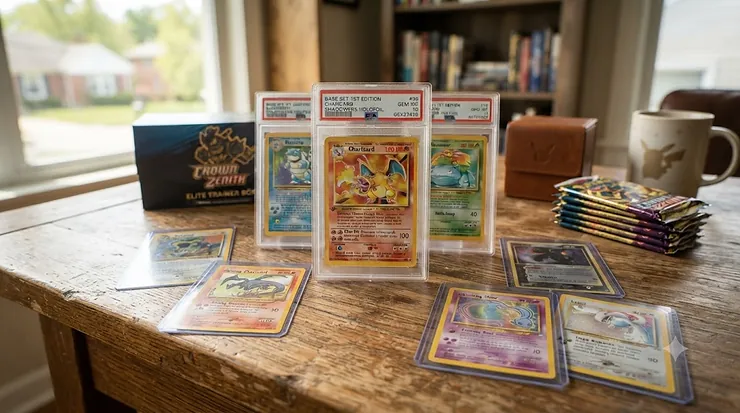
Somewhere in a closet in Abbotsford, a stack of cards from 2016 is quietly worth more than the closet’s paint job. That’s not hyperbole — it’s just where the hobby has landed. If you’re hunting for the best Pokemon cards to build, protect, or simply not accidentally destroy in a junk drawer, you’ve picked an interesting decade to get serious about it. A Pokemon card, in the simplest terms, is a collectible playing card from the Pokemon Trading Card Game (TCG), used for battling, trading, or straight-up collecting, and its value depends on rarity, condition, and demand. What most new collectors don’t realize is that the cards themselves are only half the equation — how you store and protect them determines whether that binder becomes a family heirloom or a pile of bent corners. This guide walks through seven genuinely useful products for storing, protecting, and getting started with Pokemon cards, all sold through amazon.ca, with honest analysis instead of marketing fluff. We’ll cover starter decks for kids, everyday binders, sleeves that actually fit, and the kind of graded-card storage that serious investors use. Whether you’re outfitting a curious eight-year-old or trying to keep a five-figure Charizard safe, there’s a setup here that fits your budget and your nerves.
What Is the Best Pokemon Cards Storage Setup?
The best Pokemon cards storage setup pairs a properly sized sleeve (protecting each card from surface wear) with a binder or deck box rated for that sleeve thickness, plus a separate, harder container for anything graded or genuinely valuable. There’s no single “best” product — a six-year-old opening booster packs at the kitchen table has different needs than someone holding a PSA 10 in a safety deposit box, and the right setup respects that difference rather than forcing one box to do everything.
Quick Comparison Table
| Product | Best For | Price Range (CAD) | Capacity |
|---|---|---|---|
| Pokemon TCG Battle Academy 2024 | New players and kids learning the game | around C$30-C$40 | 3 x 60-card decks |
| Ultra Pro Premium 4-Pocket Pokemon Binder | Budget-conscious beginners | under C$20 | 160 sleeved cards |
| Ultra Pro Toploaders (regular 35pt) | Cheap bulk card protection | C$10-C$20 (25-pack) | 1 card per sleeve |
| Dragon Shield Standard Matte Sleeves | Everyday shuffling and play | C$10-C$15 (100 ct) | 1 card per sleeve |
| Ultra Pro Poke Ball 9-Pocket Pro-Binder | Mid-range collectors | C$25-C$35 | 360 sleeved cards |
| Vault X 9-Pocket Exo-Tec Zip Binder | Serious collectors and competitive players | C$35-C$50 | 360 sleeved cards |
| Ultra Pro Graded Card Box | Investment-grade slab storage | under C$15 | 10 graded slabs |
Looking at the spread above, the pattern is pretty clear: price climbs with build quality and closure security, not just capacity. The Pokemon TCG Battle Academy 2024 and the Ultra Pro Premium 4-Pocket Pokemon Binder sit at the entry point for a reason — they’re built for people who aren’t sure yet how deep they’re getting into this hobby. Meanwhile, the Vault X 9-Pocket Exo-Tec Zip Binder and Ultra Pro Graded Card Box exist for the collector who already knows their Charizard isn’t going back in a shoebox.
💬 Just one click — help others make better buying decisions too!😊
Top 7 Best Pokemon Cards Storage & Protection Picks
Here’s the lineup, researched from real listings and aggregated review patterns rather than guesswork. Each pick below covers a specific budget tier and use case, so read for your situation, not just the highest star rating.
1. Pokemon TCG Battle Academy 2024 — best starter deck kit for kids and new trainers
The standout here is that it’s a genuinely complete two-player experience straight out of the box, no booster packs or prior knowledge required. Inside, you get three ready-built 60-card decks, each anchored by a marquee Pokemon (recent versions have featured cards like Pikachu ex and Darkrai ex), plus a two-player game board, tutorial guides, a rulebook, and three small deck boxes to keep everything organized from day one. Based on the product’s design intent and its repeated use in classrooms and family game nights, this is squarely built for kids aged 6 and up and for adults who want to teach the game without reading a 40-page rulebook cold. Reviewers consistently report that the step-by-step tutorial guides make the first few games far less overwhelming than jumping into a full 60-card constructed match, which is the single biggest complaint about learning the TCG from scratch. A common theme in aggregated feedback is that the included deck boxes are basic — fine for the included cards, but not something you’d trust with a valuable pull.
Pros:
- ✅ Complete two-player game, no extra purchases needed
- ✅ Tutorial guides make rules genuinely beginner-friendly
- ✅ Includes three basic deck boxes for immediate organization
Cons:
- ❌ Included deck boxes aren’t durable long-term storage
- ❌ Deck lists rotate, so exact cards vary by print run
At around C$30-C$40, this is one of the cheapest ways to find out if a kid (or you) actually likes playing the Pokemon TCG before spending real money on singles.
2. Ultra Pro Premium 4-Pocket Pokemon Binder — best budget binder for growing collections
What stands out immediately is the padded leatherette cover with an embossed Poke Ball snap closure — it looks a lot more premium than the price suggests. The binder holds up to 160 standard cards across 20 fixed side-loading pages, and its side-loading pocket design (rather than top-loading) matters more than it sounds: side-loading pockets resist gravity and accidental tips far better, so cards don’t slide out mid-flip. Based on the spec sheet, the archival-safe, non-PVC, acid-free construction is the same baseline material Ultra Pro has used since the 1950s, which matters if you’re storing cards for years rather than weeks. This is the right call for a beginner who has maybe 100-150 cards and doesn’t yet need 360-card capacity. Aggregated review sentiment points to the snap closure as a genuine strength — unlike zipperless binders, it actually stays shut in a backpack. What most buyers overlook is that 4-pocket layouts show off cards better for younger collectors who like flipping through pages slowly, versus the denser 9-pocket format built for speed-browsing large collections.
Pros:
- ✅ Padded leatherette cover feels premium for the price
- ✅ Side-loading pockets prevent accidental card slippage
- ✅ Acid-free, non-PVC materials for long-term safety
Cons:
- ❌ 160-card capacity fills up fast for active collectors
- ❌ Fixed pages can’t be reorganized or expanded
Priced under C$20, the Ultra Pro Premium 4-Pocket Pokemon Binder is the easiest entry point into real trading card storage without committing to a bigger system.
3. Ultra Pro Toploaders (Regular 35pt, 3x4in) — best cheap protective card accessories for bulk cards
The standout feature is rigidity: unlike a flexible sleeve, a toploader is a stiff plastic holder that resists bending entirely, which is exactly what you want for a card riding around in a backpack. Each toploader is sized for a standard 2.5 x 3.5-inch card plus a penny sleeve underneath, giving two protective layers for pennies per card. Based on the spec comparison with premium alternatives, standard Ultra Pro and BCW toploaders use clear PVC that’s optically fine for everyday cards, though not the museum-grade optical clarity that premium UV-blocking brands offer for display purposes. This product is for the collector storing dozens or hundreds of mid-value cards — not the person about to frame a single Charizard, but the person protecting an entire binder’s worth of holos from bent corners. Reviewers consistently note that toploaders paired with a penny sleeve and a rigid mailer is the accepted standard for shipping cards safely, and that buying in bulk packs brings the per-unit cost down to pocket change. A common complaint in aggregated feedback is that loose toploaders can rattle and scuff each other if stored without a divider box.
Pros:
- ✅ Rigid construction fully prevents bending
- ✅ Extremely cheap per card in bulk packs
- ✅ Compatible with penny sleeves for double protection
Cons:
- ❌ Not graded-submission safe (graders require semi-rigid holders)
- ❌ Bulk loose toploaders need a separate box to avoid scuffing
At C$10-C$20 for a 25-pack, this is the best value protective card accessory for anyone with more cards than budget.
4. Dragon Shield Standard Size Matte Sleeves (100 CT) — best card sleeves and protectors available in Canada
The matte finish is the headline feature, and it’s not just cosmetic — matte-textured backs create a smoother, more consistent shuffle than glossy sleeves, which matters if these cards are actually getting played rather than just displayed. Sized precisely for standard 63x88mm cards, the fit is snug enough to prevent cards from sliding around inside, which is the main cause of scuffed card backs over time. Based on Dragon Shield’s own spec claims and consistent aggregated reviewer sentiment, the sleeves are made from polypropylene, free of PVC and acid, which keeps the cards themselves chemically stable in long-term storage. This product suits both casual kitchen-table players and tournament-level competitors, since Dragon Shield sleeves are widely accepted at organized play events across Canada. What reviewers repeatedly highlight is shuffle feel — a detail that sounds minor until you’ve played with sleeves that stick together mid-game and cost you a match on a misdeal. On the downside, a recurring theme in feedback is that matte sleeves show fingerprint smudges more visibly than glossy options over extended handling.
Pros:
- ✅ Matte texture gives a smoother, tournament-friendly shuffle
- ✅ Precise fit for standard-size cards reduces wear
- ✅ PVC-free, acid-free materials for archival safety
Cons:
- ❌ Matte finish shows fingerprint smudges more easily
- ❌ Colour dye can occasionally transfer onto card edges over time
In the C$10-C$15 range per 100-count pack, these sleeves remain the benchmark that most other card protectors are compared against.
5. Ultra Pro Poke Ball 9-Pocket Pro-Binder — best mid-range binder for serious collectible card gaming
The design highlight is the debossed Poke Ball artwork stitched into a padded leatherette cover — it looks the part of a serious collector’s binder rather than a kid’s photo album. Inside, 40 pages of 9-pocket side-loading sleeves hold up to 360 cards, with an embossed black web backing that frames each card for a cleaner display look when flipping through pages. Based on the spec sheet, the elastic strap closure is a step down from a zipper in terms of security, but it’s lighter and faster to open one-handed, which matters during active trading sessions or tournament play. This binder is aimed squarely at collectible card gaming enthusiasts who’ve outgrown a 4-pocket starter binder but aren’t ready to spend Vault X money. Aggregated reviewer sentiment consistently praises the archival-safe, non-PVC materials and the framed display effect of the embossed pages, treating it as the mid-tier sweet spot in Ultra Pro’s own lineup. A recurring critique in feedback is that the elastic strap loosens with years of heavy use, eventually failing to hold the cover fully shut.
Pros:
- ✅ 360-card capacity handles a genuinely large collection
- ✅ Embossed pages give cards a premium, framed look
- ✅ Officially licensed design holds resale appeal
Cons:
- ❌ Elastic strap closure is less secure than a zipper
- ❌ Fixed pages mean you can’t rearrange card order later
Sitting in the C$25-C$35 range, the Ultra Pro Poke Ball 9-Pocket Pro-Binder earns its price as a genuine step up for anyone taking collectible card gaming seriously.
6. Vault X 9-Pocket Exo-Tec Zip Binder — best premium storage for competitive players
The Exo-Tec material is the whole pitch here: a non-slip, water-resistant exterior with 200-micron-thick clear pockets and built-in padding between every page, which is noticeably thicker than standard binder pockets. That padding matters practically — it absorbs shock from drops or a backpack getting tossed around, which is exactly the scenario a tournament player deals with every weekend. Based on the spec comparison against the Ultra Pro Poke Ball binder above, the full zip closure (rather than an elastic strap or snap) is the clearest upgrade, sealing the entire binder against dust, moisture, and accidental spills at events. This product is for the collector or competitive player who travels with their cards regularly and needs a binder that survives real wear, not just shelf storage. Reviewers consistently highlight the zipper’s smooth action and the vivid, consistent colour options as standout details, alongside the compatibility with standard sleeves already in most players’ collections. A recurring point in aggregated feedback is that some units have arrived with minor air bubbles in the interior lining, though this appears to be inconsistent rather than a systemic defect.
Pros:
- ✅ Full zip closure seals out dust, moisture, and spills
- ✅ Padded Exo-Tec pockets absorb shock from travel
- ✅ Side-loading design prevents cards from spilling out
Cons:
- ❌ Heavier and bulkier than elastic-strap binders
- ❌ Occasional reports of minor lining air bubbles on arrival
At C$35-C$50, the Vault X 9-Pocket Exo-Tec Zip Binder is the pick for anyone whose cards leave the house as often as they do.
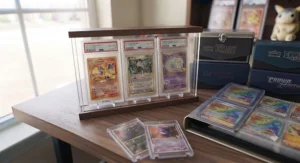
7. Ultra Pro Graded Card Box — best trading card investment storage for graded slabs
The defining feature is the self-locking lid combined with a write-on label strip — small details, but exactly what matters once cards start leaving your hands and going into a safe or safety deposit box. The box holds 10 graded cards from PSA or Beckett, or Ultra Pro toploaders and ONE-TOUCH magnetic holders up to 3×5 inches, making it genuinely flexible across different grading companies. Based on the spec sheet, the archival-safe polypropylene construction and clear walls let you visually confirm contents without opening the box and risking damage to a slab’s tamper-evident seal. This is the product for anyone treating Pokemon cards as a trading card investment rather than a hobby box — the difference between a $50 collection and a $5,000 collection is almost entirely about how it’s stored once graded. Aggregated reviewer feedback consistently points to the write-on strip as a favourite feature for organizing multiple boxes by set or grade, and the self-locking lid as reassuring for long-term, low-access storage. On the downside, a common theme in reviews is that the fixed 10-slab capacity means serious investors need several boxes, which adds up in both cost and shelf space.
Pros:
- ✅ Self-locking lid protects against dust and shifting
- ✅ Clear walls allow visual ID without opening the box
- ✅ Compatible with multiple grading companies’ slab sizes
Cons:
- ❌ Only holds 10 slabs, so serious investors need several
- ❌ No built-in humidity or UV protection beyond the plastic itself
At under C$15 per box, this is a small cost relative to what’s typically stored inside it, which is exactly the point for a trading card investment.
Setting Up Your Pokemon Card Collection: A Practical Usage Guide
Getting a new collection organized in the first month sets the tone for the next five years, so it’s worth doing right the first time instead of retrofitting later. Start by sorting cards into three rough piles: bulk commons and energy cards, playable holos and rares, and anything you suspect might be genuinely valuable. Bulk cards can go straight into a Ultra Pro Premium 4-Pocket Pokemon Binder or similar entry-level storage without individual sleeves — it’s not worth the time or cost to sleeve a common Rattata. Anything you plan to handle, trade, or play with regularly should go into Dragon Shield Standard Size Matte Sleeves before it touches a binder page, since sleeve-then-binder is always safer than binder-alone. The most common first-30-days mistake is over-handling new cards while checking prices online — every flip and re-flip adds wear before the card’s even protected. A close second mistake is buying one binder and assuming it’ll last forever; most collections outgrow their first storage solution within a year. For maintenance, wipe down binder covers monthly with a dry cloth (never a wet or chemical one, which can damage leatherette), and check zip or snap closures every few months for wear before they fail while a binder’s full.
Real-World Scenarios: Matching Products to Your Collecting Style
Picture three different people walking into the same card shop. First, there’s an eight-year-old getting into Pokemon for the first time because their friend has a binder full of holos — for them, the Pokemon TCG Battle Academy 2024 paired with the Ultra Pro Premium 4-Pocket Pokemon Binder covers both learning to play and starting a first collection, all under C$60 combined. Second, there’s a university student in Toronto who plays casual TCG nights with friends twice a month and has maybe 400 cards worth keeping — the Ultra Pro Poke Ball 9-Pocket Pro-Binder fits that volume and budget without overspending on features they won’t use. Third, there’s a collector in Calgary who just had a friend’s local card shop broken into and is rethinking how they store an actual investment-grade collection — for them, Dragon Shield Standard Size Matte Sleeves plus the Ultra Pro Graded Card Box for anything graded, kept somewhere more secure than a shelf, makes far more sense than a single flashy binder. The through-line across all three: budget, frequency of handling, and whether cards are being played or preserved should drive the purchase, not just which binder looks nicest online.
✨ Don’t Miss These Exclusive Deals!
🔍 Take your Pokemon card collection to the next level with these carefully selected products. Click on any highlighted item to check current pricing and availability. These picks help new and experienced trainers alike keep their collection safe and organized!
Common Pokemon Card Storage Problems (And How to Fix Them)
Problem: Cards are bending inside a backpack. A flexible sleeve alone doesn’t stop bending under real pressure — pair sleeves with Ultra Pro Toploaders for anything traveling regularly, since rigid plastic is the only thing that truly resists bending. Problem: A binder’s zipper or elastic strap has failed. This is common after a year or two of daily use; a full-zip option like the Vault X 9-Pocket Exo-Tec Zip Binder tends to outlast elastic-strap alternatives specifically because zippers distribute stress more evenly across the closure. Problem: You don’t know which cards in a big bulk lot are actually worth protecting. Rather than sleeving everything, spend an afternoon checking recent sold listings for anything with a holo pattern, a special rarity marking, or an older print date — anything under a few dollars can stay loose in bulk storage. Problem: A graded slab arrived and you’re not sure how to store it long-term. Slabs need a rigid, lockable box rather than a binder pocket — the Ultra Pro Graded Card Box is built exactly for this and prevents the tamper-evident seal from being disturbed. Problem: Humidity or sunlight is fading card colours in a display area. Keep binders and boxes out of direct sunlight and avoid basements prone to dampness; none of the products above include built-in humidity control, so the storage location matters as much as the container itself.
How to Choose the Best Pokemon Cards Storage Setup
- Count your collection size honestly. Under 200 cards fits a 4-pocket binder; past 500, you’ll want a 9-pocket format or a box system instead.
- Decide if cards are for playing or preserving. Playable decks need shuffle-friendly matte sleeves; preserved collectibles need rigid toploaders and minimal handling.
- Match closure type to how often you travel with cards. Zippers beat elastic straps for anyone commuting with cards weekly; a snap closure is fine for shelf storage at home.
- Separate graded cards from the rest immediately. A graded slab in a regular binder pocket is a mismatch waiting to crack a case — use dedicated graded card boxes instead.
- Budget for sleeves before binders. A C$40 binder full of unsleeved cards is a worse investment than a C$20 binder with every card properly sleeved first.
- Check material safety claims. Acid-free, PVC-free construction genuinely matters for cards you plan to keep for a decade or more, not just marketing language.
- Buy slightly ahead of your current collection size. Growth is the norm in this hobby, and upgrading storage every six months costs more overall than buying one size up initially.
Common Mistakes When Buying Pokemon Card Storage
The single biggest mistake collectors make is buying based on cover art rather than capacity and closure quality — a beautiful Charizard-themed binder with a weak elastic strap will fail long before a plain black zip binder does. A close second is assuming any plastic sleeve fits any card; standard-size Pokemon cards need genuinely standard-size sleeves, and cheap off-brand sleeves are sometimes cut slightly small or loose, leading to cards slipping or jamming. Reviewers across multiple products in this guide consistently flag a third mistake: buying a single storage solution for an entire mixed collection instead of separating bulk, playable, and graded cards into different containers built for each purpose. A fourth common error is skipping sleeves entirely to save a few dollars on a large collection, only to end up needing to buy replacement cards later at a much higher cost than sleeves would have been. Finally, many new collectors overlook that Amazon-listed prices for TCG accessories fluctuate constantly with demand spikes tied to new set releases — checking current pricing before assuming a “deal” is genuinely a deal is worth the extra thirty seconds.
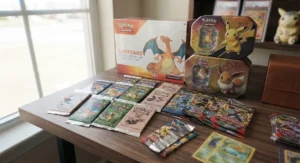
Trading Card Storage vs Traditional Cardboard Boxes
| Factor | Trading Card Storage (Binders/Boxes) | Traditional Cardboard Shoebox |
|---|---|---|
| Physical protection | High — padded, side-loading, rigid options | Low — no cushioning or structure |
| Organization | High — dividers, pages, labels | Low — loose piles, easy to lose track |
| Long-term material safety | Acid-free, PVC-free options available | Cardboard can degrade and yellow cards over time |
| Best For | Anyone keeping cards past a year | Very short-term, low-value storage only |
The comparison above makes the case pretty plainly: a cardboard shoebox costs nothing upfront but costs plenty in bent corners and faded value down the line, while dedicated trading card storage pays for itself the first time a binder survives a backpack drop that would’ve crushed a shoebox flat. Purpose-built products like the Ultra Pro Poke Ball 9-Pocket Pro-Binder or Vault X 9-Pocket Exo-Tec Zip Binder also make a collection actually browsable, which matters more than it sounds once you’re trying to find one specific card among a thousand. The only scenario where a shoebox still makes sense is genuinely temporary storage of cards you’re about to sort anyway — anything you intend to keep deserves better than a box built to hold shoes.
Pokemon Starter Deck Kids vs Jumping Straight Into Booster Packs
For a child just discovering the hobby, a structured starter kit like the Pokemon TCG Battle Academy 2024 solves a problem that random booster packs simply can’t: it guarantees a complete, balanced, playable deck on day one, with tutorial guides that turn confusing rules into a step-by-step first game. Booster packs, by contrast, are a gamble — a new player might open three packs and still not have enough cards of one type to build a functional deck, which is genuinely frustrating for a kid who just wants to play immediately. Based on the spec comparison, starter kits also include physical game boards and rulebooks designed for teaching, while booster packs assume you already know how to build and play a deck. That said, once a child has learned the basics through a starter kit, booster packs become the more cost-effective way to expand a specific deck’s strategy or chase a favourite Pokemon, since starter kits don’t get restocked with new cards. The practical answer for most families: start with a kit, then transition to boosters once the rules genuinely click.
Long-Term Cost & Maintenance of a Growing Collection
| Setup Tier | Approx. Initial Cost (CAD) | Ongoing Cost | Best For |
|---|---|---|---|
| Starter (Battle Academy + 4-Pocket Binder) | C$50-C$60 | Low — occasional sleeve packs | Kids and total beginners |
| Mid-Range (9-Pocket Binder + Sleeves) | C$40-C$50 | Moderate — replacement sleeves, extra pages | Active hobbyists |
| Premium (Exo-Tec Binder + Graded Boxes) | C$50-C$65+ per binder/box | Higher — multiple boxes as collection grows | Investors and competitive players |
Total cost of ownership in this hobby rarely stops at the initial purchase — sleeves wear out, binders get outgrown, and graded card boxes multiply as a collection expands past ten slabs. Looking at the table above, the mid-range tier tends to offer the best long-term value per card protected, since a Ultra Pro Poke Ball 9-Pocket Pro-Binder handles years of active collecting before needing replacement, while cheaper binders often need upgrading within a single year. For anyone treating cards as a trading card investment rather than a hobby, the ongoing cost of proper graded storage is genuinely negligible compared to the value being protected — spending C$15 on a box to protect a card worth hundreds is not a place to cut corners.
Safety, Regulations & Compliance for Kids’ Pokemon Products in Canada
Anyone buying Pokemon products for children in Canada should know that toys sold here fall under the Canada Consumer Product Safety Act, and small parts intended for kids under three are federally restricted specifically due to choking hazards, a rule the Toys Regulations under Canadian law spell out in detail. Products like the Pokemon TCG Battle Academy 2024 include small components such as coins and damage counters, which is why packaging typically carries an age recommendation of 6+ rather than being marketed to toddlers. Health Canada’s own general toy safety guidance recommends checking age labels closely and keeping small accessories away from children who still put objects in their mouths, advice that applies directly to loose gaming tokens and coins bundled with TCG starter sets. Beyond physical safety, there’s a newer and less obvious risk worth flagging: as Pokemon card values have climbed, some Canadian card shops have reported break-ins specifically targeting sealed product, which is a reminder that storing a genuinely valuable collection at home is worth thinking about the same way you’d think about any other high-value asset.
Frequently Asked Questions
❓ What are the best Pokemon cards to start collecting?
❓ How do I know if my Pokemon cards are worth grading?
❓ What size are standard Pokemon card sleeves?
❓ Can I use Magic the Gathering sleeves for Pokemon cards?
❓ Where should I store valuable graded Pokemon cards long-term?
Conclusion
There’s no single best Pokemon cards storage product because there’s no single type of collector — the parent buying a first starter kit, the university student building a playable deck, and the investor sitting on graded slabs all need genuinely different setups. What ties every recommendation in this guide together is a simple principle: match the product to how the cards are actually used, protect before you display, and don’t let a good binder distract from the sleeves doing the real work underneath it. Starting small with something like the Ultra Pro Premium 4-Pocket Pokemon Binder and upgrading as a collection grows tends to work out better financially than overbuying on day one. Whatever tier you land on, remember that pricing on all of these products shifts constantly, so always check current pricing before buying, and treat any listed range here as a starting point for research rather than a guarantee.
Recommended for You
- 7 Best Marble Run Construction Kits for Canadian Families (2026)
- STEM Toys 6-8 Year Old: 7 Top Picks for 2026 (Canada Edition)
- Star Wars Figures 2026: 7 Best Poseable Picks for Every Budget
Disclaimer: This article contains affiliate links. As an Amazon Associate, I earn from qualifying purchases. If you purchase products through these links, we may earn a small commission at no additional cost to you.
✨ Found this helpful? Share it with your friends! 💬🤗
