
In This Article
There’s a particular kind of chaos that unfolds in a Canadian mudroom the week before a child’s first hockey practice. Skates that don’t fit. A helmet still in shrink wrap. A parent frantically Googling at 11 p.m. because nobody warned them a jock and a jill are not interchangeable. If that sounds familiar, you’re not alone, and you’re not behind — you’re just early enough in the process to do it right.
beginner hockey equipment kids shopping doesn’t have to be a minefield. In plain terms, beginner hockey equipment kids refers to the entry-level protective gear, skates, and sticks sized and built for new young players — typically ages 4 to 10 — who are learning the game’s basics rather than competing at an elite level. According to Hockey Canada, the sport remains one of the most widely registered youth activities in the country, which means the market for kids’ gear is enormous, occasionally overwhelming, and full of both excellent and mediocre options wearing similar-looking packaging.
This guide skips the marketing fluff. We’ve researched seven real, currently available products spanning entry skates, a beginner stick, protective bundles, a mini net for the basement, and an off-ice training puck — with honest analysis of who each one actually suits, not just a spec sheet copy-paste. We’ll also dig into stick sizing for a six-year-old, building a mini rink at home, real training aids that work, and why hockey still occupies such a strange, wonderful corner of Canadian identity. Lace up.
Quick Comparison Table: Beginner Hockey Gear at a Glance
Before the deep dive, here’s the fast version for parents standing in an aisle with a squirming kid and fifteen minutes before the store closes.
| Gear Category | Example Product | Price Range (CAD) | Best For |
|---|---|---|---|
| Entry-level skates | Bauer X-LP Youth Skates | around C$70-95 | First-time skaters, easy break-in |
| Step-up skates | CCM Jetspeed FT680 Youth | C$120-160 range | Kids staying in the sport past season one |
| Beginner stick | Bauer Nexus Performance Grip Youth | around C$85-105 | Ages 5-8, learning shot mechanics |
| Home training net | Franklin NHL Mini Steel Goal | under C$70 | Basement or driveway shooting practice |
| Off-ice trainer | Green Biscuit Snipe Puck | under C$25 | Stickhandling reps without ice time |
Looking at this table, the pattern that jumps out is how little correlation there is between price and beginner suitability — the cheapest items here (the training puck and mini net) often deliver the fastest skill gains because repetition matters more than resistance-grade materials at this stage. Parents chasing the “best” gear for a five-year-old are usually better served spending on ice time and off-ice reps than on premium composite sticks their kid will outgrow in eight months. That said, skates are the one category worth stretching the budget on slightly, since a poor-fitting boot can genuinely make a kid hate the sport before they’ve given it a fair shot.
💬 Just one click — help others make better buying decisions too!😊
💬 Found a combo that works for your family? Share this guide with another hockey parent who’s drowning in gear tabs right now.
Top 7 Beginner Hockey Equipment for Kids: Expert Analysis
We picked these seven based on real availability, genuine review patterns across major Canadian and North American retailers, and a deliberate spread across skates, sticks, protective bundles, and off-ice tools. Budget, mid-range, and premium-leaning options are all represented, because “best” always depends on your kid’s age, commitment level, and how many times you expect to replace this gear before June.
1. Bauer X-LP Youth Skates — easiest boot to break in for total beginners
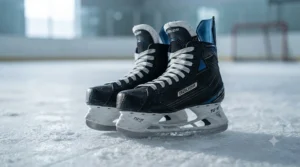
The standout here is how little resistance the boot puts up during those wobbly first sessions, which honestly matters more than any performance spec at this stage. The skate uses a fleece-lined interior for warmth and comfort, a traditional hockey-lace closure kids can eventually learn to tie themselves, and a 13-foot blade radius, which is a gentler, more stable curve than the sharper radii found on performance skates built for quick direction changes.
Based on the spec comparison against pricier youth lines, the wider stability margin here is a deliberate trade-off: less agility, more forgiveness for a kid who’s still figuring out where their centre of gravity lives. That’s exactly the right trade for a first or second season. Reviewers across hockey retail sites consistently describe the X-LP as simple to size and comfortable enough that kids don’t fight getting them on, which — anyone who has wrestled a squirming six-year-old into skates will tell you — is not a small thing.
Pros:
- ✅ Wide stability radius forgives early balance mistakes
- ✅ Fleece liner stays warm through long rink sessions
- ✅ Simple hockey lacing kids can learn to tie themselves
Cons:
- ❌ Limited agility once skating skills progress
- ❌ Boot stiffness is minimal, offering less ankle support long-term
Priced around C$70-95 depending on retailer and size, this is arguably the smartest first purchase in the entire lineup — spend here, not on a stick your kid will outgrow by Christmas.
2. CCM Jetspeed FT680 Youth Skates — best step-up for a second season
What stands out on the FT680 is the jump in boot construction quality without jumping into adult-level pricing — CCM built this specifically to bridge entry-level comfort with slightly more responsive performance. It ships with pre-sharpened stainless steel runners, a stiffer boot than base learn-to-skate models, and a moisture-wicking liner that holds up better across a full practice season than basic foam interiors.
Here’s what to weigh: this isn’t the skate for a four-year-old trying hockey for the first time, but for a seven- or eight-year-old who’s finished a season of learn-to-skate and is registering for a house league, the added support genuinely translates to better edge control. Aggregated reviewer sentiment across retail sites is largely positive, with recurring praise for value relative to CCM’s junior and senior lines, though a handful of buyers note the sizing runs slightly narrow compared to Bauer’s youth fit.
Pros:
- ✅ Pre-sharpened steel runners ready out of the box
- ✅ Stiffer boot supports developing edge control
- ✅ Strong value against CCM’s pricier junior lines
Cons:
- ❌ Narrower fit than some competing brands
- ❌ Overkill for a true first-time skater
Expect a price in the C$120-160 range, positioning it as the natural upgrade once a beginner outgrows entry-tier skates in confidence, if not always in shoe size.
3. Bauer Nexus Performance Grip Youth Stick (20 Flex) — best beginner stick for small hands
The headline feature is Launch Flex technology, which Bauer designed specifically to help small, developing players load and release a shot without needing adult-level strength. What most buyers overlook about youth-flex sticks is that flex rating isn’t a marketing gimmick — a 20 flex genuinely bends where a senior-flex stick simply won’t for a 40-pound kid, meaning shots that actually leave the ice instead of dribbling along it.
The shaft’s grip finish helps small hands maintain control during stickhandling drills, and the 15K carbon fibre build keeps the whole stick light enough that a beginner isn’t fighting the weight of their own equipment. On paper, this reads as a premium price for a kid’s stick, and reviewers occasionally raise that exact point — but the trade-off is a stick that can be cut down as the child grows, extending its usable life across more than one season, which softens the real cost-per-use.
Pros:
- ✅ Launch Flex helps small players actually get shots airborne
- ✅ Lightweight carbon build reduces fatigue during drills
- ✅ Grip shaft aids control for developing hand strength
Cons:
- ❌ Premium price point for a stick that will be outgrown
- ❌ Overkill for a child who may not stick with the sport
Priced around C$85-105, this is best suited to kids ages 5 to 8 who’ve shown enough interest that a slightly nicer stick will keep them motivated rather than frustrated.
4. Franklin NHL Mini Steel Street Hockey Goal — best mini net for home practice
At 71 cm wide by 51 cm high (28 by 20 inches), this net’s standout advantage is that it’s genuinely portable between a driveway, a basement, and a backyard rink without needing a toolbox to reassemble it each time. The heavy-gauge steel tubing holds its shape far better than the plastic mini nets marketed as toys, and the pre-fit polyester netting resists the kind of tearing that happens fast when siblings start taking slap shots at each other.
Based on the spec comparison with plastic alternatives, the steel frame is the real differentiator — plastic mini nets tip over or crack within a season of regular shooting practice, while a welded steel loop attachment simply doesn’t. Reviewers describe it as an easy assembly job for a parent in under ten minutes, and several specifically mention using it for indoor knee hockey during Canadian winters when outdoor ice access is limited.
Pros:
- ✅ Durable steel frame outlasts plastic mini net alternatives
- ✅ Genuinely portable between indoor and outdoor use
- ✅ Assembles without tools in a matter of minutes
Cons:
- ❌ Too small for realistic shot-placement practice past age 9 or 10
- ❌ Netting can loosen with heavy daily use over time
Priced under C$70, this is one of the highest-value purchases on this entire list, doubling as both a skill-building tool and, let’s be honest, a way to get kids off screens for an hour.
5. Green Biscuit Snipe Training Puck — best off-ice trainer for stickhandling reps
The Snipe’s standout feature is that it behaves almost identically to a real puck on ice while sliding across ordinary pavement, concrete, or hardwood — a genuinely clever bit of engineering for a product this simple. At roughly 147 grams (5.2 oz), it’s slightly lighter than a standard ice puck, and its surface friction is tuned so it doesn’t tumble or flip the way a tennis ball or hockey ball tends to during quick-hands drills.
What the spec sheet won’t tell you, but aggregated reviewer sentiment does, is that durability is genuinely mixed — some reviewers report years of daily driveway use with no issues, while others describe cracking after a handful of hard slap shots, particularly in cold weather when plastics get brittle. Honest framing matters here: this product shines for stickhandling and passing reps, and is explicitly not designed by its own manufacturer for full-power shooting practice, a distinction some buyers miss before they’re disappointed.
Pros:
- ✅ Realistic on-ice puck feel on rough outdoor surfaces
- ✅ Compact and inexpensive way to add daily practice reps
- ✅ Doesn’t flip or tumble like balls used for similar drills
Cons:
- ❌ Reported durability issues with hard shots or cold weather
- ❌ Not intended for full-power slap shot practice
At under C$25, it’s a low-risk addition to any beginner’s routine, and one of the best cost-per-minute-of-practice tools in this entire lineup.
6. CCM Fitlite 3DS Youth Helmet Combo — best CSA-certified helmet for ages 4 to 7
The standout here is D30 Lite smart-material padding, a rate-sensitive foam that stays soft during normal movement but stiffens on impact — a meaningfully different protective approach than older single-density foam liners. The helmet is CSA, HECC, and CE certified, meets requirements for Canadian minor hockey associations, and includes a tool-free adjustable cage designed specifically for the age 4-7 head shape rather than a scaled-down adult shell.
Here’s what most buyers overlook about youth helmets specifically: certification labels matter more than brand prestige at this level, because CSA Group sets the specific impact-testing standards that Canadian rinks and leagues actually require, and a helmet without that label — regardless of how good it looks — typically isn’t league-legal. Reviewer sentiment aggregated across retailers is strongly positive on comfort and ease of adjustment, with the tool-free cage clips repeatedly singled out as a parent-friendly feature during growth spurts.
Pros:
- ✅ CSA, HECC, and CE certified for Canadian league compliance
- ✅ D30 Lite padding adapts protection level to impact force
- ✅ Tool-free cage adjustment for quick growth-spurt changes
Cons:
- ❌ Sizing runs specifically for ages 4-7, not adjustable much beyond
- ❌ Cage visibility can feel restrictive to some first-time wearers
Expect a price in the C$90-130 range — and given that this is the single piece of gear where cutting corners carries real safety consequences, it’s not the place to hunt for the absolute cheapest option available.
7. TronX Youth Player Ice Hockey Equipment Starter Kit — best all-in-one budget protective bundle
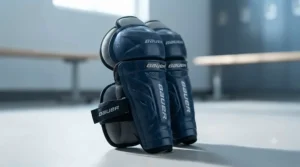
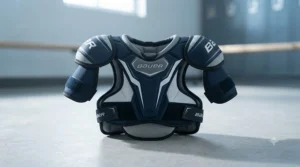
The obvious standout is completeness at a single, predictable price: shoulder pads, gloves, elbow pads, shin guards, pants, and a carrying bag arrive together, sized and coordinated, which removes the guesswork that trips up most first-time hockey parents. Molded plastic covers the key impact zones — shoulders, elbows, shins — while standard foam handles the rest, keeping the whole kit lightweight enough that a small child isn’t weighed down mid-stride.
Based on the spec comparison against buying each piece individually, bundling like this typically saves real money and, more importantly, saves parents from the sizing-mismatch problem where shin guards from one brand don’t quite line up with skates from another. Reviewers consistently frame this as the practical, no-fuss choice for a first season, noting the odour-resistant fabric treatment holds up reasonably well, though a few mention the padding is noticeably less plush than what a mid-tier individual purchase would offer.
Pros:
- ✅ Covers every required protective piece except skates and helmet
- ✅ Coordinated sizing removes cross-brand fit guesswork
- ✅ Includes a bag, which is one less separate purchase
Cons:
- ❌ Padding density is basic compared to individually purchased gear
- ❌ Less room to size up as the child grows mid-season
Priced in the C$100-160 range, this is the pragmatic choice for a family who isn’t yet sure hockey is a multi-year commitment and doesn’t want to buy six separate items to find out.
✨ Don’t Miss These Exclusive Deals!
🔍 Take your beginner hockey equipment kids shopping to the next level with these carefully selected products. Click on any highlighted item to check current pricing and availability. The right gear now means fewer meltdowns at the rink and a kid who actually wants to come back next week!
How to Choose Beginner Hockey Equipment for Kids
Choosing gear for a beginner comes down to a handful of decisions made in the right order, rather than trying to optimize every single item at once.
- Start with skates, not sticks. Fit problems in skates cause more early quitting than any other equipment issue, so this is where your budget and attention should go first.
- Buy protective gear one size up, not two. A slightly loose fit still protects properly; an overly large fit leaves gaps between pads where pucks and sticks can land.
- Confirm CSA or HECC certification on the helmet specifically. Provincial minor hockey associations generally won’t let a child on the ice without it, regardless of how new or expensive the helmet looks.
- Choose stick flex by weight, not by height. A taller-but-lighter kid still needs a low flex rating; going too stiff means shots that never leave the ice.
- Consider used gear for fast-growing kids. Most protective equipment sees only one or two seasons of wear before being outgrown, making secondhand a genuinely reasonable option for pads, pants, and shin guards.
- Add one off-ice training tool before spending more on-ice gear. A mini net or training puck often improves a beginner’s comfort with the puck faster than another expensive stick will.
- Leave room in the budget for growth. Kids in this age range can move up a full gear size within a single season, so resist maxing out the budget on day one.
Kids Hockey Stick for a 6 Year Old: Sizing and Flex Guide
Six is a strange age for hockey gear because kids in this range vary wildly in height and weight, which makes generic “age-based” sizing charts almost useless on their own. The better method: stand your child in their skates and hold a stick vertically in front of them — the top of the shaft should reach roughly their chin, not their nose or forehead, which is a common oversizing mistake among parents buying “room to grow.”
Flex rating matters just as much as length here. Youth sticks, including the Bauer Nexus Performance Grip covered above, typically come in a 20 flex specifically because a 6-year-old weighing 20-25 kg (roughly 45-55 lbs) simply doesn’t generate enough force to load a stiffer shaft. Reviewers and coaches consistently note that oversized, overly stiff sticks are one of the single biggest reasons young beginners develop poor shooting mechanics early — they compensate with their arms instead of learning to flex the stick properly with their legs and core.
A stick can always be cut down at the shaft if it’s slightly too long, but it can’t be un-cut if you go too short, so when in doubt, size up by an inch rather than down. Left- or right-hand curve matters less at this age than parents assume; most six-year-olds haven’t developed a strong shooting preference yet, and a straight-blade or mild-curve beginner stick works fine either way.
Mini Hockey Net Canada: Building a Backyard or Basement Rink
A mini net is arguably the highest-value, lowest-cost purchase on this entire list, and Canadian winters make it almost a necessity rather than a luxury. With outdoor ice availability varying wildly by region and weather, a steel-framed mini net like the Franklin model above lets a kid rack up hundreds of extra shots per week without needing to book ice time or wait for a backyard rink to freeze solid.
Setup is genuinely simple: most steel-frame mini nets assemble in minutes without tools, and the better ones — with a welded loop net attachment rather than simple clips — survive years of daily use rather than collapsing after a season. For basement or garage use, look specifically for a model with a weighted or wide-stance base, since narrow-framed nets tip constantly on hard flooring, which gets old fast for both the kid shooting and the parent hearing it happen.
Some Canadian retailers also sell modular side-board panels that connect to form a mini “half rink,” turning a spare room or garage bay into a legitimate practice space. It’s a bigger investment than the net alone, but for families in apartments or without easy outdoor rink access, it solves the single biggest obstacle to skill development: simply not having enough reps.
Youth Hockey Training Aids That Actually Move the Needle
Not every training aid on the market delivers real skill improvement, so it’s worth separating the genuinely useful from the merely well-marketed. Off-ice training pucks, like the Green Biscuit covered above, top this list because they let a kid practice stickhandling, passing, and puck protection literally anywhere with pavement — no ice, no rink fees, no scheduling.
Shooting pads — smooth synthetic sheets that mimic ice friction for a stationary shooting area — are the second genuinely useful category, since they let a kid practice wrist shots and snap shots in a garage without tearing up a real puck’s flight on rough concrete. Slide boards, which simulate the lateral pushing motion of skating, build leg strength relevant to stride power, though they’re generally better suited to kids aged 8 and up who have the coordination to use them safely.
What to skip, generally: elaborate “shooting trainer” gadgets with sensors and apps promising instant improvement. Based on the spec comparison against simpler tools, the actual skill transfer from screen-based gadgets to on-ice performance is thin at best for beginners, and the money is far better spent on pure repetition tools plus actual ice time with a coach or program like Hockey Canada’s initiation-level programming.
Ice Hockey Fundamentals Every Beginner Needs to Learn First
Before worrying about curves, flex ratings, or fancy dangles, beginners need four fundamentals locked in, roughly in this order: balance on skates, forward stride mechanics, stopping, and basic stick control.
Balance comes first because everything else in hockey is built on top of it — a kid who’s still wobbly on their edges can’t meaningfully learn a wrist shot, because their body is preoccupied simply staying upright. Forward stride mechanics follow: pushing out to the side rather than straight back, which feels counterintuitive to most beginners used to running. Stopping — specifically the two-foot snowplow stop before attempting one-foot hockey stops — is the fundamental most often skipped too early, and it’s directly responsible for a huge share of beginner falls and frustration.
Only once those three are reasonably solid does stick control become the priority, starting with simply carrying the puck in a straight line before attempting any lateral stickhandling. Programs structured around this exact sequence — Hockey Canada’s initiation and pre-novice programming among them — consistently produce more confident second-season players than gear-focused or drill-heavy approaches that skip straight to shooting and passing before balance is truly solid.
Skating Skill Development: From Wobbly Strides to Confident Crossovers
Skating skill development in young beginners tends to follow a fairly predictable arc, and understanding it helps parents set realistic expectations instead of comparing their kid to whoever looks smoothest on the ice that week.
In the first several sessions, expect pure survival skating — short, choppy steps, frequent falls, and heavy reliance on the boards. This is developmentally normal and typically resolves within 6 to 10 sessions for most beginners, not because of any particular drill, but simply through accumulated ice time. The next stage introduces a proper push-glide stride, where a child starts generating actual forward momentum from each leg push rather than shuffling.
Edge control — the ability to lean into a turn on the inside or outside edge of the blade rather than pivoting the whole body — typically emerges next, and it’s the skill that unlocks everything from crossovers to hockey stops. Canadian minor hockey associations widely use structured programs like CanSkate alongside initiation hockey specifically because they isolate these edge and balance skills before layering on game context, which research on motor skill development in children generally supports over throwing kids straight into full-ice scrimmages before they can stop reliably.
Canadian Sports Culture and Why Hockey Still Rules the Rink
It’s worth pausing on why this particular sport commands this particular level of parental time, money, and 6 a.m. rink drop-offs across the country. Hockey occupies a genuinely unusual place in Canadian identity — not just as a sport but as a shared cultural reference point, from backyard rinks flooded by parents in January to small-town arenas that double as the actual social centre of a community.
That cultural weight has practical upsides for beginners: because so many communities have invested in accessible rink infrastructure and structured minor hockey associations, entry points for new players tend to be more established here than in most countries, even in smaller towns. It also has a real downside worth naming honestly — the depth of hockey culture can create pressure, both financial and social, for families to over-invest early, chasing gear and travel programs long before a five- or six-year-old has any real sense of whether they even love the sport yet.
The healthiest approach, borne out by both coaching literature and simple common sense, treats those first one or two seasons as low-stakes exploration rather than a commitment to an athletic pathway. Buy the beginner-tier gear, not the aspirational gear. Let the kid decide, through actually playing, whether this becomes a lifelong thing or a fun couple of winters — both are completely fine outcomes.
Common Mistakes Parents Make Buying Beginner Hockey Equipment
A few mistakes show up again and again among first-time hockey parents, and most are easily avoidable once you know to watch for them.
Buying skates a full size or more too large “for growth room” tops the list — unlike sneakers, oversized skates genuinely hurt performance and balance, because a boot that’s too loose can’t transmit edge control properly. Skipping certification checks on helmets is another common one; a helmet without CSA or HECC labelling might look identical to a certified one but simply won’t be league-legal, and worse, may not meet the actual impact standards those labels represent.
Overspending on a premium stick before a child has shown real interest is a frequent regret parents mention in hindsight, since sticks are the single fastest-outgrown item in the entire kit. On the opposite end, underspending on the helmet and skates while overspending on jerseys or “cool factor” items inverts the priority order that actually matters for safety and skill development. Finally, many parents skip off-ice training tools entirely, assuming ice time alone is sufficient — when in reality, a cheap mini net or training puck often accelerates comfort with the puck faster than the same number of minutes spent purely on skating drills.
Real-World Scenarios: Matching Gear to Your Kid
The complete beginner, age 5, first time ever on skates. Budget around C$300-400 total. Prioritize the Bauer X-LP skates for their forgiving balance radius, the CCM Fitlite helmet for certified protection, and the TronX starter kit to cover the rest in one purchase. Skip the premium stick entirely for now — a basic beginner stick under C$40 is plenty until interest is confirmed.
The returning player, age 7, finishing their first house league season. Budget around C$400-550. This is the point to upgrade skates to something like the CCM Jetspeed FT680, since the added support pays off once basic balance is established, and to introduce the Bauer Nexus youth stick for better shot mechanics as shooting becomes a bigger part of practice.
The reluctant sibling, age 6, being dragged along because an older brother or sister plays. Budget under C$200, secondhand where possible. A mini net and a Green Biscuit training puck in the driveway, paired with basic borrowed or secondhand protective gear, lets this kid explore the sport at zero pressure — if genuine interest develops, invest further; if not, nothing was wasted on gear that will barely get used.
Problem → Solution: Fixing the Most Common First-Season Headaches
Problem: skates that feel comfortable in the store but cause pain after 20 minutes of skating. Solution: heat-mould thermoformable boots where available, and always test with the actual hockey socks the child will wear, since thickness changes the fit noticeably.
Problem: a kid who cries or refuses to fall practice, developing a fear of the ice. Solution: dedicate a few sessions purely to controlled falling and getting back up, ideally away from a full practice group, so there’s no social pressure attached to the learning curve.
Problem: shin guards or shoulder pads that constantly shift out of position during play. Solution: check that pants overlap properly with shin guards and that Velcro straps are actually being used, not just skipped for speed when getting dressed — a shockingly common shortcut among rushed parents.
Problem: a stick that feels impossible to control, with shots that never leave the ice. Solution: confirm the flex rating actually matches the child’s weight rather than their age or height, and consider cutting an oversized stick down rather than replacing it entirely.
Problem: a training puck or mini net that gets used twice and then abandoned in the garage. Solution: build a short, consistent routine — even five minutes before dinner most nights — rather than treating it as a special occasion activity that competes with screen time and always loses.
Long-Term Cost & Maintenance of Kids’ Hockey Gear
Hockey has a reputation as an expensive sport, and for elite travel programs that reputation is earned — but beginner-level participation is considerably more manageable than most non-hockey parents assume, especially with a secondhand-forward strategy.
| Approach | Typical First-Season Cost (CAD) | Best For |
|---|---|---|
| All-new individual pieces | C$500-700+ | Families confident in a multi-year commitment |
| New starter bundle + skates | C$300-450 | Most first-time families |
| Mostly secondhand gear | C$100-200 | Reluctant or trial-run players, fast-growing kids |
The analysis here is straightforward: since most protective gear fits a growing child for only one or two seasons regardless of quality, the cost-per-use math strongly favours secondhand purchases for pants, shin guards, elbow pads, and shoulder pads specifically — items that see genuine wear-and-tear but rarely fail structurally within a season or two. Skates and helmets are the two exceptions worth buying new when the budget allows, since boot support and impact protection genuinely degrade with prior use in ways that are harder to assess secondhand.
Maintenance costs are modest but real: skate sharpening every 15-20 hours of ice time, occasional stick replacement as flex and length are outgrown, and periodic helmet padding replacement if a liner compresses or degrades. Budgeting an extra C$50-100 per season for these small recurring costs avoids the surprise expense that catches many first-year hockey parents off guard.
Safety, Certification & Regulations Parents Should Know
Certification labels aren’t bureaucratic decoration — they represent actual impact-testing standards that Canadian minor hockey associations require before a child is permitted on the ice. Helmets need CSA certification at minimum for most Canadian leagues, with HECC recognized as an equivalent standard accepted in many associations as well. CSA Group publishes the specific testing methodology behind these standards, and it’s worth a quick look if you want to understand exactly what a certified helmet has actually been tested against.
Mouthguards, while sometimes treated as optional at the very beginner level, are increasingly required even in initiation programs, and neck guards are mandatory in most provincial associations for players under a certain age. Provincial and league-specific rules do vary, so checking directly with your child’s specific minor hockey association before the season starts is genuinely worth the ten-minute phone call — requirements around neck guards, visors versus full cages, and even stick length can differ meaningfully between provinces.
Beyond mandated equipment, basic supervision practices matter just as much: making sure a beginner never skates alone on unsupervised natural ice, checking that a helmet fits snugly with no more than two fingers of space at the forehead, and replacing any helmet that’s taken a serious impact, since internal foam can compress invisibly even without external cracking.
Frequently Asked Questions
❓ What age should a kid start playing hockey?
❓ How much does beginner hockey equipment cost in Canada?
❓ What size hockey stick does a 6 year old need?
❓ Do I need a mini hockey net for at-home practice?
❓ Is used hockey equipment safe for kids?
Conclusion
Outfitting a young beginner for hockey doesn’t require getting every single decision perfect on the first try — it requires getting the important decisions right and staying relaxed about the rest. Spend real attention on skates that fit and a helmet that’s properly certified. Add a mini net and a training puck for cheap, high-value practice reps at home. Resist the pull toward premium sticks and gear bundles until genuine interest is confirmed, because most beginners will outgrow both their equipment and, occasionally, their enthusiasm within a season or two.
What matters far more than any single product on this list is simply getting a kid comfortable enough on their skates that they actually want to go back next week. That’s the entire game at this stage, long before flex ratings or curve patterns matter even a little.
✨ Ready to Gear Up?
🔍 Check current pricing on today’s picks before your next trip to the rink — a little research now saves a lot of frustration (and returns) later. Your future hockey player will thank you!
Recommended for You
- Kids Sports Equipment: 7 Top Picks Parents Love in 2026
- 7 Best Family Board Games for Canadian Game Nights (2026)
- Best LEGO Creator 3-in-1 Sets Canada 2026: Top 7 Expert Picks
Disclaimer: This article contains affiliate links. As an Amazon Associate, I earn from qualifying purchases. If you purchase products through these links, we may earn a small commission at no additional cost to you.
✨ Found this helpful? Share it with your friends! 💬🤗
