
In This Article
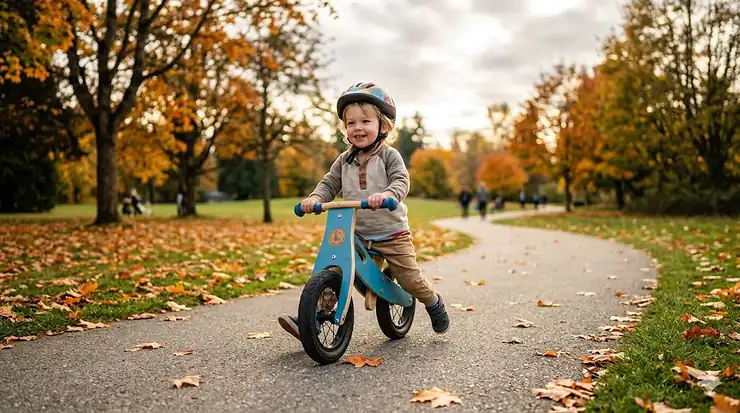
Picture a crisp Saturday morning in late April — the snow has finally retreated (it’s Canada, after all 🍁), and your little one is wobbling, then gliding, then flying down your driveway on two wheels for the very first time. That moment of pure, unfiltered joy? A great balance bike makes it happen weeks — sometimes months — earlier than a traditional pedal bike ever could.
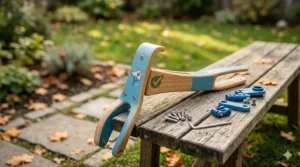
A best balance bike is a pedal-free bicycle that lets toddlers and young children propel themselves forward with their feet, learning balance and steering through real, organic movement rather than relying on training wheels. According to Wikipedia’s overview of balance bikes, the concept works because children develop true countersteering instinct — something training wheels actively prevent, meaning kids who start on training wheels often have to unlearn bad habits later.
Research published in the International Journal of Environmental Research and Public Health found that children who begin cycling early are more likely to maintain healthy weights in subsequent school years and develop stronger motor and social-emotional skills. In other words, a balance bike isn’t just a toy — it’s a developmental investment.
For Canadian families, choosing the right best balance bike involves a few extra considerations: Will it handle spring slush on the sidewalk? Can you find replacement parts in Canada without waiting three weeks for cross-border shipping? Is the seat adjustable enough to last through two Canadian winters? This guide answers all of that — with real products verified available on Amazon.ca, prices in CAD, and commentary that goes beyond the spec sheet.
Whether you’re shopping for a 18-month-old taking their first wobbly steps or a four-year-old ready to graduate to a pedal bike, we’ve got you covered. Let’s ride. 🚴
Quick Comparison Table: Best Balance Bikes on Amazon.ca
| Product | Best For | Approx. Price (CAD) | Frame | Tyre Type | Weight Limit | Age Range |
|---|---|---|---|---|---|---|
| Strider 12″ Sport | Overall best / beginners | $120–$160 range | Steel | Foam (flat-free) | 27 kg (60 lbs) | 18 mo–5 yrs |
| Strider 14x | Older/taller kids | $200–$250 range | Steel | Air | 45 kg (99 lbs) | 3–7 yrs |
| KRIDDO Toddler Balance Bike | Best budget pick | $55–$80 range | Carbon steel | Foam | 25 kg (55 lbs) | 2–5 yrs |
| Banana Bike LT | Lightweight budget | $60–$90 range | Aluminium | EVA foam | 20 kg (44 lbs) | 2–5 yrs |
| Retrospec Cub | Long wheelbase stability | $80–$120 range | Steel | Foam (air-free) | 27 kg (60 lbs) | 2–5 yrs |
| Chillafish BMXie2 | Cool style / Costco fave | $100–$140 range | Steel | Rubberskin | 25 kg (55 lbs) | 2–5 yrs |
| besrey Toddler Balance Bike | Motion-activated lights | $70–$100 range | Alloy | EVA foam | 30 kg (66 lbs) | 2–5 yrs |
What the table tells you: The Strider 12″ Sport wins on sheer brand trust and adjustability range, but the KRIDDO and Banana Bike LT offer remarkable value if your budget is tight. For older riders or Canadian families wanting a bike that grows further into the school years, the Strider 14x’s air tyres and higher weight limit justify the premium. If your child is on the chunky side (no judgment — Canadian winters call for hearty appetites 😄), the besrey’s 30 kg limit is notably generous for the price range.
💬 Just one click — help others make better buying decisions too! 😊
✨ Don’t Miss These Exclusive Deals!
🔍 Take your little one’s riding journey to the next level with these carefully selected products. Click on any highlighted item to check current pricing and availability on Amazon.ca. These bikes will help your child build balance, confidence, and outdoor skills they’ll carry for life!
Top 7 Balance Bikes on Amazon.ca: Expert Analysis
1. Strider 12″ Sport Balance Bike — The Gold Standard for Canadian Toddlers
When parents ask me which best balance bike to buy first, the Strider 12″ Sport is almost always the answer — and it’s been that way for over a decade. Strider has sold more than 4 million bikes worldwide since 2007, and the 12″ Sport remains their most versatile everyday model, available on Amazon.ca in multiple colours including Matte Grey, Blue, Green, Pink, and Red.
Specs in plain English: The bike weighs just 3.0 kg (6.7 lbs) — that’s lighter than most toddlers’ backpacks — so a 2-year-old can actually pick it up and carry it when they inevitably stop in the middle of the sidewalk to investigate a beetle. The seat adjusts from 28 cm to 43 cm (11″ to 17″), which covers most children from 18 months through age 5. Flat-free foam tyres mean you will never be mid-ride when a tyre goes soft. The weight limit sits at 27 kg (60 lbs), so it comfortably handles most Canadian preschoolers.
What most buyers overlook is just how much the built-in footrests matter. Once your child is comfortably striding, they’ll naturally start lifting their feet and gliding — those footrests give them somewhere to rest while they coast, which is exactly how balance is internalised. No training wheels ever taught a kid to coast like that.
Who it’s for: Any Canadian family wanting a proven, reliable first balance bike that works from toddlerhood through kindergarten. The tool-free assembly is a genuine bonus for parents assembling it in a cold garage in March.
Canadian customers note the bike holds up well through wet spring conditions and Ontario-level road salt splashes on sidewalks — just rinse the frame occasionally.
✅ Ultralight at 3 kg — kids can handle it independently
✅ Widest age/size range in its class
✅ Tool-free assembly and adjustments
❌ Foam tyres less grippy than air on rougher terrain
❌ Handlebars can feel slightly narrow for bigger toddlers
Price range: Around $120–$160 CAD — exceptional value for a bike that can last from 18 months to age 5.
2. Strider 14x Balance Bike — The One That Bridges Balance Bike to Pedal Bike
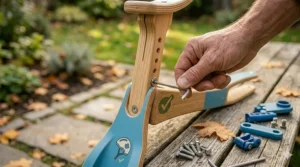
The Strider 14x is the model Canadian parents of older or taller children often discover too late — and then wish they’d bought from the start. It’s designed for ages 3–7, features 14″ air-filled tyres, and — this is the clever part — includes a pedal conversion kit (sold separately) so the bike literally grows into a pedal bike. The air tyres on the 14x are meaningful: they absorb more vibration than foam, which matters when your 5-year-old is riding over Quebec cobblestones or BC gravel paths.
The seat height goes from 37 cm to 52 cm (14.5″ to 20.5″), accommodating substantially taller kids. The weight limit jumps to 45 kg (99 lbs), making it future-proof. The hand brake — a feature absent on the 12″ models — starts building real stopping habits well before a pedal bike arrives.
Who it’s for: Families with taller preschoolers, or parents who want one bike that transitions all the way to pedal riding. If you have a 3-year-old who is already large for their age, skip the 12″ Sport and go straight to the 14x — you’ll thank yourself in 18 months.
✅ Air tyres for superior comfort and terrain versatility
✅ Grows into a pedal bike with optional kit
✅ Hand brake develops proper stopping instincts early
❌ Higher price point than the 12″ Sport
❌ Heavier than the 12″ models — some younger kids find it tiring
Price range: $200–$250 CAD range — justified if you consider the pedal bike conversion as part of the total cost of ownership.
3. KRIDDO Toddler Balance Bike — Best Budget Pick That Doesn’t Feel Budget
The KRIDDO punches well above its price range. The carbon steel frame is reassuringly solid — not the flimsy flex you sometimes feel on no-name bikes in this price bracket. The dual-bearing wheels roll noticeably smoother than single-bearing budget alternatives, and smoother rolling means a child expends less energy on the flat, leaving more enthusiasm for actually learning to balance. The customisable number plate with DIY stickers is a surprisingly effective trick: kids who personalise their own bike develop ownership and attachment to it, which translates directly into wanting to ride it more.
The seat height adjusts from roughly 30 cm to 38 cm, suitable for ages 2–5. At around $55–$80 CAD, this is the bike I recommend to Canadian parents who are genuinely uncertain whether their child will take to balance biking at all. If your toddler turns out to be obsessed (likely), you’ll still get full value here. If they show mild interest, you haven’t lost the rent money.
Caveat: Foam tyres won’t grip wet autumn leaves the way air tyres do. Stick to dry pavement and paved paths, and this bike is everything a budget-conscious Canadian family needs.
✅ Dual-bearing wheels for noticeably smoother ride
✅ DIY plate engages kids emotionally with their bike
✅ Excellent value in the $55–$80 CAD range
❌ Foam tyres struggle on wet or rough surfaces
❌ Seat height range slightly limited for taller 4–5 year olds
Price range: $55–$80 CAD — the best value balance bike on Amazon.ca right now.
4. Banana Bike LT Balance Bike — Lightweight Champion for Tiny Riders
The Banana Bike LT (Lava Sport) has built a quiet reputation among Canadian parents who know their bikes. The aluminium frame keeps the total weight genuinely low — important because the single biggest barrier to a small child riding independently is a bike that feels too heavy to control. When a 2-year-old can easily pick up their own bike and reposition it, confidence skyrockets.
EVA foam tyres are puncture-proof (no Canadian parent wants to deal with a flat tyre on a balance bike — been there 😅), and the handlebar and seat adjustments are straightforward enough that you won’t need an Allen key every time your child grows 2 cm. The minimalist design means fewer parts to go wrong, and customers note the adjusters stay firm without slipping — a common complaint on cheaper competitors.
Who it’s for: Smaller or lighter children aged 2–4 who feel intimidated by heavier bikes. Also excellent for Canadian families who store bikes in a condo locker or apartment hallway — the lightweight aluminium makes grabbing it and heading out genuinely easy.
✅ Aluminium frame genuinely lighter than steel alternatives
✅ EVA puncture-proof tyres — no maintenance headaches
✅ Clean, minimal design that kids find approachable
❌ Lower weight limit (20 kg / 44 lbs) — not suitable for heavier kids
❌ Colour selection sometimes limited on Amazon.ca
Price range: $60–$90 CAD range — solid mid-budget choice.
5. Retrospec Cub Balance Bike — Stability Specialist for Cautious Beginners
Here’s what the spec sheet won’t tell you about the Retrospec Cub: its 23.5″ wheelbase is significantly longer than similarly priced competitors. What does that mean in practice? More stability. The child’s weight sits better-centred, the bike tracks straighter, and nervous beginners feel less wobbly right from the first push. Expert reviews from Two Wheeling Tots note the Cub’s wheelbase rivals high-end bikes costing twice as much — a genuine feat at its price point.
The CPSC-compliant build is Canadian-seller verified, and the adjustable seat and handlebars accommodate children through age 5 without tools. Air-free tyres require zero maintenance — a real convenience for busy Canadian parents who don’t want to be tracking down a tiny pump.
Who it’s for: Timid or cautious beginners who need extra confidence from a more stable platform. Also ideal for Canadian parents who want a “set and forget” first bike — once assembled, maintenance is essentially zero.
✅ Longer wheelbase = superior stability for beginners
✅ Air-free tyres: zero flat-tyre maintenance
✅ Strong adjustability range grows with the child
❌ Slightly heavier than aluminium-frame alternatives
❌ Foam tyres less grippy in wet/muddy conditions
Price range: $80–$120 CAD — excellent stability-to-cost ratio.
6. Chillafish BMXie2 Balance Bike — The Cool Kid on the Block
The Chillafish BMXie2 has earned something of a cult following among Canadian parents — it’s frequently sold at Costco Canada during the holiday season, which tells you something about its mainstream appeal. The BMX-inspired styling resonates strongly with children who want to look like the older kids at the skate park, not ride a baby bike. That psychological buy-in is more important than it sounds: a child who loves the look of their bike will spend more time on it.
The proprietary Rubberskin tyres are a genuine differentiator — they’re softer and more grippy than standard EVA foam, providing noticeably better traction on wet pavement. For Canadian families in rainy Vancouver or damp Maritime conditions in spring and fall, this detail matters. The low step-through frame lets tiny legs mount and dismount independently, which builds confidence and reduces frustration.
Who it’s for: Parents with a style-conscious toddler (yes, they exist at age 3 😄) and families in wetter Canadian climates where tyre grip on damp surfaces is a genuine concern.
✅ Rubberskin tyres grip wet pavement better than standard foam
✅ BMX styling that kids genuinely get excited about
✅ Low step-through frame for independent mounting
❌ Slightly pricier than comparable foam-tyre bikes
❌ Availability on Amazon.ca can be intermittent — check stock
Price range: $100–$140 CAD — worth it for the tyre quality and kid-factor.
7. besrey Toddler Balance Bike — The Night-Rider Special
The besrey stands apart from every other bike on this list with one clever feature: motion-activated LED wheels that light up as your child rides. Is it gimmicky? Maybe slightly. Does it make kids ride their bike constantly, including in the garage when it’s raining outside and you’ve run out of indoor activities? Absolutely yes. The alloy frame keeps weight reasonable, the all-metal construction feels premium for the price, and the padded adjustable seat accommodates a solid range of Canadian toddler sizes.
The 30 kg (66 lbs) weight limit is notably generous — the highest on this list — making it a great choice for larger-built children who might otherwise outgrow a standard balance bike’s weight limit quickly. Parents report the LED wheels are a frequent conversation starter at the park, and there’s something to be said for a bike that makes riding feel magical rather than just educational.
Who it’s for: Children who need extra motivation to ride outdoors — especially useful in the grey, drizzly months of Canadian autumn when getting kids off screens and outside requires a little extra spark. ✨
✅ Motion-activated LED wheels for serious kid appeal
✅ Highest weight limit on this list (30 kg)
✅ Alloy frame for good strength-to-weight ratio
❌ LED feature adds slight complexity (battery replacement eventually)
❌ Foam EVA tyres standard — no air tyre option
Price range: $70–$100 CAD — great value given the weight limit and novelty factor.
How Balance Biking Works in Practice: A Canadian Family Guide
Getting Started the Right Way
One of the most common mistakes Canadian parents make when introducing a best balance bike is setting the seat too high. The golden rule: your child’s feet should rest flat on the ground with a very slight bend in the knee. This low, secure position lets them feel the ground at all times, which is the foundation of genuine confidence.
Here’s the progression that works for most Canadian toddlers:
Week 1–2: Let the child simply walk the bike around — no striding, no coasting. Just getting comfortable with the weight and steering. Do this inside your home or in a dry garage if it’s still cold outside.
Week 3–4: Encourage short strides — one foot, then two feet off the ground briefly. A gentle, smooth incline (like a sloped driveway) works beautifully here; gravity gives a little assist and makes the gliding feeling more natural.
Month 2+: Most children will naturally start lifting both feet and gliding for 2–4 seconds at a time. Resist the urge to push or hold the bike — it delays the process. Your job at this stage is to cheer enthusiastically and occasionally wipe the inevitable mud off their jacket.
Cold-weather tip: Canadian springs are wet. If you’re introducing a balance bike in April or May, expect muddy knees and wet shoes. Dress your toddler in waterproof pants and choose a path with pavement rather than grass. Bring a towel in the car.
Transitioning to a Pedal Bike
Children who learn on a balance bike typically skip training wheels entirely. According to research, this is because they’ve already internalised countersteering and weight distribution — the skills training wheels actually prevent developing. When your child is coasting on their balance bike for 5+ seconds with feet up, they’re ready. Add pedals (or buy the Strider 14x pedal kit), and most children pedal independently within one or two sessions. The transition is genuinely remarkable to witness.
Three Canadian Families, Three Perfect Balance Bikes
Every family’s situation is different. Here’s how I’d match three realistic Canadian buyer profiles to the bikes on our list:
🏙️ Profile 1: Toronto Condo Family with a 2-Year-Old
Situation: Small storage space, hardwood floors indoors, mostly paved park paths outdoors, budget around $100 CAD. Toddler is petite and a little cautious.
Best pick: Banana Bike LT — the lightweight aluminium frame is easy to carry up a condo elevator, the EVA tyres don’t mark hardwood floors, and the low weight won’t overwhelm a small 2-year-old. If budget allows, step up to the Retrospec Cub for the stability bonus.
🌧️ Profile 2: Rainy-Season Vancouver Parent with a 3-Year-Old
Situation: Rides year-round in drizzle, wants something grippy and durable, child is average size and already interested in “cool” bikes.
Best pick: Chillafish BMXie2 — the Rubberskin tyres handle wet West Coast pavement meaningfully better than standard foam. The BMX styling will keep a 3-year-old motivated to ride even when the weather’s grey. Pair it with a CSA/CPSC-certified toddler helmet from Amazon.ca and knee pads.
🏔️ Profile 3: Calgary Suburban Family with a 4-Year-Old Tall for Their Age
Situation: Child is already 105 cm (41″) tall, starting balance bikes later than average, wants to transition to pedal bike within 12 months. Budget is flexible.
Best pick: Strider 14x — the only bike on this list designed explicitly to bridge the gap to pedal riding, with a seat range that accommodates taller children and genuine air tyres for the varied Calgary terrain (gravel paths, park trails, paved sidewalks). The optional pedal kit makes the investment extend well beyond the balance bike phase.
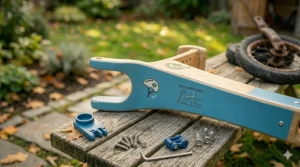
How to Choose the Best Balance Bike in Canada: 5 Expert Criteria
1. Seat Height — The Most Important Spec Nobody Checks
Measure your child’s inseam (crotch to floor, feet flat) before you browse. The bike’s minimum seat height should be equal to or slightly less than their inseam. A bike that’s too tall forces tiptoe riding, which delays learning. Most Canadian parents skip this step and end up returning a bike — don’t be that parent.
2. Weight — The Lighter, the Better
A rule of thumb: the bike should weigh no more than 30% of the child’s body weight. For a 13 kg (28 lb) toddler, that’s about 4 kg max. Most balance bikes on our list come in at 3–4.5 kg, which is appropriate. Avoid any bike exceeding 5 kg for children under 3.
3. Tyre Type — Foam vs. Air for Canadian Conditions
Foam/EVA tyres are maintenance-free and suitable for smooth pavement — perfect for Canadian urban settings. Air tyres (like the Strider 14x) absorb more vibration and handle varied terrain better, but can go flat. For most Canadian families on paved paths and driveways, foam is fine. If you’re in a rural area with gravel paths or frequently ride on rough surfaces, air is worth the minor maintenance.
4. Frame Material — Steel vs. Aluminium
Steel is durable and affordable but heavier. Aluminium is lighter but typically costs more. For young toddlers (under 3), prioritise lightweight — a child who can easily manoeuvre their bike develops skills faster. For older or more active riders, steel’s durability is a fair trade-off for the extra weight.
5. Canadian-Specific: Availability & After-Sales
Always verify the product ships to your specific province before ordering on Amazon.ca. Some products may show as available but have limited shipping to Quebec or remote northern communities. Prime members generally receive the most consistent shipping experience across Canada.
Common Mistakes Canadian Parents Make When Buying a Balance Bike
Mistake #1: Buying a bike with training wheels “just in case.” Training wheels actively interfere with learning balance. According to Health Canada’s helmet safety guidance, the goal of safe cycling is genuine balance — and training wheels delay exactly that. If you’re going balance bike, go fully — no wheels.
Mistake #2: Skipping the helmet. This deserves its own bullet. The Canadian Paediatric Society’s Caring for Kids resource is crystal clear: helmets sold in Canada must carry certification from CSA, CPSC, Snell, or ASTM. When buying a toddler bike helmet on Amazon.ca, check the listing specifically for one of these certification marks — not all listings make this obvious. A helmet without certification isn’t protection; it’s a polystyrene hat.
Mistake #3: Buying too big, thinking they’ll “grow into it.” Unlike rain boots, balance bikes don’t work when they’re too large. A child who can’t touch the ground flat-footed will never build genuine confidence. Buy for now, not for two years from now.
Mistake #4: Ignoring Canadian availability. Many balance bike brands popular on American review sites (woom, Early Rider) are either unavailable on Amazon.ca or significantly more expensive when imported. The bikes on our list are verified available to Canadian buyers at prices in Canadian dollars — no surprise customs duties.
Mistake #5: Forgetting about storage. Canadian winters mean 4–6 months of indoor bike storage for most families. Before you buy, measure your storage space. Hanging hooks in a garage or laundry room are your best friends — and a 3 kg balance bike is easy enough for one parent to hang one-handed.
Balance Bikes vs. Training Wheels: The Science-Backed Canadian Verdict
This comparison comes up constantly in Canadian parenting forums, so let’s address it directly with the evidence.
| Factor | Balance Bike | Training Wheels |
|---|---|---|
| Learns real balance? | ✅ Yes — from day one | ❌ No — relies on side support |
| Countersteering instinct | ✅ Develops naturally | ❌ Actively prevents it |
| Time to independent riding | ✅ Faster (weeks–months) | ❌ Longer (months–years) |
| Transition to pedal bike | ✅ Smooth and quick | ❌ Requires re-learning balance |
| Suitable for Canadian winters | ✅ Easy to store (lightweight) | ❌ Heavier bikes harder to store |
| Typical cost (CAD) | $55–$250 range | $80–$200+ for equivalent quality bike |
The evidence is clear. As noted by researchers cited in CBS News, children who learn to cycle with balance bikes skip the training wheel phase entirely when moving to pedal bikes — a finding consistent across multiple studies. The Wikipedia balance bike article further notes that training wheels teach children to steer the wrong way by preventing the natural leaning that real cycling requires. That’s a habit that has to be unlearned — and unlearning habits is always harder than building the right ones from the start.
In purely practical Canadian terms: a balance bike is lighter, easier to store for Canadian winters, requires no adjustment as a child grows more confident, and produces better long-term cycling outcomes. The case for training wheels in 2026 is essentially nostalgic, not logical.
The table verdict: For any Canadian parent choosing between balance bike and training wheels, the balance bike wins on every meaningful metric. The only scenario where training wheels make sense is if a child is 6+ years old and has a specific motor challenge — and even then, specialist adaptive options often outperform training wheels.
The Toddler Bike Helmet Question: What Canadian Parents Need to Know
No balance bike guide is complete without addressing safety equipment — and in Canada, this means navigating specific certification requirements that differ subtly from American standards.
Health Canada’s helmet safety page and the Canadian Paediatric Society both confirm that helmets sold in Canada must carry at least one of four certification marks: CSA (Canadian Standards Association), CPSC (US Consumer Product Safety Commission — accepted in Canada), Snell, or ASTM. When shopping on Amazon.ca for a toddler bike helmet Canada option, add the certification check to your process: look for it explicitly in the product description or images, not just the listing title.
What to Look For in a Toddler Helmet on Amazon.ca:
- Certification mark clearly stated (CSA, CPSC, Snell, or ASTM)
- Proper fit range: Measure your child’s head circumference before ordering. Most toddler helmets fit 46–52 cm — but confirm.
- Adjustable retention system (dial or micro-adjust) rather than just foam padding — kids’ heads grow fast
- Lightweight — heavy helmets cause neck fatigue in young children and make them less willing to wear the helmet
- Ventilation — Canadian summers can be surprisingly warm; a stuffy helmet means a child who wants to take it off
Brands like Giro, Bell, and Joovy offer toddler helmets with CPSC/CSA certification on Amazon.ca in the $35–$80 CAD range. Avoid any no-name listing that doesn’t clearly state certification — when it comes to head protection, the savings aren’t worth it.
✨ Don’t Miss These Exclusive Deals!
🔍 Pair your best balance bike with certified safety gear your little rider will actually want to wear. Click highlighted products to check current pricing and availability on Amazon.ca — and set your child up for safe, confident riding from day one!
FAQ: Best Balance Bike Canada 2026
❓ What age should a Canadian child start on a balance bike?
❓ Is the Strider balance bike available on Amazon.ca and does it ship across Canada?
❓ Do Canadian balance bikes need to meet specific safety standards?
❓ How long does a balance bike last before my child moves to a pedal bike?
❓ Can a balance bike be used outdoors in Canadian spring mud and rain?
Conclusion: Your Child’s Riding Journey Starts Here 🍁
The best balance bike for your Canadian family isn’t necessarily the most expensive one — it’s the one that fits your child’s body, matches their temperament, and suits your Canadian lifestyle right now. The Strider 12″ Sport earns top spot for its proven track record, exceptional weight, and versatile fit range. Budget-conscious families will find real value in the KRIDDO and Banana Bike LT, while families with older or taller children should take a serious look at the Strider 14x for its grow-into-pedal-bike potential.
Whatever you choose, remember: a helmet is non-negotiable. Check for CSA, CPSC, Snell, or ASTM certification every time. And when that first glide happens — when your toddler lifts both feet and floats for a second with the biggest smile they’ve ever worn — know that you gave them something that goes far beyond bike riding. You gave them balance, confidence, and the first taste of independent movement.
Now get outside. The Canadian spring waits for no one. 🚴♀️
✨ Don’t Miss These Exclusive Deals!
🔍 Ready to find the perfect balance bike? Click any highlighted product in this guide to check current pricing and real-time availability on Amazon.ca. Canadian families deserve great gear — and these picks deliver exactly that!
Recommended for You
- 7 Best Kids Costumes Canada 2026: Princess, Superhero & Dress-Up Picks
- Best Art Easel Preschool: 7 Top Picks for Canadian Kids (2026)
- Best Kids Craft Kit 4 Year Old Canada 2026 – Top 7 Picks
Disclaimer: This article contains affiliate links. As an Amazon Associate, I earn from qualifying purchases. If you purchase products through these links, we may earn a small commission at no additional cost to you.
✨ Found this helpful? Share it with your friends! 💬🤗
