
In This Article
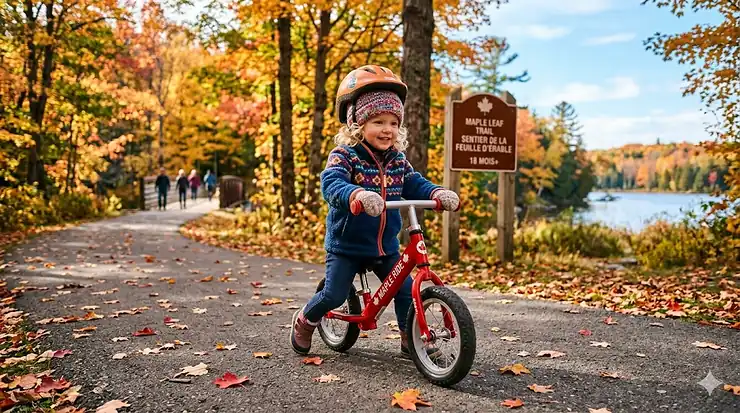
Picture this: your toddler confidently gliding across the park, steering around obstacles with a huge grin on their face. That’s the magic of starting with a balance bike 18 months into their development journey. Unlike tricycles or training wheels that create dependency, balance bikes teach what matters most—actual balance and coordination skills that transfer seamlessly to pedal bikes later.
What most Canadian parents overlook is timing. The window between 18 months and 2.5 years is crucial for developing gross motor skills, and balance bikes align perfectly with this developmental stage. According to Health Canada’s guidelines on children and physical activity, early childhood is when kids develop the foundational balance and coordination that supports lifelong physical activity habits. Starting at 18 months gives your child years of confident riding before transitioning to pedals—often with zero drama.
The Canadian market offers unique considerations too. We’re dealing with longer winters, varied terrain from urban sidewalks to cottage country paths, and products that must meet Health Canada’s stringent safety standards under the Canada Consumer Product Safety Act. This guide cuts through the marketing fluff to show you exactly which balance bikes work for Canadian families, what features actually matter in our climate, and how to choose one that’ll last through multiple seasons and possibly even multiple kids.
Quick Comparison: Top Balance Bikes for 18-Month-Olds
| Product | Weight | Seat Height Range | Best Feature | Price Range (CAD) |
|---|---|---|---|---|
| SEREED Baby Balance Bike | 1.9 kg | 24-29 cm | Ultra-lightweight for beginners | $70-$90 |
| Strider 12 Sport | 3.1 kg | 28-43 cm | Longest growth range | $140-$160 |
| JOYSTAR 10″ Balance Bike | 2.8 kg | 30-38 cm | Puncture-proof tyres | $100-$130 |
| KRIDDO 2-in-1 | 3.5 kg | 28-38 cm | Converts from tricycle | $85-$110 |
| Gotrax Baby Balance Bike | 2.2 kg | 25-30 cm | Quick 2-minute assembly | $75-$95 |
Looking at this comparison, the SEREED Baby Balance Bike delivers exceptional value for parents introducing balance bikes to younger toddlers around 18 months. Its ultra-low seat height of 24 cm accommodates shorter inseams common in Canadian toddlers at this age, while the featherweight 1.9 kg frame means even petite 18-month-olds can manoeuvre it independently. The Strider 12 Sport justifies its premium CAD pricing with a remarkable seat adjustment range that grows with your child from 18 months potentially through age four—eliminating the need for a second purchase. Budget-conscious families should note that while the KRIDDO 2-in-1 offers versatility with its tricycle mode, the trade-off is added weight that makes it harder for younger riders to control initially.
💬 Just one click — help others make better buying decisions too! 😊
Top 7 Balance Bikes for 18 Months: Expert Analysis
1. SEREED Baby Balance Bike – Best for First-Time Riders
The SEREED Baby Balance Bike stands out as the most beginner-friendly option available on Amazon.ca for Canadian families. This 4-wheel baby balance bike weighs just 1.9 kg (4.2 lbs), making it genuinely manageable for an 18-month-old who’s still developing upper body strength. The seat adjusts from 24-29 cm (9.4-11.4 inches), which accommodates the typical inseam range for Canadian toddlers aged 12-24 months.
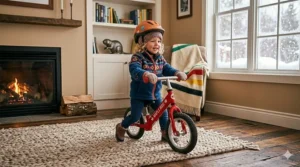
What the spec sheet won’t tell you is how that extra pair of wheels changes the learning curve. Unlike 2-wheel balance bikes that demand immediate balance skills, the 4-wheel design lets toddlers focus on steering and propulsion first. They build confidence pushing themselves around the living room during those long Canadian winters before progressing to more challenging outdoor terrain come spring.
Canadian parents consistently praise the silent EVA foam wheels that won’t scratch hardwood floors—a huge consideration if you’re practicing indoors from November through March. The no-pedal design and low centre of gravity mean tumbles happen at ground level without the dramatic tips that send anxious parents running.
Pros:
- ✅ Ultra-lightweight at 1.9 kg for easy toddler handling
- ✅ 4-wheel stability perfect for complete beginners
- ✅ Indoor-friendly silent wheels for year-round Canadian use
Cons:
- ❌ Limited growth range may require upgrade by age 2.5
- ❌ Plastic frame less durable than metal alternatives
Around $70-$90 CAD makes this the most affordable entry point for Canadian families wanting to test if their toddler enjoys balance biking before investing in premium models.
2. Strider 12 Sport Balance Bike – Best Long-Term Investment
The Strider 12 Sport remains the gold standard that other balance bikes measure against, and for Canadian families planning long-term use, the premium price makes sense. With a seat height adjusting from 28-43 cm (11-17 inches), this single bike genuinely serves kids from 18 months through age four—potentially your only balance bike purchase ever.
The lightweight steel frame at 3.1 kg strikes the sweet spot between durability and manoeuvrability. What impresses most is how Strider engineered real bike geometry into a toddler product. The offset fork design shifts weight distribution to give better steering control, which matters enormously when your 18-month-old is navigating playground terrain or learning to avoid obstacles. The mini grips are sized for toddler hands, preventing the grip fatigue that causes many young riders to give up prematurely.
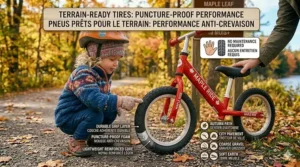
Canadian climate performance deserves mention. The puncture-proof EVA polymer tyres handle everything from spring slush to summer gravel without maintenance. No pumping tyres in -20°C garage mornings, no flats from sharp ice chunks—they just work. Customer feedback from Canadian buyers specifically highlights how the bike holds up through harsh winters stored in unheated sheds, something not all balance bikes manage.
Pros:
- ✅ Exceptional 28-43 cm seat range grows with your child
- ✅ Maintenance-free tyres handle Canadian weather extremes
- ✅ Real bike geometry improves steering for young riders
Cons:
- ❌ Higher price point around $140-$160 CAD
- ❌ Minimum seat height may be too tall for smaller 18-month-olds
The Strider delivers the best cost-per-use value in the mid-$140s CAD if your child fits the minimum height at 18 months. Families with petite toddlers should wait 2-3 months rather than forcing an improper fit.
3. JOYSTAR 10″ Balance Bike – Best All-Terrain Option
The JOYSTAR 10″ Balance Bike targets Canadian families who want one bike that transitions from indoor practice to serious outdoor adventures. The 10-inch air-filled puncture-proof tyres provide genuine shock absorption—crucial if you’re riding on cracked city sidewalks or cottage country gravel paths. At 2.8 kg with a seat adjusting 30-38 cm, it fits most kids from 18 months onwards.
What makes this model particularly relevant for Canadian buyers is the carbon steel frame construction that handles temperature extremes better than cheaper alloy alternatives. The powder-coated finish resists road salt corrosion, which will absolutely destroy lesser bikes after one Canadian winter of sidewalk riding. The footrest encourages proper foot positioning once kids progress from walking to gliding—a feature missing on cheaper models that leaves kids dragging their feet awkwardly.
Customer reviews from Ontario and Alberta parents specifically mention how the adjustable seat grows with kids through age five, though realistically most will transition to pedal bikes around age three. The soft PU leather seat provides more cushioning than basic plastic saddles, reducing complaints on longer rides.
Pros:
- ✅ Air-filled tyres offer superior comfort on rough Canadian terrain
- ✅ Salt-resistant frame finish for sidewalk riding
- ✅ Footrest teaches proper gliding technique
Cons:
- ❌ Slightly heavier at 2.8 kg than ultra-lightweight models
- ❌ 30 cm minimum seat height too tall for shortest 18-month-olds
Priced around $100-$130 CAD, the JOYSTAR sits in the value sweet spot for families prioritizing outdoor versatility and Canadian climate durability.
4. KRIDDO 2-in-1 Tricycle & Balance Bike – Best for Gradual Transitions
The KRIDDO 2-in-1 offers something unique: detachable pedals and training wheels that transform it from tricycle to balance bike as your child’s skills progress. For Canadian parents worried about buying the “wrong” riding toy, this flexibility removes guesswork. The 3.5 kg frame with seat adjusting 28-38 cm accommodates most 18-month-olds through preschool.
Here’s the practical reality: the 2-in-1 design shines for cautious kids who need extra stability initially. Start in tricycle mode during those first tentative weeks, then remove the pedals for balance bike mode once they’re confident. The included DIY sticker plate lets kids customize their ride, which surprisingly increases engagement—toddlers ride “their special bike” more enthusiastically.
Canadian winter considerations matter here too. The wide stance in tricycle mode provides excellent stability on icy driveways where 2-wheel balance bikes would be sketchy. However, that 3.5 kg weight makes it the heaviest option reviewed, which some 18-month-olds struggle to manoeuvre independently indoors.
Pros:
- ✅ Dual mode adapts to changing skill levels
- ✅ Extra stability in tricycle mode for Canadian winter conditions
- ✅ Customizable stickers increase toddler engagement
Cons:
- ❌ Heavier 3.5 kg frame harder for youngest riders to handle
- ❌ More complex assembly than single-mode bikes
Around $85-$110 CAD makes this competitively priced given the 2-in-1 functionality, though you’re paying for versatility rather than optimal performance in either mode.
5. Gotrax Baby Balance Bike – Best Quick-Start Option
The Gotrax Baby Balance Bike earned its spot through one standout feature: genuinely quick assembly. While other models have parents fumbling with Allen keys for 20+ minutes, Gotrax’s tool-free design snaps together in under two minutes—perfect for Canadian parents assembling birthday gifts while an excited toddler bounces around impatiently. At 2.2 kg with a 25-30 cm seat range, it targets the youngest riders.
The 7-inch silent wheels use upgraded EVA foam that’s thicker than competitors, providing surprising cushioning without the maintenance of air tyres. This matters more than you’d think for Canadian families—no worrying about tyres deflating in the cold garage, no pumps needed, just grab and go from November through March. The sturdy steel frame is rated to 30 kg (66 lbs), meaning it’ll handle enthusiastic riding and inevitable crashes.
CPC certification (which includes ASTM F963 compliance) ensures it meets North American safety standards, though note this is US certification rather than specific Canadian standards. Canadian customer reviews frequently mention the comfortable soft seat that doesn’t cause complaints even on longer rides.
Pros:
- ✅ Tool-free 2-minute assembly perfect for gift-giving
- ✅ Maintenance-free thick EVA wheels handle all seasons
- ✅ Ultra-low 25 cm seat height fits smallest toddlers
Cons:
- ❌ Limited 25-30 cm seat range means outgrowing by age 2
- ❌ 7-inch wheels smaller than standard for outdoor terrain
In the $75-$95 CAD range, Gotrax works brilliantly as a starter bike for younger 18-month-olds, though families should expect to upgrade within 12-18 months.
6. KRIDDO Standard Balance Bike – Best Value for Features
The standard KRIDDO Balance Bike (non-convertible version) strips away the 2-in-1 complexity to deliver focused balance bike performance at a competitive price. Weighing 2.6 kg with a 28-38 cm seat adjustment, it fits the typical 18-month-old through preschool years. What sets it apart is the dual bearing system on both wheels—a feature usually reserved for premium models.
Those bearings make a tangible difference in how smoothly the bike rolls. Cheaper single-bearing designs create friction that forces kids to push harder, leading to fatigue and frustration. The dual bearings mean your toddler maintains momentum with less effort, which translates to longer, more enjoyable rides. Canadian parents specifically note this matters on slight inclines, where single-bearing bikes stall but the KRIDDO keeps rolling.
The racing-style frame with non-slip footrest looks sportier than typical balance bikes, which appeals to toddlers who want “big kid” bikes. Three sets of included stickers let kids personalize it, though the adhesive quality is variable according to customer feedback. The powder-coated frame resists scratches better than painted alternatives—important for Canadian families storing bikes in garages where they’ll bang against other equipment.
Pros:
- ✅ Dual bearing system for smoother rolling and less fatigue
- ✅ Sporty racing design appeals to toddlers wanting “big kid” bikes
- ✅ Scratch-resistant powder coat finish handles rough storage
Cons:
- ❌ Sticker quality inconsistent according to buyer reviews
- ❌ 28 cm minimum seat might exclude smallest 18-month-olds
Around $80-$105 CAD positions this as excellent value, particularly for families prioritizing rolling efficiency and durability over absolute lowest price.
7. Umatoll Baby Balance Bike – Best Indoor-to-Outdoor Transition
The Umatoll Baby Balance Bike specifically targets Canadian families starting indoors during winter months before transitioning outside come spring. The adjustable seat goes from 26-32 cm, the removable basket adds toy-carrying functionality that toddlers love, and at 2.1 kg it’s light enough for true independent handling. Available in multiple colours to match any preference.
The real selling point is how it functions as a proper baby walker before becoming a balance bike. At 18 months, many toddlers are still perfecting their walking—this bike supports them through that stage and then continues serving as they develop balance skills. The 4-wheel design with extra-wide stance prevents the tipping that makes parents nervous about early balance bike attempts.
Canadian customer reviews consistently mention the silent wheels that won’t disturb apartment neighbours below—a genuine consideration for urban families. The basket clips off tool-free, so you can start with it attached for toy transport motivation, then remove it when your child is ready for more serious riding. The first birthday gift positioning makes sense given the 12-24 month recommended age range.
Pros:
- ✅ Functions as walker and balance bike for extended usability
- ✅ Removable basket adds play value for younger toddlers
- ✅ Silent wheels ideal for apartment and condo living
Cons:
- ❌ Limited 26-32 cm range requires upgrade by age 2-2.5
- ❌ Basket feature may be too “babyish” for toddlers wanting grown-up bikes
Priced $70-$90 CAD, Umatoll excels as a transitional first bike for families with younger toddlers or kids still developing walking confidence.
Setting Up Your Child for Balance Bike Success: A Canadian Parent’s Guide
Starting your 18-month-old on a balance bike in Canada requires slightly different tactics than what you’ll read in general guides written for milder climates. Here’s the realistic progression that works for Canadian families:
Phase 1: Indoor Introduction (Weeks 1-3)
Begin indoors during those first crucial weeks, regardless of season. Canadian weather is unpredictable—you don’t want your toddler’s first experience to involve wind, cold, or intimidating outdoor spaces. Set up a clear path in your living room or basement. Remove the pedals if purchasing a bike that has them, adjust the seat so your child’s feet are completely flat on the ground with knees slightly bent, and let them simply sit and walk the bike.
This feels boring to adults but it’s essential foundation work. Your 18-month-old is learning how the bike responds to steering input, how much force creates movement, and building the neural pathways for balance without the distraction of outdoor stimuli. Most Canadian toddlers need 5-10 indoor sessions before outdoor confidence emerges.
Phase 2: Controlled Outdoor Sessions (Weeks 4-8)
Once they’re walking the bike confidently indoors, choose your first outdoor location carefully. A flat, paved surface with no traffic is ideal—think empty parking lots, school playgrounds after hours, or quiet suburban cul-de-sacs. Canadian spring/fall weather can be perfect for this, but if you’re starting in winter, dress in proper layers and limit sessions to 15-20 minutes before cold affects fine motor control.
The goal here isn’t speed or distance—it’s about your child experiencing how different surfaces feel. That textured playground asphalt, the smooth bike path, the slight slope of the driveway all teach different lessons about balance and momentum. Canadian parents often underestimate how much our varied terrain (gravel, grass, cracked sidewalks, leaf litter) actually accelerates skill development compared to pristine bike paths.
Phase 3: Winter Maintenance Reality
If you’re a Canadian family, you’re eventually storing this bike through winter or attempting year-round riding. Here’s what actually works: store the bike inside where temperature stays above freezing. Plastic and rubber components on budget bikes can become brittle in unheated garages, leading to cracks when your child sits on it come spring. Metal frames handle cold fine, but wipe down road salt immediately after winter rides—it will corrode cheaper finishes within weeks.
For winter riding (yes, this is possible), stick to plowed sidewalks and dress your child in layers that allow movement. The bulky snowsuit that’s perfect for sledding restricts leg movement too much for balance biking. Thinner base layers plus a wind-blocking outer shell works better. Most importantly, accept that winter riding is about maintaining skills and burning energy during cabin fever days, not developing new abilities.
How to Choose the Right Balance Bike for Your Canadian 18-Month-Old
Canadian parents face unique considerations that generic buying guides miss. Here’s the framework that leads to successful purchases:
Measure Your Child’s Inseam, Not Their Age
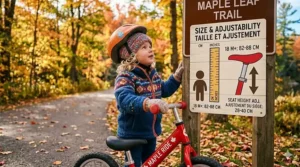
The 18-month age marker is a starting point, nothing more. Canadian toddlers vary enormously in height—some 18-month-olds have the inseam of a 12-month-old, others are built like two-year-olds. Measure from crotch to floor while your child is standing in socks. You need a bike with minimum seat height at least 2-3 cm below that measurement. This gives proper flat-footed stability and room for growth.
Most balance bikes list seat height ranges in product descriptions on Amazon.ca. Don’t assume—verify the actual measurements because some manufacturers exaggerate ranges. A bike with a 28 cm minimum seat won’t work for an 18-month-old with a 26 cm inseam, regardless of what the age recommendation claims.
Weight Matters More Than You Think
Balance bikes should weigh no more than 30% of your child’s body weight for proper handling. An average Canadian 18-month-old weighs around 11-12 kg (24-26 lbs), which means your target bike weight is 3.5 kg maximum, ideally closer to 2-2.5 kg. Heavier bikes exist and function fine for older or larger toddlers, but they create unnecessary struggle for petite 18-month-olds.
The weight issue compounds in Canadian families where parents hope to pass bikes down to younger siblings. That 4 kg balance bike might work fine for your sturdy firstborn but overwhelm a smaller second child—consider that in your purchase if multiple kids are in your future.
Wheel Size and Terrain Reality
Balance bikes typically come in 10-inch and 12-inch wheel sizes. For 18-month-olds, 10-inch wheels usually fit better proportionally and handle easier indoors. However, Canadian families need to think about actual usage—where will this bike roll?
If you’re primarily urban with access to smooth sidewalks, smaller wheels work beautifully. Rural families or those with cottage properties need the rolling efficiency of larger wheels to handle gravel driveways and uneven terrain. Air-filled tyres provide the best shock absorption for rough surfaces but require maintenance (pumping, potential flat repairs). EVA foam tyres are maintenance-free but transmit more vibration on bumpy ground—a reasonable trade-off for Canadian winters when you’re not riding rough terrain anyway.
Canadian Climate Durability
This point deserves its own section. Balance bikes sold on Amazon.ca aren’t always designed with Canadian conditions in mind. Look for:
- Sealed bearings rather than exposed ball bearings (road salt destroys exposed bearings)
- Powder-coated or painted finishes with rust-resistant primer
- Plastic components rated for cold temperatures (cheap plastics crack at -20°C)
- Seats made of vinyl or leather rather than basic plastic (won’t become rock-hard in cold garages)
Read Canadian customer reviews specifically mentioning how bikes held up through winter storage or salt exposure. The Amazon.ca review filter makes this easy—set your location to see reviews from Canadian buyers first.
Balance Bike vs Training Wheels: Why Canadian Experts Recommend Balance Bikes
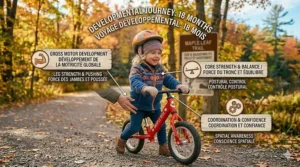
The debate between balance bikes and training wheels isn’t even close anymore. Health Canada’s physical activity guidelines emphasize that children develop balance and coordination through appropriate age-based activities, and balance bikes align perfectly with toddler developmental stages in a way training wheels don’t.
Training wheels teach children to rely on stabilizers, which means they never actually learn balance. When those training wheels eventually come off (usually around age 5-6), the child faces the same steep learning curve they would have at age two—except now they’re heavier, faster, more afraid of falling, and have reinforced incorrect riding patterns for years.
Balance bikes flip this entirely. An 18-month-old on a balance bike learns genuine balance from day one because there’s no alternative—either they balance or they put their feet down. This matches exactly how toddlers naturally learn other physical skills like walking and running: through practice, failure, adjustment, and success. The progression feels organic rather than forced.
The Canadian advantage is significant too. Our longer winters mean kids on training wheels miss months of practice when bikes are stored away. Balance bike skills transfer immediately to indoor use—toddlers can practice steering and balance in basements and hallways year-round, maintaining and improving skills that would otherwise regress.
Most importantly, children who start on balance bikes transition to pedal bikes years earlier and with dramatically less drama. The average balance-bike-trained child moves to pedals around age 3-4 with no training wheels needed, often learning to pedal in an afternoon. Training-wheel kids typically transition at age 5-6 and require weeks of practice. That’s one or two extra summers of independent bike riding for families in provinces with short cycling seasons.
Common Canadian Parent Mistakes When Buying Balance Bikes
Mistake #1: Prioritizing Price Over Fit
The $50 balance bike seems like a bargain until you realize the minimum seat height is 30 cm and your 18-month-old has a 26 cm inseam. Rather than waiting for your child to grow, you force the purchase because “they’ll grow into it.” Three months later, the bike sits unused while your toddler loses the crucial early development window.
The fix: Measure your child’s inseam first, identify bikes that actually fit, then compare prices within that subset. A proper-fitting $80 bike your toddler rides immediately delivers more value than a $50 bike that sits unused for six months.
Mistake #2: Ignoring Canadian Season Timing
Buying a balance bike in November in Manitoba makes little practical sense unless you have substantial indoor practice space. Your 18-month-old gets excited for one week, then the bike goes unused until April—by which time they may have lost interest or outgrown early learning phases.
The fix: Time purchases strategically. Late February/early March in most of Canada means 4-6 weeks of indoor practice before outdoor weather arrives, maintaining momentum and excitement. Alternatively, if buying in fall, commit to year-round indoor practice rather than assuming your toddler will wait patiently for spring.
Mistake #3: Skipping Assembly Quality Checks
Balance bikes arrive partially assembled with final steps required. Canadian parents rushing through assembly to satisfy an excited toddler sometimes miss critical tightening or safety checks. Handlebars that rotate loosely, seats that slip during riding, wheels that wobble—all create dangerous situations and frustrate young riders.
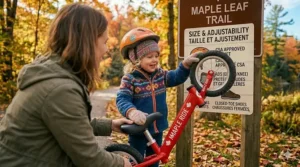
The fix: Complete assembly the evening before gifting, not while your child watches impatiently. Test every adjustment point, verify all bolts are properly tightened (but not over-tightened, which strips cheap hardware), and do a safety roll test before your child’s first ride. Keep the included Allen keys or wrenches in a labelled bag attached to the bike for future adjustments.
Long-Term Value: What Happens After Your Child Outgrows Their First Balance Bike?
Canadian families think long-term, and balance bikes offer surprising extended value. That bike your 18-month-old uses for 18-24 months doesn’t just disappear—here are realistic scenarios:
Passing Down to Younger Siblings
The obvious choice if you’re planning multiple children. Balance bikes that held up through Canadian winters with proper maintenance will absolutely survive a second or third child. The Strider 12 Sport particularly excels here with its wide adjustment range and durable construction—families report successfully passing them through three kids.
The caveat: ensure proper fit for each child individually. Don’t force a younger sibling onto a bike at 12 months just because the older sibling started at 18 months. Every child’s developmental timeline differs.
Resale Through Canadian Marketplaces
Quality balance bikes like Strider retain strong resale value on Facebook Marketplace, Kijiji, and local parent groups. You’ll typically recover 50-70% of purchase price if the bike is in good condition. This is especially true in urban Canadian markets (Toronto, Vancouver, Calgary, Montreal) where parents actively seek used kids’ gear.
Pro tip: List bikes in February/March when parents are thinking ahead to cycling season. November listings sit longer. Include photos showing the bike next to a ruler demonstrating seat height adjustment to help other parents determine fit for their own children.
Storage for Future Grandchildren
This might sound premature, but compact balance bikes store easily in Canadian basements or garages. Multiple parents report pulling balance bikes out of storage 20+ years later for grandchildren. A quality balance bike like the Strider or JOYSTAR that cost $120-$150 CAD new delivers value across generations when stored properly in climate-controlled spaces.
FAQ: Balance Bikes for 18-Month-Olds in Canada
❓ Can my 18-month-old really handle a balance bike, or should I wait until 2 years old?
❓ Are balance bikes safe to use during Canadian winters, or should I store them until spring?
❓ What's the actual height and weight range I should look for when buying for an 18-month-old in Canada?
❓ Do balance bikes sold on Amazon.ca meet Canadian safety standards under the CCPSA?
❓ How long will my child actually use a balance bike before moving to pedals, and is the investment worth it for Canadian families?
Conclusion: Choosing Your Canadian Family’s First Balance Bike
Selecting a balance bike 18 months into your child’s development isn’t just about finding the cheapest option on Amazon.ca or picking whatever your neighbour recommends. It’s about matching your specific child’s developmental stage, your family’s usage patterns, and Canadian environmental realities with a product that delivers safety, durability, and genuine skill-building value.
For most Canadian families, I’d recommend starting with either the SEREED Baby Balance Bike ($70-$90 CAD) if you have a younger, smaller, or more cautious 18-month-old who needs the confidence boost of a 4-wheel design and ultra-lightweight handling. This bike excels as an indoor-focused first introduction that transitions outdoors once skills and weather permit. The investment is modest, the learning curve gentle, and the confidence-building impact significant.
Families confident their child fits the sizing and who want a single balance bike that grows through preschool years should invest in the Strider 12 Sport ($140-$160 CAD). Yes, you’re paying premium pricing, but you’re buying 3-4 years of use, proven Canadian winter durability, and a resale value that recovers significant cost later. The engineering quality, adjustment range, and maintenance-free tyres justify the price difference for families planning long-term.
The middle ground belongs to the JOYSTAR 10″ Balance Bike ($100-$130 CAD) and KRIDDO Standard Balance Bike ($80-$105 CAD), both offering excellent feature sets and Canadian climate durability without premium pricing. Choose JOYSTAR if outdoor versatility and terrain handling matter most for your family’s activities. Choose KRIDDO if smooth rolling efficiency and sporty aesthetics appeal to your toddler’s preferences.
Remember that the best balance bike is ultimately the one your 18-month-old actually rides. Perfect specifications mean nothing if your child refuses to sit on it because the colour is wrong or the seat feels uncomfortable. Start with proper fit, prioritize safety and durability for Canadian conditions, then let your toddler’s enthusiasm guide the final decision. Those confident glides across the park are coming sooner than you think—choose the bike that gets you there safely and joyfully.
Recommended for You
- 7 Best Ride On Toys for Active Canadian Kids (2026 Guide)
- 7 Best Toddler Music Instruments Canada 2026
- Mega Bloks vs Duplo: 7 Best Large Blocks Canada 2026
Disclaimer: This article contains affiliate links. As an Amazon Associate, I earn from qualifying purchases. If you purchase products through these links, we may earn a small commission at no additional cost to you.
✨ Found this helpful? Share it with your friends! 💬🤗
