
In This Article
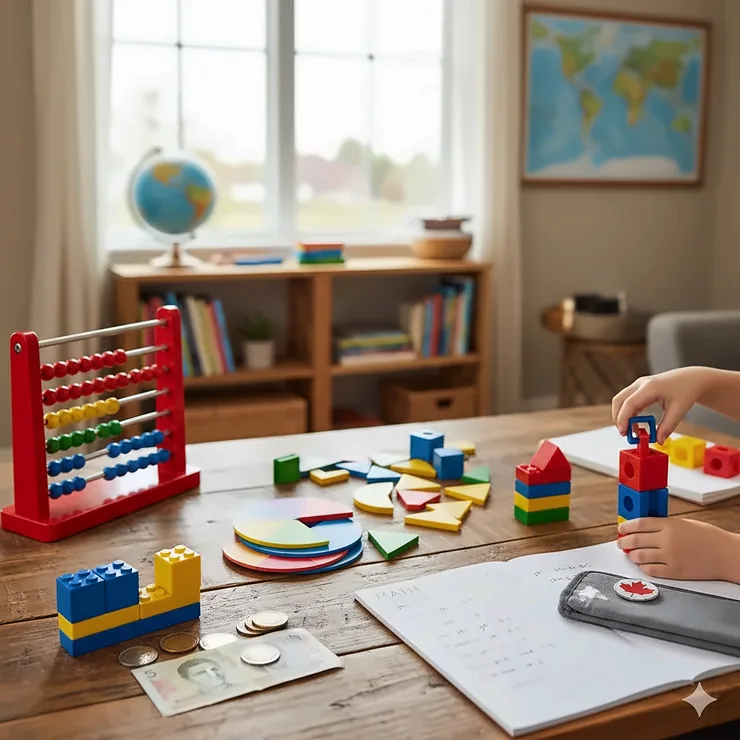
If your child’s eyes glaze over when they see numbers on a page, you’re not alone. Thousands of Canadian homeschool families struggle with making abstract mathematical concepts tangible and engaging. The solution? Math manipulatives homeschool resources that transform learning from frustrating to fascinating.
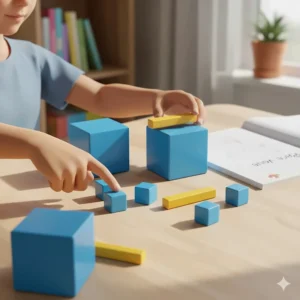
Think back to learning to count. You probably used your fingers, right? That’s your first math manipulative. These hands-on math learning tools bridge the gap between concrete experiences and abstract mathematical reasoning. Research from the National Research Council confirms that manipulatives provide invaluable support when used consistently over time, helping children build strong concrete mathematical concepts.
For Canadian homeschoolers, choosing the right tools means considering availability on Amazon.ca, shipping times within Canada, and CAD pricing. This guide presents seven rigorously tested products that deliver exceptional value for Canadian families. Whether you’re introducing tactile number sense to a kindergartener or reinforcing fraction learning games with an older student, the right tools make all the difference.
Quick Comparison Table
| Product | Best For | Price Range (CAD) | Rating | Ships from Canada |
|---|---|---|---|---|
| Torlam Base Ten Blocks | Place value, K-3 | $25-35 | 4.6/5 | ✓ Amazon.ca |
| Learning Resources MathLink Cubes | Counting, patterns | $18-30 | 4.8/5 | ✓ Amazon.ca |
| Torlam Fraction Circles | Fractions, grades 1-6 | $22-32 | 4.5/5 | ✓ Amazon.ca |
| Learning Resources Counting Bears | Early counting, sorting | $15-25 | 4.7/5 | ✓ Amazon.ca |
| hand2mind Take Home Kit | Complete starter set | $45-65 | 4.6/5 | Ships to Canada |
| D-FantiX Magnetic Fractions | Visual fraction work | $28-38 | 4.4/5 | ✓ Available |
| Learning Resources Base Ten Smart Pack | Individual/small group | $20-28 | 4.7/5 | ✓ Amazon.ca |
💬 Just one click – help others make better buying decisions too! 😊
Top 7 Math Manipulatives Homeschool: Expert Analysis
1. Torlam Base Ten Blocks – Best Overall for Place Value
When Canadian homeschool parents need a reliable foundation for understanding place value, the Torlam Base Ten Blocks consistently deliver results. This comprehensive set transforms the abstract concept of tens, hundreds, and thousands into something children can literally hold in their hands.
Key Specifications:
- 143 pieces total: 100 units, 30 rods, 10 flats, 1 cube
- Durable plastic construction
- Includes 20 task cards with 4 themes
Available on Amazon.ca for approximately $25-35 CAD, this set represents exceptional value. Canadian customers appreciate fast Prime shipping and local fulfillment, eliminating international delays. The included task cards provide structured activities that reinforce place value concepts through engaging games.
One Ontario parent shared in their review, “My grade 2 daughter finally understood regrouping after using these blocks for just one week. The visual representation made everything click.” The lightweight design makes these perfect for both desk work and floor activities, while the compact size simplifies storage between lessons.
✅ Pros:
- Long-lasting plastic material easy to clean
- Task cards facilitate independent learning
- Excellent for grades K-3 mathematical foundation
❌ Cons:
- Storage container not included
- May need supplementary activities for advanced students

2. Learning Resources MathLink Cubes – Most Versatile Counting Tool
The Learning Resources MathLink Cubes have earned their reputation as the Swiss Army knife of counting toys for kindergarten through early elementary. These colourful, interlocking cubes serve countless purposes, from basic counting to complex patterning activities.
Key Specifications:
- 100 cubes in 10 vibrant colours
- Each cube measures 3/4 inch (2 cm)
- Connects on all six sides with geometric cutouts
Priced between $18-30 CAD on Amazon.ca, MathLink Cubes offer outstanding versatility per dollar spent. They’re compatible with other linking cube brands, making them a smart long-term investment. Canadian educators particularly value these for tactile number sense development, working brilliantly for skip counting, one-to-one correspondence, and introducing multiplication concepts.
They integrate seamlessly with the popular Numberblocks educational program available on streaming services in Canada. Children can recreate characters they see on screen while reinforcing math skills through play—a powerful combination of entertainment and education that keeps young learners engaged.
✅ Pros:
- Endless applications across multiple grade levels
- Durable, washable plastic withstands years of use
- Compatible with existing linking cubes you may already own
❌ Cons:
- Can be time-consuming to organize without proper storage
- Smaller cubes may pose choking hazard for children under 3
3. Torlam Fraction Manipulatives – Best for Visual Fraction Learning
Fractions confuse countless students, but the Torlam Fraction Manipulatives make these tricky concepts accessible through visual learning math techniques. This comprehensive set combines circles, percentage charts, and decimal flip cards for multi-faceted understanding.
Key Specifications:
- Complete fraction circle set (halves through twelfths)
- Percentage and decimal conversion flip chart
- 20 activity task cards included
Available for $22-32 CAD on Amazon.ca, this kit addresses the most challenging aspect of elementary mathematics: understanding parts of a whole. The colour-coded pieces help students visualize equivalent fractions and compare different denominators effortlessly. A British Columbia homeschool mom noted, “This turned fraction learning games from my daughter’s most dreaded subject into her favourite. The hands-on approach made abstract concepts concrete.”
The flip chart particularly helps students understand connections between fractions, decimals, and percentages—a critical foundation for higher mathematics and real-world applications like calculating discounts or understanding statistics.
✅ Pros:
- Comprehensive coverage from basic to advanced fractions
- Activity cards guide structured, progressive learning
- Collapsible base provides compact storage solution
❌ Cons:
- Foam pieces may show wear with very heavy daily use
- Best suited for grades 1-6 age range
4. Learning Resources Baby Bear Counters – Perfect Early Counting Introduction
For introducing counting to preschool and early elementary students, few tools match the engaging charm of the Learning Resources Baby Bear Counters. These adorable manipulatives transform abstract numbers into a tactile, colour-based adventure that captivates young learners.
Key Specifications:
- 102 bear counters in 6 vibrant colours (17 bears per colour)
- Each bear stands 1 inch (2.5 cm) tall
- Includes activity guide and storage bucket
Priced affordably at $15-25 CAD, these counting toys for kindergarten punch well above their weight class. Canadian families appreciate the included storage bucket with printed activity ideas—no need to hunt for lesson plans when juggling multiple subjects. The bears excel at teaching sorting, patterning, basic addition and subtraction, and colour recognition simultaneously.
They’re particularly effective for kinesthetic learners who need to physically manipulate objects to internalize concepts. Many Canadian speech therapists also recommend these bears for language development activities, making them multi-purpose educational tools that extend beyond mathematics into literacy and communication skills.
✅ Pros:
- Engaging and non-intimidating for young learners ages 3+
- Storage bucket keeps 102 pieces organized
- Activity guide provides structured learning path for parents
❌ Cons:
- Limited use beyond early elementary grades
- Small parts require supervision for children under 3 years
5. hand2mind Take Home Math Manipulatives Kit – Best Complete Starter Set
Overwhelmed by choosing individual math manipulatives homeschool products? The hand2mind Take Home Math Manipulatives Kit solves that problem by bundling six essential tools into one comprehensive package designed specifically for grades K-2.
Key Specifications:
- 292 total pieces covering multiple math concepts
- Includes foam base ten blocks, Cuisenaire rods, pattern blocks, colour tiles
- Learning clock for time concepts
- 100 plastic snap cubes
Available for $45-65 CAD with shipping to Canada, this kit eliminates the guesswork of building a manipulative collection. While not always stocked directly on Amazon.ca, reputable Canadian educational supply stores carry it with reasonable shipping times. The included parent guide explains each manipulative’s purpose with example activities—invaluable for homeschool parents without formal teacher training.
Canadian customers particularly appreciate how this kit covers place value, fractions, patterns, measurement, and time concepts efficiently. One Alberta homeschooler reported, “This kit saved me hours of research and probably money compared to buying everything separately. Everything we need for early elementary math in one convenient package.”
✅ Pros:
- Complete solution eliminates decision fatigue and shopping time
- Parent guide supports confident teaching without education background
- Covers full range of K-2 mathematics standards
❌ Cons:
- Higher upfront cost than buying individual items gradually
- May include duplicates if you already own some materials
- Foam pieces less durable than plastic alternatives
6. D-FantiX Magnetic Fraction Tiles & Circles – Best for Interactive Demonstration
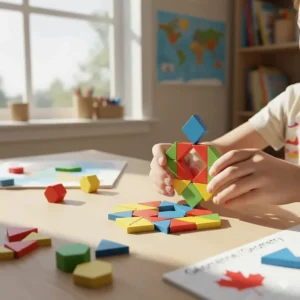
When you need to demonstrate concrete mathematical concepts on a vertical surface, the D-FantiX Magnetic Fraction Tiles & Circles become indispensable. These colourful magnetic pieces transform refrigerators, whiteboards, and magnetic doors into interactive math learning stations.
Key Specifications:
- 102 EVA foam pieces (circles and bars)
- 14 double-sided activity cards with write-and-wipe surface
- 2 dry-erase markers included
Priced between $28-38 CAD, these magnetic manipulatives offer unique advantages for visual learning math. The vertical presentation helps some students understand fraction concepts better than horizontal arrangements, particularly visual learners who benefit from seeing information displayed. Plus, the dry-erase cards allow for repeated practice without wasting paper—environmentally friendly and budget-conscious.
Canadian homeschoolers particularly appreciate using these on the refrigerator during kitchen time, turning meal prep into impromptu math lessons. The rainbow colour-coding helps children distinguish different fraction values quickly, while strong magnets keep pieces secure during activities without falling.
✅ Pros:
- Magnetic backing works on any iron surface
- Reusable dry-erase cards save paper costs
- Bright rainbow colours enhance visual engagement
❌ Cons:
- Requires magnetic surface for full functionality
- Foam may compress slightly with extended use
- Activity cards themselves are not magnetic
7. Learning Resources Base Ten Blocks Smart Pack – Best Budget-Friendly Option
Not every Canadian family needs a classroom-sized set of manipulatives. The Learning Resources Base Ten Blocks Smart Pack provides essential place value tools in a perfectly sized package for individual or small-group instruction without unnecessary excess.
Key Specifications:
- 121 pieces: 1 flat, 20 rods, 100 units
- Resealable polybag packaging
- Activity guide included with purchase
At just $20-28 CAD on Amazon.ca, this represents the most affordable entry point for quality base ten blocks from a trusted brand. The Smart Pack fits easily into backpacks for math co-ops or library sessions, making it ideal for Canadian families who homeschool on the go or participate in learning groups.
Despite the smaller quantity, these blocks teach the same fundamental concepts as larger sets. They work particularly well for one-on-one instruction, allowing focused attention on each child’s specific learning needs. The activity guide provides enough structured lessons to get started, though experienced homeschoolers will quickly develop their own creative applications.
✅ Pros:
- Most affordable quality option from reputable brand
- Portable size perfect for travel or co-op sessions
- Sufficient quantity for individual or sibling instruction
❌ Cons:
- Limited quantity may frustrate families with 3+ children
- No rigid storage container provided
- Fewer pieces than full classroom sets
✨ Take Action Now: Transform Your Homeschool Math Experience
🔍 Ready to bring these powerful hands-on math learning tools into your Canadian homeschool? Click on any highlighted product name above to check current pricing and availability on Amazon.ca. With Prime shipping, most items arrive within 1-3 business days—meaning you could be building concrete mathematical concepts with your children by this weekend!
These carefully selected manipulatives will help you create authentic mathematical understanding your family will use for years. Don’t let abstract concepts hold your children back when tactile number sense is just a click away.
Understanding the CPA Approach: Why Manipulatives Work
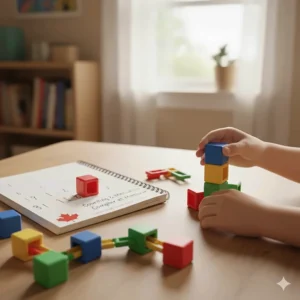
Effective math instruction follows the Concrete-Pictorial-Abstract (CPA) approach, a research-backed teaching sequence that builds deep understanding rather than surface-level memorization. This method, supported by decades of educational research and recognized in curricula worldwide including across Canadian provinces, ensures children develop robust mathematical foundations.
Concrete Stage: Children manipulate physical objects (your math manipulatives homeschool tools) to solve problems. They physically count out seven cubes and add five more cubes to find the sum. This tactile experience creates neural pathways connecting physical action to mathematical meaning.
Pictorial Stage: Students draw representations of the concrete objects they previously manipulated. Instead of using actual cubes, they draw circles or tally marks to represent quantities. This bridges concrete and abstract thinking.
Abstract Stage: Finally, children work with numbers and symbols alone. They can solve 7 + 5 mentally or on paper without needing visual support, having internalized the concept through previous concrete and pictorial experiences.
Rushing to the abstract stage before solidifying concrete and pictorial understanding creates gaps that haunt students in higher mathematics. The Wikipedia entry on mathematical manipulatives provides fascinating historical context on how educational pioneers like Maria Montessori, Jean Piaget, and Jerome Bruner developed and validated this approach over the past century.
Using hands-on math learning tools at the concrete stage isn’t a crutch—it’s the foundation for all future mathematical success. Research consistently shows that students who use manipulatives develop stronger number sense, better problem-solving skills, and more positive attitudes toward mathematics compared to those who learn through abstract symbols alone.
Choosing Math Manipulatives by Learning Stage
Not all manipulatives serve every purpose equally well. Match tools to your child’s developmental stage and learning objectives for maximum effectiveness:
For Early Elementary (K-2): Building Foundations
Focus on counting toys for kindergarten and early number sense development. Young children need concrete objects they can move, sort, and manipulate while developing one-to-one correspondence and basic operations.
Essential Tools:
- Counting bears for sorting, patterning, and one-to-one correspondence
- MathLink cubes for counting to 100, basic addition/subtraction
- Base ten blocks (start with units and rods only)
At this stage, choose brightly coloured, durable materials that can withstand enthusiastic handling. Storage solutions matter significantly—frequent setup and cleanup shouldn’t become barriers to regular use.
For Upper Elementary (3-5): Deepening Understanding
Emphasize concrete mathematical concepts like multi-digit operations, fractions, decimals, and introductory geometry. Children at this stage benefit from more sophisticated tools that can model complex relationships.
Essential Tools:
- Complete base ten sets including thousands cubes
- Fraction circles or tiles for visual comparison and operations
- Pattern blocks for geometry, symmetry, and fractional relationships
Upper elementary students can begin taking responsibility for selecting appropriate tools for specific problems, building mathematical maturity and decision-making skills that transfer to higher mathematics.
For Different Learning Styles
Visual Learners need tactile number sense through:
- Bright, colour-coded manipulatives that distinguish concepts visually
- Magnetic pieces for vertical display on whiteboards or refrigerators
- Clear, transparent materials that show relationships
Kinesthetic Learners benefit from hands-on math learning tools with:
- Interlocking pieces like MathLink cubes that snap together
- Sorting and building activities that incorporate large motor movements
- Three-dimensional models that can be rotated and examined
Canadian families homeschooling multiple grades simultaneously benefit from versatile tools like MathLink cubes and base ten blocks that scale across age ranges, maximizing your budget while minimizing storage needs.
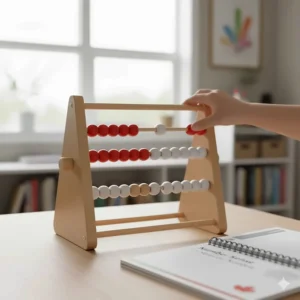
Storing and Organizing Your Math Manipulatives Collection
Even the best math manipulatives homeschool tools become frustrating if constantly scattered. Smart storage systems transform chaos into calm, making daily lessons smoother and encouraging children to take ownership of their learning materials.
Label Everything Clearly: Use clear containers or resealable bags labeled with contents and ideal grade level. When your grade 5 student finishes fractions, you’ll know exactly where to store pieces for your grade 2 child’s future use. Consider bilingual labels (English/French) for additional language exposure.
Create Dedicated Math Stations: Designate specific areas for different manipulative types. All counting tools in one clearly marked location, all fraction materials in another. This system helps children develop independence in selecting and returning materials, building responsibility alongside mathematical skills.
Invest in Quality Storage: Clear plastic bins from Canadian retailers like Canadian Tire, Dollarama, or IKEA work brilliantly for home storage. See-through sides eliminate the need to open every container hunting for the right tool. For portable storage, consider tackle boxes or craft organizers with adjustable dividers.
Rotate Materials Seasonally: Don’t leave every manipulative accessible constantly. Rotating tools monthly keeps materials fresh and interesting while reducing clutter. Store seasonal items (Christmas-themed counting activities for December, Canadian-themed patterns for Canada Day) until appropriate times.
Digital Inventory: Create a simple spreadsheet listing owned manipulatives, ideal uses, recommended grade levels, and approximate quantities. This prevents duplicate purchases during sales, helps plan future additions, and assists in curriculum planning.
Daily Life Integration: Math Beyond the Textbook
Math manipulatives needn’t live exclusively in formal lesson time. Canadian families excel at weaving fraction learning games and counting practice into everyday activities, making mathematics feel relevant and natural rather than isolated and academic.
Cooking Together: Use fraction circles to understand recipe measurements before cooking. If a recipe calls for 3/4 cup of flour, physically show the fraction, then measure. Discuss doubling recipes using concrete mathematical concepts—what happens to 1/2 cup when we need twice as much?
Grocery Shopping: Bring counting bears in a sealed bag to the store. Count items going into the cart, practice addition with small purchases, or sort items by colour while waiting in line. Older children can estimate total costs using rounding and mental math with visual support.
Nature Walks: Collect pinecones, acorns, smooth stones, or interesting leaves to use as natural counting materials at home. Sorting finds by size, shape, or colour reinforces classification skills while connecting mathematics to the natural world. Create patterns with collected items, building both math and observational skills.
Game Enhancement: Board games naturally incorporate counting and strategy. Enhance them with manipulatives—use base ten blocks to track scores visually, count spaces with linking cubes, or sort game pieces using bears. Popular Canadian games like Crokinole can incorporate mathematical discussions about angles and strategy.
Financial Literacy: Let children physically manipulate Canadian coins or currency play money to understand money concepts concretely. The Government of Canada’s financial literacy resources complement these hands-on activities beautifully, helping children build real-world skills alongside mathematical understanding.
This integrated approach helps children see mathematics as a practical life skill rather than an isolated subject confined to textbooks, strengthening both motivation and long-term retention of concrete mathematical concepts.
Addressing Common Manipulative Challenges
“My child just plays with them instead of learning”
This common concern actually represents an opportunity rather than a problem. Free play with manipulatives builds familiarity and comfort with the materials. Set clear expectations: “First we’ll do our math work with these cubes, then you can have five minutes to build whatever you want.” The promise of creative time often motivates focused work during structured lessons.
“Which manipulatives should I buy first on a limited budget?”
Start with three versatile foundation tools: MathLink cubes, base ten blocks, and either fraction circles or fraction bars. These categories cover approximately 90% of elementary mathematics concepts across all Canadian provincial curricula. Add specialized tools as specific curriculum needs arise rather than purchasing everything at once.
“My child doesn’t seem to progress beyond needing manipulatives”
Ensure you’re systematically moving through the CPA (Concrete-Pictorial-Abstract) progression. After mastering concepts at concrete stages, intentionally transition to drawing pictures. Gradually reduce manipulative dependence by asking, “Can you picture this in your mind?” before automatically providing physical tools. Remember that some children developmentally need manipulatives longer than others—that’s normal variation, not concerning delay.
“These manipulatives don’t match my curriculum exactly”
Fundamental math concepts remain consistent across all quality curricula—only presentation and sequencing vary. If your curriculum shows different coloured base ten blocks, explain that the shapes and size relationships matter, not specific colours. Most quality manipulatives work seamlessly with any curriculum emphasizing conceptual understanding over rote memorization.

Budget-Friendly Strategies for Canadian Homeschool Families
Quality math manipulatives represent an investment, but smart strategies make them accessible for families at every income level without sacrificing educational effectiveness.
Buy Gradually: You don’t need everything immediately. Start with one high-quality foundation set (base ten blocks or MathLink cubes) and add pieces as children progress through concepts. This approach also prevents overwhelming young children with too many choices simultaneously.
Watch for Canadian Sales: Amazon.ca regularly discounts educational materials around back-to-school season (August-September) and again in January. Set price alerts through browser extensions or Amazon wish lists for items on your future purchase list. Lightning deals can offer 30-40% savings.
Share with Co-ops: Join or form a homeschool co-op where families pool resources. Collectively purchasing classroom quantities creates better per-unit pricing while ensuring access to variety. Shared specialized manipulatives (expensive geometry sets, for example) benefit everyone without individual financial burden.
DIY Alternatives: Many manipulatives have acceptable homemade alternatives. Dried beans or pasta work as counters, cardboard squares become fraction tiles, LEGO bricks substitute for some linking cube activities. While commercial versions offer consistency and durability advantages, homemade tools still deliver valuable tactile learning benefits.
Buy Used Carefully: Quality mathematics manipulatives withstand years of use. Check local homeschool buy-and-sell groups on Facebook, Kijiji, or VarageSale for gently used sets. Inspect carefully for missing pieces, clean thoroughly before use, and verify all pieces work as intended. Many families sell curriculum changes at deep discounts.
Request as Gifts: Grandparents and relatives often request meaningful gift ideas for birthdays and holidays. Quality manipulatives make educational presents that support learning year-round, far outlasting typical toys in both use and value. Provide specific Amazon.ca links to desired items to simplify their shopping.
Remember that manipulatives aren’t consumables—they’ll serve multiple children over many years, making the cost-per-use remarkably low for most families who maintain materials properly.
❓ Frequently Asked Questions About Math Manipulatives Homeschool
❓ What is the best age to start using math manipulatives homeschool tools in Canada?
❓ How much should I budget for complete math manipulatives homeschool supplies in Canada?
❓ Where can I buy authentic math manipulatives that ship quickly within Canada?
❓ Do virtual manipulatives work as well as physical ones for tactile number sense development?
❓ How do I know when my child has outgrown needing hands-on math learning tools?
Final Thoughts: Building Mathematical Confidence in Canadian Homeschools
Investing in quality math manipulatives homeschool tools represents more than purchasing educational supplies—you’re building a foundation for lifelong mathematical confidence, capability, and positive attitudes toward a subject many adults fear. The hands-on math learning tools highlighted in this guide serve Canadian families exceptionally well, combining research-backed effectiveness with practical availability on Amazon.ca and realistic pricing in Canadian dollars.
Remember that no manipulative collection, however comprehensive or expensive, replaces thoughtful teaching, patient guidance, and genuine enthusiasm for mathematical discovery. These tools amplify your efforts, making abstract concepts tangible and transforming potential frustration into achievement. As you watch your child physically build the number 47 with base ten blocks for the first time, or carefully piece together fraction circles to discover that 2/4 equals 1/2, you’re witnessing mathematical thinking taking root at the deepest conceptual level.
Canadian homeschoolers enjoy unique advantages: access to provincial curriculum guidance, supportive online communities, bilingual resources, and the freedom to implement research-based practices without institutional constraints or pacing pressures. By choosing concrete mathematical concepts as your foundation and supporting them with quality manipulatives, you’re giving your children mathematical gifts that compound over years—each new concept building naturally on solid understanding of previous material.
Start where you are, use what you have, and build gradually rather than overwhelmingly. Whether you begin with a single set of MathLink cubes or invest in a comprehensive kit, you’re taking meaningful steps toward mathematical literacy and confidence. Your children won’t remember every worksheet they completed years from now, but they will remember the excitement of discovery when a difficult concept suddenly made sense—often thanks to those colourful blocks, bears, and circles scattered across your kitchen table during a particularly satisfying “aha moment.”
The journey toward mathematical proficiency begins with making abstract concepts concrete. Choose your tools wisely, use them consistently with intentional progression through concrete-pictorial-abstract stages, and watch mathematical understanding flourish naturally.
Recommended for You
- 7 Best Screen-Free Educational Toys Canada 2026 Guide
- 7 Best Ontario Curriculum Learning Toys for Canadian Kids (2026)
- 7 Best Homeschool STEM Materials Canada 2026
Disclaimer: This article contains affiliate links to Amazon.ca. If you purchase products through these links, we may earn a small commission at no additional cost to you.
✨ Found this helpful? Share it with your friends! 💬🤗
